Generated with AI2 min read
Sewage System
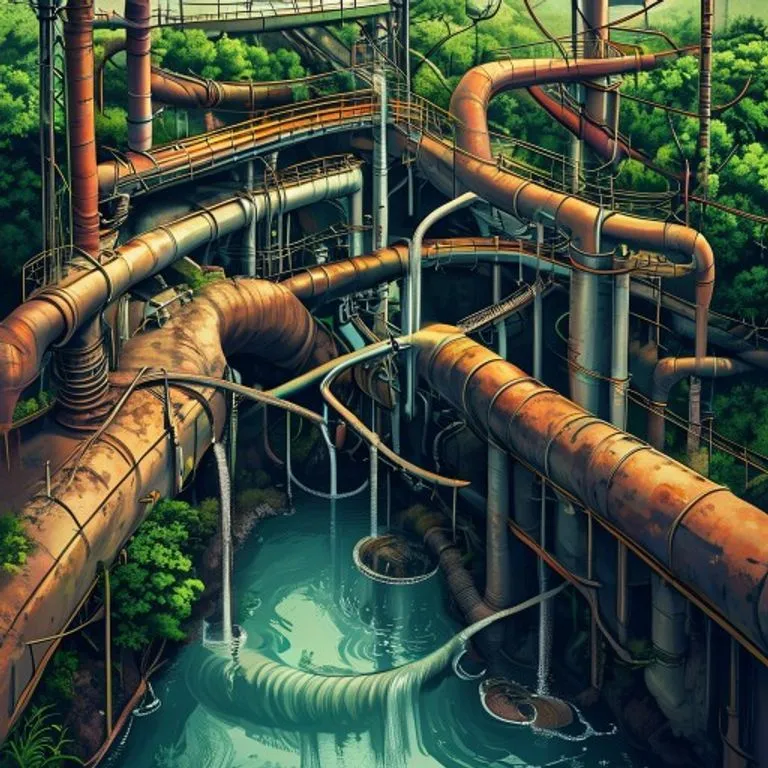
Brief description
A network of underground pipes and facilities dedicated to collecting and transporting wastewater and refuse from buildings to a treatment or disposal site.
Use / Function
- Primary use: Hygienic removal of human waste (sanitation) to prevent disease.
- Secondary uses: Drainage of stormwater to prevent flooding.
- Scale: Urban and industrial.
Operating principle
- Gravity Flow: Sewers are laid on a precise downward slope so liquids flow naturally without pumping.
- Traps: U-shaped bends in pipes at inlets (sinks, toilets) hold a small amount of water to block sewer gases from entering buildings.
- Venting: Vertical pipes allow air to enter the system, preventing vacuums that would suck traps dry and ensuring smooth flow.
How to create it
- Surveying: Determine the natural slope of the terrain towards a low point (river, treatment plant).
- Trenching: Dig trenches deep enough to ensure a constant gradient (usually 1-2%).
- Laying Pipes: Install large diameter pipes. Ensure joints are watertight to prevent groundwater contamination.
- Manholes: Install access points at regular intervals and every change of direction for cleaning and inspection.
- Connections: Connect building drains to the main sewer line.
Materials needed
- Pipes: Ceramic (glazed clay), Concrete, Plastic (PVC), or Brick (historical).
- Structure: Brick and Mortar for manholes.
- Tools: Shovels, Levels, Pickaxes.
Variants and improvements
- Combined Sewer: Carries both sewage and stormwater. Cheaper to build but prone to overflowing raw sewage during heavy rains.
- Separate Sewer: Distinct systems for sanitary sewage and stormwater. More expensive but environmentally safer.
- Septic System: A local, on-site version for isolated buildings using a tank and leaching field.
Limits and risks
- Blockages: Accumulation of grease, roots, or solid objects can cause backups.
- Overflow: Heavy rains can overwhelm combined systems.
- Health Hazard: Direct contact with sewage causes cholera, dysentery, and other diseases.
- Gases: Methane and hydrogen sulfide build up in sewers; they are toxic and explosive.
Related inventions
- Latrine: Basic disposal.
- Toilet: The primary source of waste.
- Septic Tank: Local variant.
- Drainage: Managing surface water.
- Water Supply: The input counterpart.
- Hand Washing Basin: Source of greywater.
- Pipes: Core component.