Generated with AI3 min read
Hand Washing Basin
Brief description
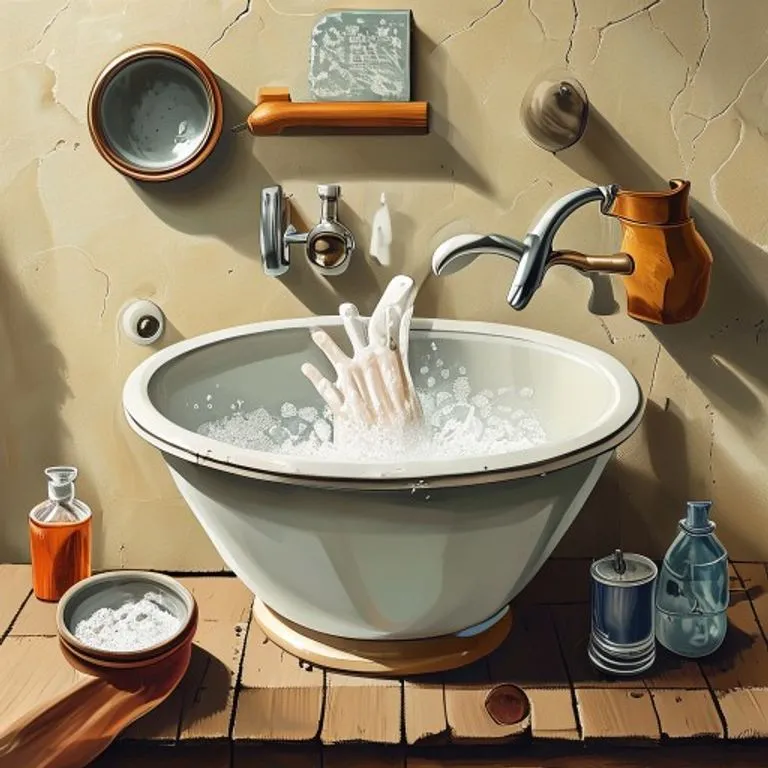
A bowl-shaped fixture used for washing hands, face, and small objects. It is a critical component of personal hygiene and sanitation, acting as the interface between the clean water supply and the user.
Use / Function
- Personal Hygiene: Washing hands to remove pathogens, dirt, and chemicals.
- Disease Prevention: The primary defense against fecal-oral transmission of diseases.
- Water Containment: Holds water temporarily for use before draining it away.
- Scale: Domestic to public.
Operating principle
- Supply: Water is delivered to the basin via a faucet or spout, connected to the Water Supply.
- Retention: The concave shape holds a volume of water.
- Drainage: A hole at the lowest point allows used water to exit into the Sewage System via gravity.
- Trap: A curved pipe (P-trap) below the drain holds a small amount of water to seal off sewer gases.
How to create it
- Basin Formation: Carve a bowl from stone, mold it from clay and fire it (Ceramics), or cast it from metal/concrete. Ideally, the surface should be smooth and non-porous to prevent bacterial growth.
- Drain Hole: Create a hole at the bottom.
- Mounting: Place the basin on a pedestal, mount it to a wall, or set it into a countertop.
- Plumbing Connection: Connect the water source (faucet/pitcher) above and the drain pipe below.
- Seal: Ensure the drain connection is watertight using gaskets or putty.
Required technological level
Basic (manual pouring) to Intermediate (plumbed).
Materials needed
- Basin: Ceramics (glazed), Stone (granite, marble), Metal (stainless steel, copper), or Plastic.
- Plumbing: Pipes for supply and drain.
- Sealant: Natural Rubber, putty, or silicone.
Variants and improvements
- Washstand: A simple bowl on a stand, filled manually from a pitcher.
- Pedestal Sink: A freestanding basin supported by a column that hides the pipes.
- Vanity Sink: Set into a cabinet for storage.
- Automatic Faucet: Uses sensors to reduce contact and save water.
Limits and risks
- Clogging: Hair, soap scum, and objects can block the drain.
- Overflow: If the drain is blocked or water is left running, it can flood the area (unless an overflow hole is present).
- Contamination: A dirty basin can become a breeding ground for bacteria if not cleaned.
- Leaks: Connections can leak, causing water damage.
Related inventions
- Water Supply: Source of clean water.
- Sewage System: Disposal of dirty water.
- Soap: Essential companion for hygiene.
- Valve: Controls the water flow (faucet).