SyntheticGenerated with AI2 min read
Concrete
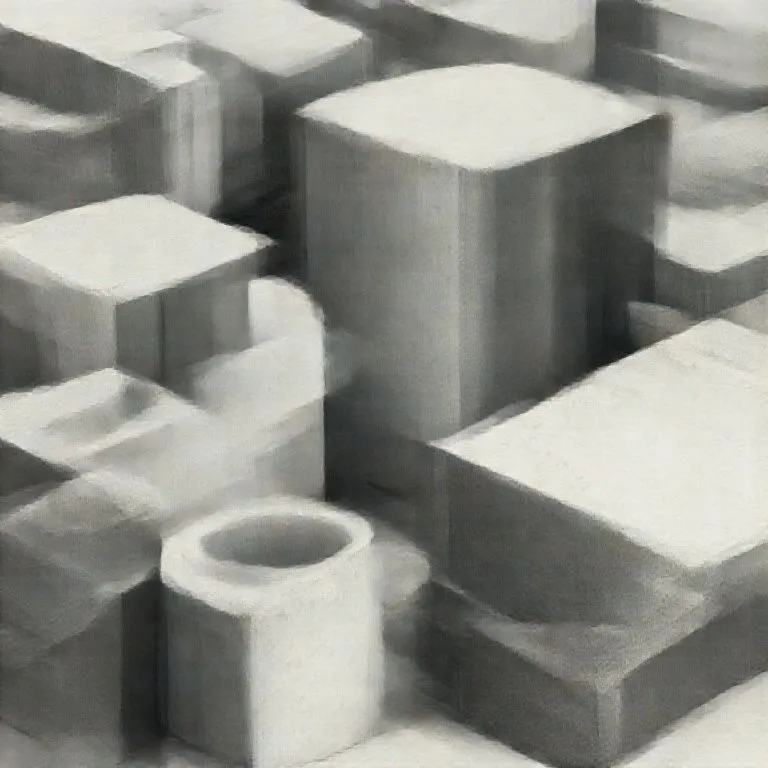
A composite material composed of fine and coarse aggregate bonded together with a fluid cement (cement paste) that hardens over time.
Description of what it is like
Initially a semi-liquid slurry that can be poured into molds. When cured, it becomes a rock-hard substance, grey in color, with high compressive strength but low tensile strength.
Origin and where to find it
- Artificial: It must be manufactured.
- History: Used extensively by Romans (Roman Concrete) using volcanic ash (pozzolana) and lime.
Minimum processing required
- Preparation: Gather sand, gravel (aggregate), binder (lime or cement), and water.
- Mixing: Thoroughly mix ingredients in correct proportions (e.g., 1 part binder, 2 parts sand, 3 parts gravel).
- Pouring (Molding): Place into forms/molds immediately.
- Curing: Keep moist for several days to allow chemical hardening (hydration).
Tools needed to work on it
- Mixing: Shovels, hoes, mixing box or trough.
- Forms: Wood planks to create molds.
- Tamping: Rods to remove air bubbles.
Common forms of use
- Mass Concrete: For dams or large foundations.
- Reinforced Concrete: Combined with steel (rebar) to add tensile strength (modern).
- Mortar: Finer mix for bonding bricks/stones.
Possible substitutes
- Stone: Harder to shape but natural.
- Brick: Requires firing but modular.
- Wood: For structures (but rot/fire risk).
Limitations and common failures
- Cracking: Shrinkage during drying or structural shifts.
- Setting Time: Must be used quickly after mixing.
- Temperature: Freezing during curing ruins it.
Risks and safety
- Chemical Burns: Wet concrete/lime is highly alkaline and can burn skin.
- Dust: Silica dust from dry mixing is harmful to lungs.
- Weight: Very heavy.
Related materials
- Lime: The binder.
- Primitive Cement: The historical version.
- Sand/Gravel: The aggregate.
- Mortar: Similar but without coarse aggregate.
Properties
- Hard
- Durable
- Moldable
- Compressive Strength
Used for
- Foundations
- Walls
- Dams
- Roads
Manufacturing / Process
Mixing cement/lime binder with aggregate and water.