Generated with AI3 min read
Septic Tank
Brief description
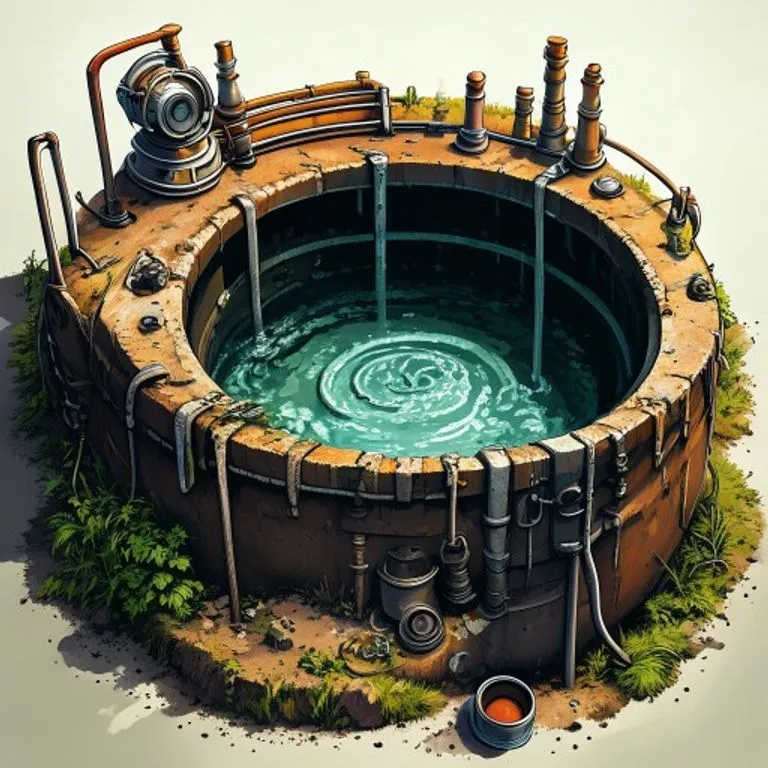
A localized underground wastewater treatment system for areas not connected to a central Sewage System. It uses natural processes (settling and anaerobic bacteria) to treat sewage before releasing it into a drain field.
Use / Function
- Primary use: Treating household wastewater (from toilets, sinks, showers).
- Secondary uses: Separating solids from liquids.
- Scale: Single household to small community.
Operating principle
- Settling: Wastewater flows into the tank. Heavy solids (sludge) sink to the bottom. Lighter solids (grease, oil - scum) float to the top.
- Anaerobic Digestion: Bacteria in the tank break down the organic matter in the sludge and scum, reducing their volume.
- Effluent: The liquid layer in the middle (effluent) flows out of the tank into a drain field.
- Filtration: The drain field (perforated pipes in gravel) distributes the effluent into the soil, where aerobic bacteria further treat it before it reaches groundwater.
How to create it
1. The Tank
- Must be watertight to prevent leakage and groundwater infiltration.
- Inlet: Where sewage enters. Has a baffle to prevent disturbing the scum layer.
- Outlet: Where effluent leaves. Has a baffle or filter to prevent solids from clogging the drain field.
- Access Ports: Lids for inspection and pumping out sludge (every 3-5 years).
2. The Drain Field (Leach Field)
- A network of Pipes with holes, laid in trenches filled with gravel.
- The soil must be permeable (perc test required).
Materials needed
- Tank: Concrete (precast or poured), Plastic (polyethylene), Fiberglass, or Brick (historical, sealed with mortar).
- Pipes: Plastic (PVC) for connections and perforated drain lines.
- Gravel/Stone: For the drain field bed.
- Soil: The final filter.
Variants and improvements
- Aerobic Treatment Unit (ATU): Uses an air pump to inject oxygen, promoting aerobic bacteria which digest waste faster and cleaner than anaerobic ones.
- Mound System: An elevated drain field for areas with high water tables or shallow bedrock.
- Sand Filter: Effluent passes through a bed of sand before entering the soil.
Limits and risks
- Maintenance: Sludge builds up and MUST be pumped out regularly (3-5 years) or it will clog the drain field (expensive failure).
- Chemicals: Bleach, harsh cleaners, and paints kill the beneficial bacteria, stopping the treatment process.
- Groundwater Contamination: If the soil is too permeable or the water table is too high, untreated sewage can pollute drinking water wells.
- Capacity: Cannot handle massive surges of water (e.g., stormwater) without flushing out solids.
Related inventions
- Toilet: The primary source of waste.
- Sewage System: The centralized alternative.
- Pipes: Connections.
- Concrete: Primary material.