SyntheticGenerated with AI2 min read
Ceramics
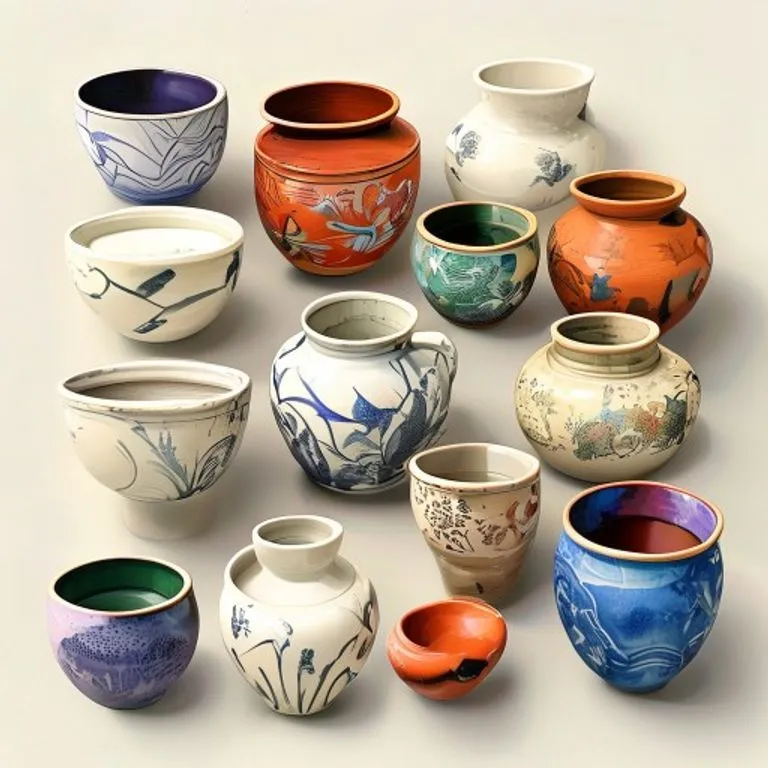
Ceramics are inorganic, non-metallic materials made by shaping clay or mineral powders and firing them at high temperature. They range from porous earthenware to dense porcelain.
Description of what it is like
Ceramics are hard and rigid with a smooth or matte surface. They resist heat and chemicals but can crack or shatter under impact.
Origin and where to find it
- Source materials: Clay and other mineral powders.
- Signs: Produced in kilns or fired pits, not found in nature.
- Synthetic: Requires transformation by heat.
Minimum processing required
- Preparation: Remove stones and organic matter from clay, then knead with water.
- Shaping: Form vessels, tiles, or parts by hand or on a potter’s wheel.
- Drying: Air-dry completely to avoid steam cracks.
- Firing: Heat in a kiln to harden the body.
- Glazing (optional): Apply a glassy coating for waterproofing.
Tools needed to work on it
- Mixing tools: Paddles, troughs, or hands.
- Shaping tools: Molds, ribs, and cutting wires.
- Drying racks: Shelves with airflow.
- Kiln: Controlled high-temperature firing.
Common forms of use
- Earthenware: Low-fire, porous, common for Pottery.
- Stoneware: Denser and more water-resistant.
- Porcelain: High-fire, fine and translucent.
- Glazed ceramics: Waterproof containers and Tiles.
Possible substitutes
- Wood: Easy to work but not heat resistant.
- Iron: Strong and conductive, reacts with some foods.
- Glass: Heat resistant but more fragile to impact.
- Stone: Durable but harder to shape.
Limitations and common failures
- Brittleness: Cracks and shatters under impact.
- Thermal shock: Rapid temperature changes cause fractures.
- Porosity: Low-fired bodies leak unless glazed.
Risks and safety
- Burns: Hot ceramics retain heat for a long time.
- Silica dust: Grinding or sanding releases fine dust.
- Kiln hazards: High heat and fumes require ventilation.
Related materials
Properties
- Hard
- Heat resistant
- Brittle
- Insulating
- Chemically inert
- Wear resistant
Used for
- Pottery
- Tiles
- Crucibles
- Kiln linings
- Pipes
Manufacturing / Process
Shaping clay, drying, and firing in a kiln, with optional glazing.