Generated with AI3 min read
Water Supply
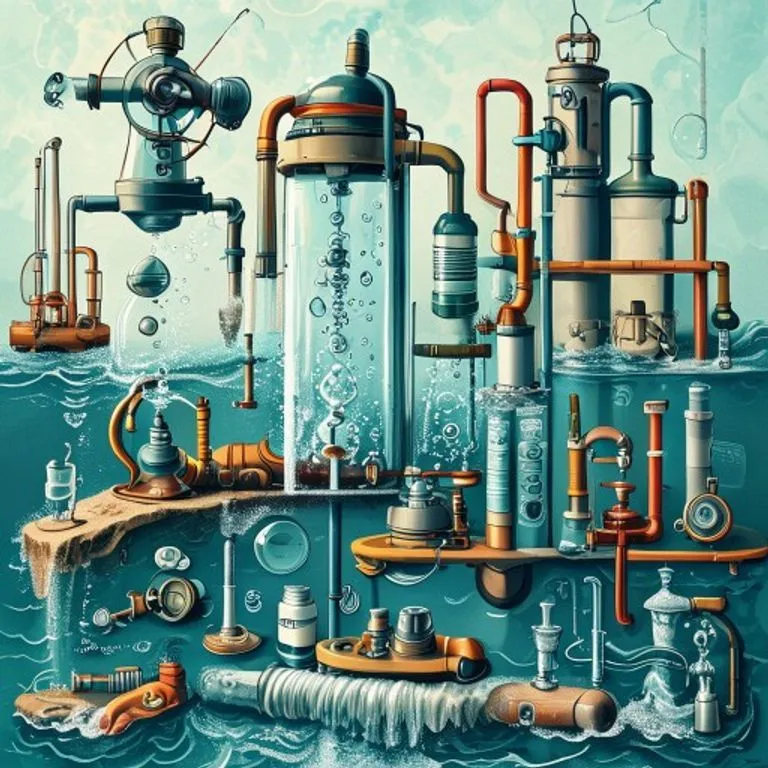
Brief description
A comprehensive system designed to collect, treat, store, and distribute water to homes, industries, and public facilities. It is the backbone of public health and urban civilization.
Use / Function
- Primary use: Providing safe drinking water (potable water) to a population.
- Secondary uses: Sanitation, irrigation, industrial processes, and fire suppression.
- Scale: Community to metropolitan.
Operating principle
- Collection: Water is gathered from a source (river, lake, reservoir, or groundwater).
- Transmission: Water is moved via aqueducts or large pipes to a treatment plant.
- Treatment: Impurities and pathogens are removed (filtration, sedimentation, disinfection).
- Storage: Treated water is stored in reservoirs or water towers to ensure constant pressure and supply during peak demand.
- Distribution: A network of smaller pipes delivers water to individual users.
How to create it
- Source Identification: Find a reliable water source (surface or underground) with sufficient quantity.
- Intake Structure: Build a structure to draw water while minimizing sediment and debris (screens, cribs).
- Transport: Construct a gravity-fed or pumped line to the settlement.
- Storage: Build a water tower or elevated Cistern. The height provides hydrostatic pressure for the distribution network.
- Distribution Network: Lay a grid of pipes. Use a “loop” layout rather than a “branch” layout to prevent stagnation and ensure supply if one section breaks.
Materials needed
- Pipes: Plastic (PVC, HDPE), Metal (Cast iron, copper), or Concrete.
- Storage: Concrete, Steel, or Stone for tanks.
- Sealing: Rubber gaskets or Lead (historical, toxic) / tow and grease.
- Machinery: Pumps and valves.
Variants and improvements
- Gravity System: Relies entirely on elevation differences. No energy cost, highly reliable.
- Pumped System: Uses mechanical energy to pressurize water. Allows supply in flat terrain but requires fuel/electricity.
- Dual Supply: Separate systems for potable water and “grey water” (for flushing/irrigation) to conserve resources.
Limits and risks
- Contamination: A breach in the pipes can introduce pathogens. Negative pressure (vacuum) can suck in groundwater.
- Leakage: Significant water is often lost to leaks in old systems.
- Freezing: Pipes must be buried below the frost line to prevent bursting.
- Drought: Reliability depends entirely on the source’s capacity.
Related inventions
- Aqueduct: Large-scale transport.
- Pump: Moving water against gravity.
- Water Filter: Treatment component.
- Sewage System: The output counterpart.
- Hand Washing Basin: Hygiene interface.
- Cistern: Storage component.
- Toilet: Primary user.