Generated with AI3 min read
Toilet
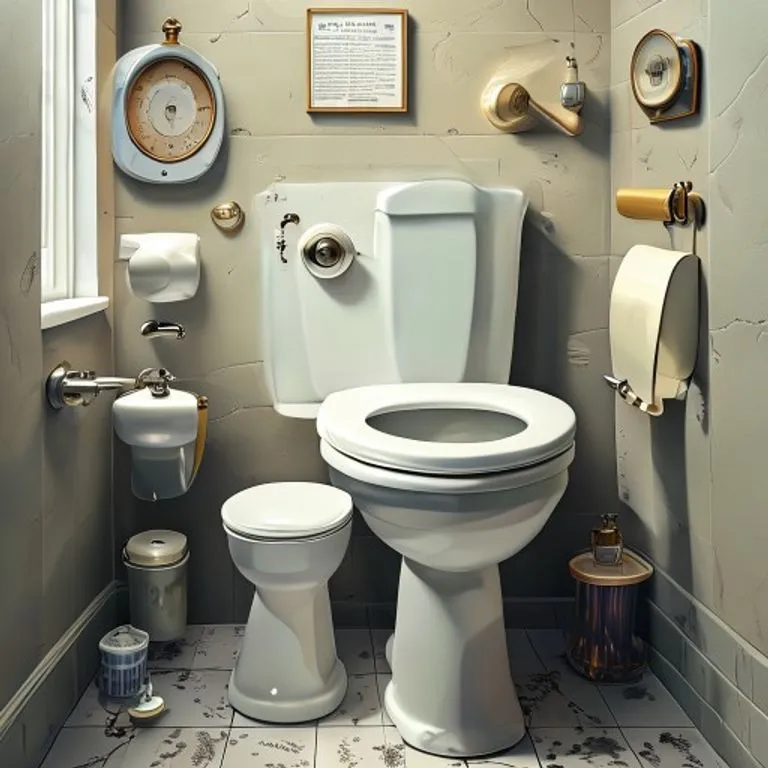
Brief description
A sanitation fixture used for the disposal of human excrement and urine. Modern flush toilets use water to move waste through a drainpipe to a sewer system or septic tank, maintaining hygiene and preventing odors.
Use / Function
- Primary use: Safe and hygienic disposal of human waste.
- Secondary uses: Disposal of liquid waste.
- Scale: Domestic to public/institutional.
Operating principle
The core principle is the siphon (S-trap or P-trap):
- Water Seal: The bowl always holds a small amount of water in a U-shaped bend. This water acts as a seal, preventing sewer gases (methane, hydrogen sulfide) from entering the room.
- Flushing: When the flush mechanism is triggered, a large volume of water from the cistern (tank) is released rapidly into the bowl.
- Siphon Action: The rapid influx of water fills the siphon tube, creating a vacuum effect that pulls the waste and water out of the bowl and into the drainpipe.
- Refill: After the flush, the tank refills via a float valve, and a small tube refills the bowl to restore the water seal.
How to create it
1. The Bowl (Ceramic)
- Must be smooth and non-porous to be easy to clean and prevent bacterial growth. Ceramics (glazed porcelain) are ideal.
- Needs an integrated S-trap or P-trap channel at the bottom.
2. The Cistern (Tank)
- A container positioned above the bowl (gravity fed).
- Inlet Valve: Controlled by a float. When water level drops, it opens to refill; when full, it closes.
- Flush Valve: A flapper or siphon mechanism that releases water into the bowl when the handle is pressed.
3. Connections
- Water Supply: Connects to the main Water Supply line.
- Drainage: Connects to the Sewage System or Septic Tank.
- Vent: The drain pipe must be vented to the roof to allow air in, preventing the siphon from sucking the trap dry.
Materials needed
- Bowl/Tank: Ceramics (Vitreous China) for durability and hygiene. Could be Plastic or Metal (stainless steel) in institutional/prison settings.
- Mechanism: Plastic or Brass for valves and levers.
- Seal: Wax ring (to seal the toilet to the floor flange) and rubber gaskets.
- Seat: Plastic or Wood.
Variants and improvements
- Squat Toilet: Common in Asia/Middle East. No seat, flush is often manual (bucket). Healthier posture.
- Composting Toilet: Does not use water. Uses sawdust/peat moss to decompose waste aerobically. Good for off-grid.
- Low-flow / Dual-flush: Uses less water (e.g., 3L for liquid, 6L for solid) to conserve resources.
- Vacuum Toilet: Uses air suction (planes, trains) to minimize water usage.
Limits and risks
- Clogging: Too much paper or foreign objects can block the siphon.
- Leakage: A leaking flapper valve wastes huge amounts of water silently.
- Seal Failure: If the wax ring fails, sewer gas and water can leak into the floor.
- Water Dependence: Requires a reliable Water Supply. Without water, it cannot function properly and becomes a health hazard.
Related inventions
- Latrine: The primitive ancestor.
- Sewage System: Where the waste goes.
- Water Supply: Where the water comes from.
- Septic Tank: Local waste treatment.
- Siphon: The physical principle.
- Valve: Control mechanism.
- Pipes: Transport infrastructure.