Generated with AI2 min read
Drainage
Brief description
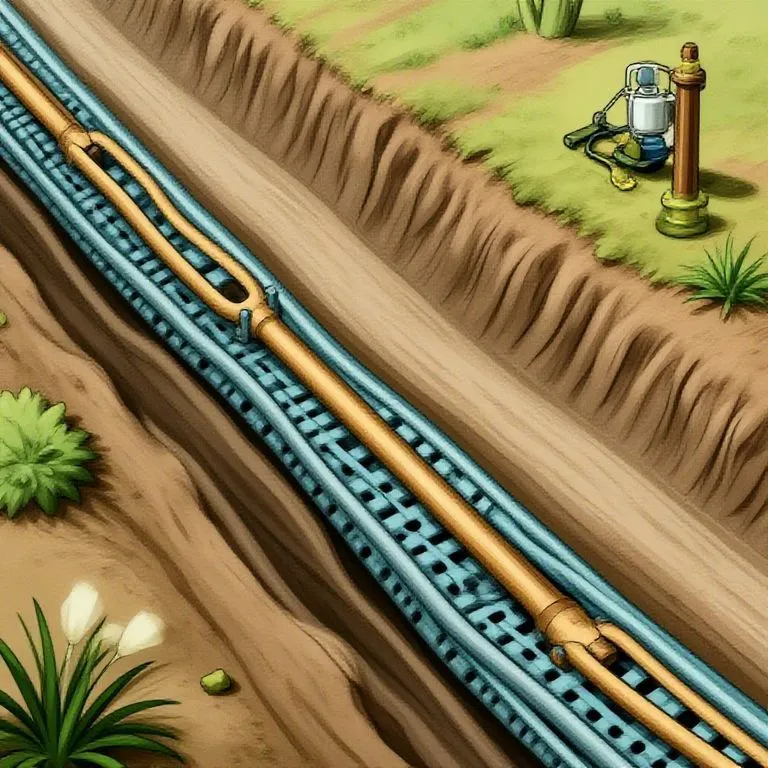
A system designed to remove excess water from the ground surface or from the soil root zone. It is essential for agriculture, construction stability, and sanitation.
Use / Function
- Sanitation: Removal of wastewater and sewage to prevent disease.
- Agriculture: Preventing soil waterlogging which can rot plant roots.
- Construction: Keeping foundations dry to prevent shifting and structural damage.
- Flood Control: Directing rainwater away from inhabited areas.
Operating principle
It relies primarily on gravity and slope. Water naturally flows from higher to lower elevations. Drainage systems provide a path of least resistance for water to flow away from the protected area, often utilizing a gradient (slope) to ensure continuous movement.
How to create it
- Surveying: Identify the low point where water collects and determine a discharge point (lower than the area to be drained).
- Trenching: Dig a trench with a consistent downward slope (at least 1%) towards the discharge point.
- Lining (Optional): Line the trench with stones or a porous material to prevent collapse.
- Filling (French Drain): Fill the trench with coarse gravel or stones to allow water to flow through the voids.
- Piping (Advanced): Lay perforated pipes (clay, bamboo) at the bottom of the trench before filling with gravel to increase capacity.
Materials needed
- Essential: Shovels, picks for digging.
- Fill Material: Gravel, loose stones, broken pottery.
- Conduits: Clay pipes, bamboo stems (nodes removed), or hollow logs.
- Tools: Level (water level or A-frame) to ensure proper slope.
Variants and improvements
- Open Ditches: Simple trenches used in agriculture; effective but take up space and can be dangerous.
- French Drains: Covered trenches filled with gravel; useful for foundations and residential areas.
- Roman Drainage: Complex systems using stone-lined channels and lead or ceramic pipes.
- Modern Storm Sewers: Large scale concrete networks.
Limits and risks
- Clogging: Silt and roots can block the drains over time. Maintenance is required.
- Erosion: High water velocity at the outlet can cause soil erosion.
- Backflow: If the discharge point floods, water can flow back into the drained area.
- Contamination: Drainage water can carry pollutants; care must be taken where it is discharged.