Generated with AI3 min read
Masonry
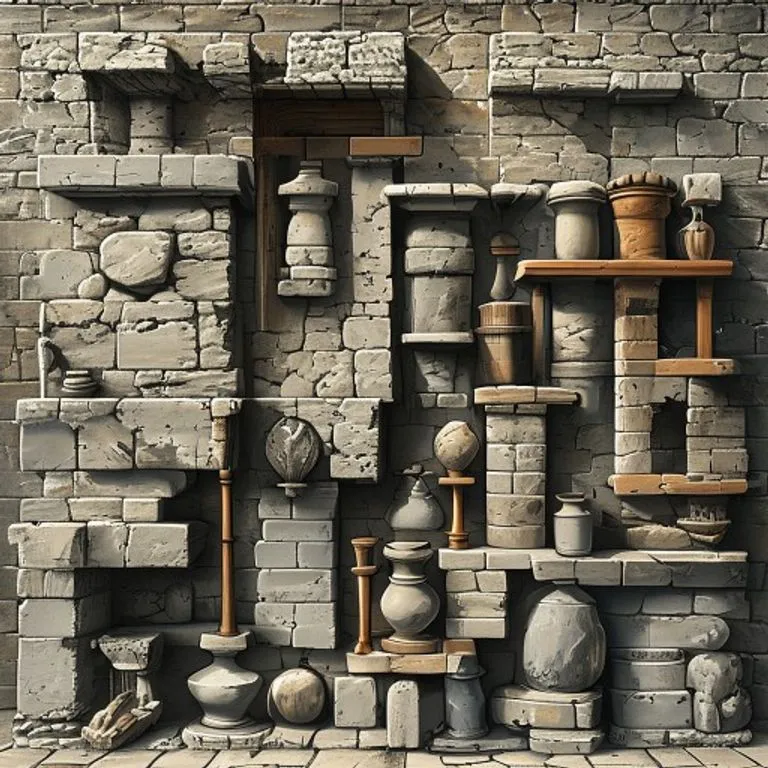
Brief description
Masonry is the building of structures from individual units, which are often laid in and bound together by Mortar. It is one of the most durable construction techniques in history.
Use / Function
- Structural Walls: Building load-bearing walls for houses, fortifications, and temples.
- Foundations: Creating stable bases for structures.
- Arches and Vaults: Spanning openings without wood or steel.
- Paving: Creating durable floors and roads.
- Scale: From small garden walls to massive cathedrals and dams.
Operating principle
Masonry relies on compression and gravity. The individual units (bricks or stones) are stacked so their weight holds them in place. The mortar acts as a glue to bond them, fill gaps, and distribute the load evenly, preventing stress concentrations that could crack the units. Staggering the vertical joints (bonding) ensures the wall acts as a single cohesive unit rather than separate columns.
How to create it
- Foundation: Ensure a stable, level base (footing) below the frost line.
- Mortar Mixing: Prepare a workable Mortar mix.
- First Course: Lay a bed of mortar and place the first row of units, ensuring they are perfectly level.
- Bonding: Start the second row with a half-unit so the vertical joints do not align with the ones below.
- Leveling: Constantly check vertical (plumb) and horizontal (level) alignment using a Level and Plumb Bob.
- Finishing: Strike the joints (smooth the mortar) before it hardens to improve water resistance.
Materials needed
- Essential Materials: Bricks, Stone, or Concrete blocks.
- Binder: Mortar (Lime, Cement, or Mud).
- Tools:
- Trowel: To handle and spread mortar.
- String Line: To keep rows straight.
- Hammer/Chisel: To cut bricks/stones.
- Level: To ensure stability.
Variants and improvements
- Dry Stone: Stacking stones without mortar (requires great skill).
- Adobe: Sun-dried mud bricks joined with mud mortar.
- Fired Brick: Standard modern masonry using kiln-fired bricks and cement mortar.
- Ashlar: Finely dressed (cut) stone masonry with very thin joints.
- Reinforced Masonry: Incorporating steel bars (rebar) into hollow blocks or cavities to add tensile strength.
- Cavity Walls: Two layers of masonry with a gap in between (often filled with Insulation like Mineral Wool or Polystyrene) to prevent moisture penetration and improve thermal retention.
Limits and risks
- Tensile Strength: Masonry is strong in compression but weak in tension. It cracks easily if the ground settles or during earthquakes unless reinforced.
- Moisture: Porous masonry can absorb water, leading to mold or freeze-thaw damage.
- Labor: It is slow and labor-intensive compared to wood framing or poured concrete.
- Weight: Masonry structures are very heavy and require strong foundations.
Related inventions
- Arch: A key masonry structure.
- Kiln: Needed to make bricks and lime.
- Level: Essential tool.
- Molding: Process to make bricks.
- Roofing: Often supported by masonry walls.