SyntheticGenerated with AI2 min read
Lime
CaO / Ca(OH)2
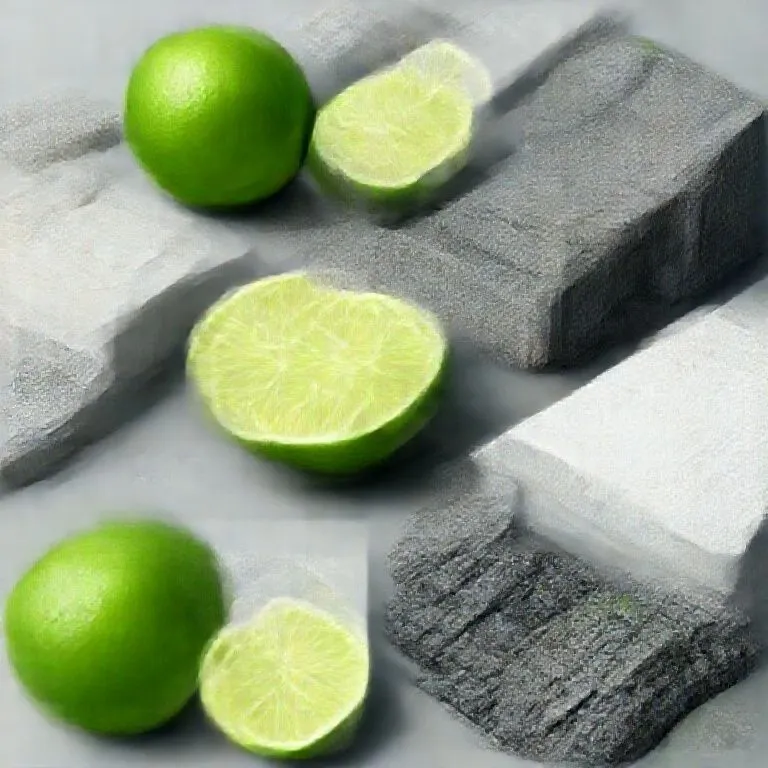
A versatile chemical derived from limestone. It exists as Quicklime (CaO) and Slaked Lime (Ca(OH)2).
Description of what it is like
- Quicklime: White, caustic lumps.
- Slaked Lime: White powder or putty.
Origin and where to find it
- Source: Limestone (Calcium Carbonate), chalk, or seashells.
- Process: Produced by heating limestone to high temperatures (~900°C).
Minimum processing required
- Quarrying: Extract limestone.
- Calcination: Burn in a kiln (Lime Kiln) to release CO2, creating Quicklime (CaO).
- Slaking: Add water to Quicklime to create Slaked Lime (Ca(OH)2). DANGER: This reaction releases intense heat.
Tools needed to work on it
- Kiln: To reach high temperatures.
- Protective Gear: To prevent burns.
- Containers: For slaking and storage.
Common forms of use
- Mortar/Plaster: Mixed with sand and water.
- Agriculture: To neutralize acidic soil.
- Tanning: To remove hair from hides.
- Whitewash: Cheap paint/sealant.
Possible substitutes
- Cement: Modern alternative.
- Clay: For simple mortar (adobe).
- Gypsum: For plaster.
Limitations and common failures
- Carbonation: Slaked lime hardens by absorbing CO2 from air (slow process).
- Water: Quicklime reacts violently with water; must be stored dry.
Risks and safety
- Burns: Quicklime can cause severe thermal and chemical burns.
- Blindness: Contact with eyes is extremely dangerous.
- Explosion: If water hits stored quicklime in a confined space.
Related materials
- Limestone: The raw material.
- Chalk: Softer form of limestone.
- Mortar: The product.
Related inventions
Properties
- Caustic
- White
- Binder
- Alkaline
Used for
- Mortar
- Concrete
- Agriculture
- Tanning
- Sanitation
Manufacturing / Process
Calcination of limestone.