SyntheticGenerated with AI3 min read
Cement Mortar
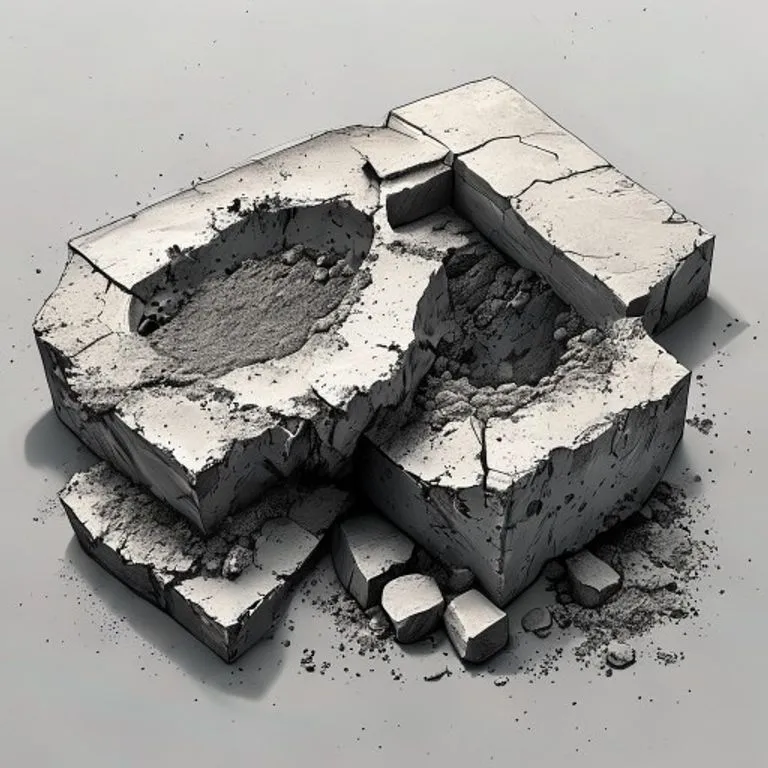
Cement mortar is a mixture of Cement, Sand, and Water. It is the standard bonding agent for modern masonry, providing high strength and water resistance. Unlike lime mortar, it sets quickly and becomes very hard and rigid.
Description of what it is like
It appears as a grey, sandy paste when fresh. It is heavier and less sticky than lime mortar. Once hardened, it becomes a rock-hard solid, grey in color, with a rough texture depending on the sand used. It is significantly harder than traditional lime mortars.
Origin and where to find it
It is a synthetic material created on-site or in a factory.
- Raw Materials:
Minimum processing required
- Selection: Choose clean sand (washed) and fresh cement (no lumps).
- Dry Mixing: Mix cement and sand thoroughly in a dry state to ensure even distribution. Common ratios are 1 part cement to 3-5 parts sand.
- Hydration: Add water gradually while mixing.
- Mixing: Work the mixture until it reaches a uniform, plastic consistency. It should hold its shape when formed into a ball but spread easily with a trowel.
Tools needed to work on it
- Shovel/Hoe: For mixing large batches.
- Wheelbarrow/Mixing Tub: Container for mixing.
- Trowel: For applying and shaping the mortar.
- Hawk: For holding a small amount of mortar while working.
- Gloves: Essential to prevent chemical burns.
Common forms of use
- Masonry Mortar: Used to bond Bricks, Concrete Blocks, and stones.
- Rendering/Plastering: Applied to walls to provide a weather-resistant finish.
- Screeding: Creating smooth, level floors.
- Grouting: Filling gaps between tiles or masonry units.
Possible substitutes
- Lime Mortar: More flexible and breathable, better for historic restoration and soft bricks.
- Mud Mortar: Clay and sand. Weaker, water-soluble, but easy to make.
- Gypsum Mortar: For dry, interior locations only.
Limitations and common failures
- Rigidity: It is very rigid and brittle. If the building moves (settles), the mortar will crack rather than flex.
- Incompatibility: It should not be used with soft, historic bricks or stone. The mortar is harder than the units, causing the bricks to crack under stress instead of the mortar joint.
- Shrinkage: Can shrink during curing, potentially causing separation cracks.
- Pot Life: Sets relatively quickly (1-2 hours), so it must be used soon after mixing.
Risks and safety
- Chemical Burns: Wet cement is highly alkaline (pH ~12-13) and can cause severe skin burns and eye damage. Always wear waterproof gloves and eye protection.
- Dermatitis: Prolonged contact can cause allergic reactions.
- Silica Dust: Mixing dry ingredients creates dust containing crystalline silica, which is harmful to lungs. Wear a mask.
Related inventions
- Masonry: The technique of building with units and mortar.
- Concrete Mixer: Machine used to mix large quantities.
Related materials
- Cement
- Sand
- Brick
- Concrete Block
- Mortar (General category)
Properties
- High compressive strength
- Water resistance
- Rapid setting
- Rigidity
- Durability
Used for
- Bonding fired bricks
- Bonding concrete blocks
- Exterior plastering (rendering)
- Flooring screeds
- Structural repairs
Manufacturing / Process
Mixing cement and sand in specific ratios (usually 1:3 to 1:5) with water until a plastic paste is formed.