SyntheticGenerated with AI3 min read
Polystyrene
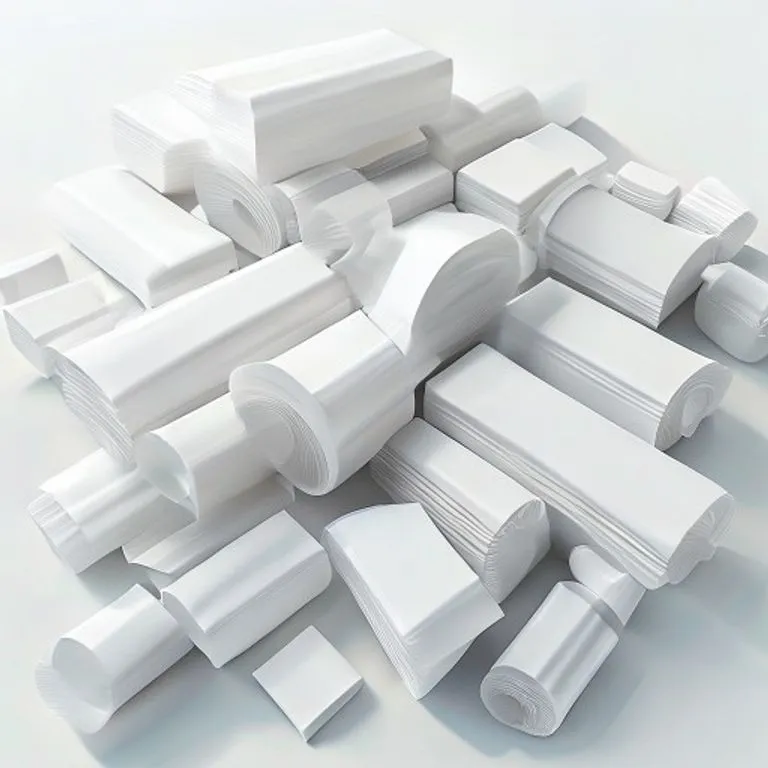
Polystyrene is a synthetic aromatic hydrocarbon polymer made from the monomer styrene. In construction, it is used in two main forms: Expanded Polystyrene (EPS) and Extruded Polystyrene (XPS). It is a white, rigid foam.
Description of what it is like
- EPS (White): Composed of small fused beads (like a coffee cup). It is slightly permeable to water vapor.
- XPS (Colored): Usually blue, pink, or green. It has a closed-cell structure, making it smoother, denser, and more water-resistant than EPS.
- Both are extremely light (95-98% air).
Origin and where to find it
- Synthetic: Product of the petrochemical industry.
- Raw Materials: Petroleum and natural gas.
Minimum processing required
- Polymerization: Styrene is polymerized into polystyrene beads.
- Expansion (EPS): Beads are heated with steam, causing them to expand significantly. They are then molded into blocks.
- Extrusion (XPS): Polystyrene crystals are melted with additives and a blowing agent, then extruded through a die into sheets.
Tools needed to work on it
- Hot Wire Cutter: The cleanest way to cut it without creating mess (dust/beads).
- Utility Knife/Saw: Can be used but creates static-charged crumbs that stick to everything.
- Adhesive: Must be solvent-free (water-based or specific foams) as solvents dissolve polystyrene.
Common forms of use
- External Wall Insulation (EWI): Boards are glued/pinned to the outside of Brick or Concrete walls, then rendered with Cement.
- Insulated Concrete Forms (ICF): Hollow blocks of polystyrene that are stacked and filled with Concrete.
- Underfloor Insulation: Placed under concrete slabs to prevent cold rising from the ground.
Possible substitutes
- Mineral Wool: Fireproof and breathable (better for timber), whereas polystyrene acts as a vapor barrier.
- Cork: Natural rigid board alternative.
- Polyurethane (PIR/PUR): Higher insulation value per inch, but more expensive.
Limitations and common failures
- Solvents: Dissolves instantly in contact with acetone, gasoline, or solvent-based glues.
- UV Light: Degrades and turns yellow/powdery if left exposed to sunlight for weeks. Must be covered.
- Flammability: It melts and burns, producing thick black smoke. Construction grades usually have fire retardants, but it is still combustible.
- Pests: Ants and mice love to tunnel through it (easy digging, warm).
Risks and safety
- Fire: Significant fire risk if not enclosed behind plasterboard or concrete.
- Toxicity: Burning releases toxic fumes (styrene gas, CO).
- Environment: Non-biodegradable and breaks into microplastics.
Related inventions
- Oil Refinery: Source of raw materials.
- Molding: Process used to shape EPS.
Related materials
- Thermal Insulation: General category.
- Concrete: Often poured into polystyrene forms (ICF).
- Cement Mortar: Used to bond and coat polystyrene boards.
- Brick: Substrate for polystyrene insulation.
Properties
- Thermal insulation
- Lightweight
- Moisture resistance
- Rigid
- Shock absorption
Used for
- External Wall Insulation (EWI)
- Floor insulation
- Packaging
- Concrete forms (ICF)
- Floatation devices
Manufacturing / Process
Polymerization of styrene monomer, then expanded (EPS) with steam or extruded (XPS).