SyntheticGenerated with AI3 min read
Cement
Complex (Ca-Si-Al-Fe oxides)
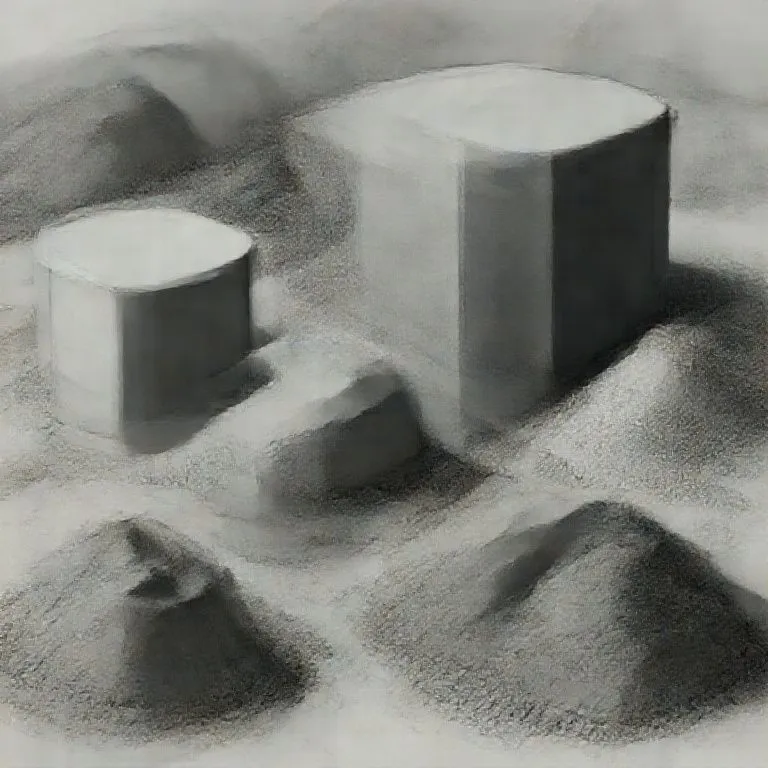
Cement is a binder, a substance used for construction that sets, hardens, and adheres to other materials to bind them together. The most common type is Portland cement, but historically, “Roman cement” was crucial.
Description of what it is like
- Powder: A fine, gray powder.
- Paste: When mixed with water, it forms a dark gray paste.
- Solid: Hardens into a stone-like material that is water-resistant.
Origin and where to find it
- Synthetic: Does not exist naturally in usable form; must be manufactured.
- Raw Materials: Limestone (Calcium) and Clay/Shale (Silica, Alumina, Iron).
Minimum processing required
- Mixing: Grind limestone and clay together in specific proportions (approx. 4:1).
- Burning: Heat the mixture in a kiln to ~1450°C (sintering). This forms nodular lumps called “clinker”.
- Grinding: Grind the clinker into a very fine powder.
- Additives: Usually mixed with a small amount of gypsum (to control setting time) during grinding.
Tools needed to work on it
- High-Temperature Kiln: Requires much higher heat than lime or gypsum.
- Ball Mill: To grind clinker into fine powder.
- Storage: Must be kept absolutely dry.
Common forms of use
- Concrete: Cement + Sand + Gravel + Water.
- Cement Mortar: Cement + Sand + Water.
- Grout: Cement + Water (for filling gaps).
Insulation Integration
Cement is an excellent conductor of heat (bad insulator), so it creates “thermal bridges” if used alone. However, it is essential for protecting insulation:
- Insulating Concrete: By replacing the heavy gravel with lightweight aggregates like Perlite, Vermiculite, or Polystyrene beads, cement can form a lightweight, insulating screed for roofs or floors.
- Renders for EWI: Cement-based renders (often reinforced with fiberglass mesh) provide the hard, weather-resistant outer shell for External Wall Insulation systems, protecting the soft insulation (Mineral Wool or Polyurethane) underneath.
- Insulated Concrete Forms (ICF): Liquid concrete is poured into hollow Polystyrene blocks that remain in place permanently as insulation.
Possible substitutes
- Hydraulic Lime: Limestone containing clay, burnt at lower temps. (The historical precursor).
- Pozzolanic Lime: Lime mixed with volcanic ash (pozzolana) or crushed brick. This makes lime hydraulic (able to set underwater).
Limitations and common failures
- Shelf Life: Absorbs moisture from air and becomes useless quickly (hard lumps).
- Shrinkage: Shrinks as it cures, causing cracks.
- Rigidity: Very rigid; can crack if the structure moves.
Risks and safety
- Chemical Burns: Wet cement is highly alkaline (pH ~13) and causes severe skin burns and eye damage.
- Silicosis: Inhalation of dust is hazardous.
- Heat of Hydration: Large pours generate significant heat.
Related inventions
- Kiln: Essential for production.
- Firing: The key chemical process.
- Masonry: Primary application field.
Related materials
- Concrete: The main product made with cement.
- Lime: The simpler, non-hydraulic ancestor.
- Clay: The other key ingredient.
- Polystyrene: Often bonded with cement in External Wall Insulation systems.
- Mineral Wool: Can be coated with cement render.
- Thermal Insulation: Cement can be mixed with lightweight aggregates (perlite) to form insulating concrete.
Properties
- Hydraulic (sets underwater)
- Hard
- Rigid
- High compressive strength
Used for
- Concrete
- Mortar
- Stucco
- Grout
Manufacturing / Process
Calcining limestone and clay at high temperatures (1450°C) and grinding the clinker.