SyntheticGenerated with AI3 min read
Mineral Wool
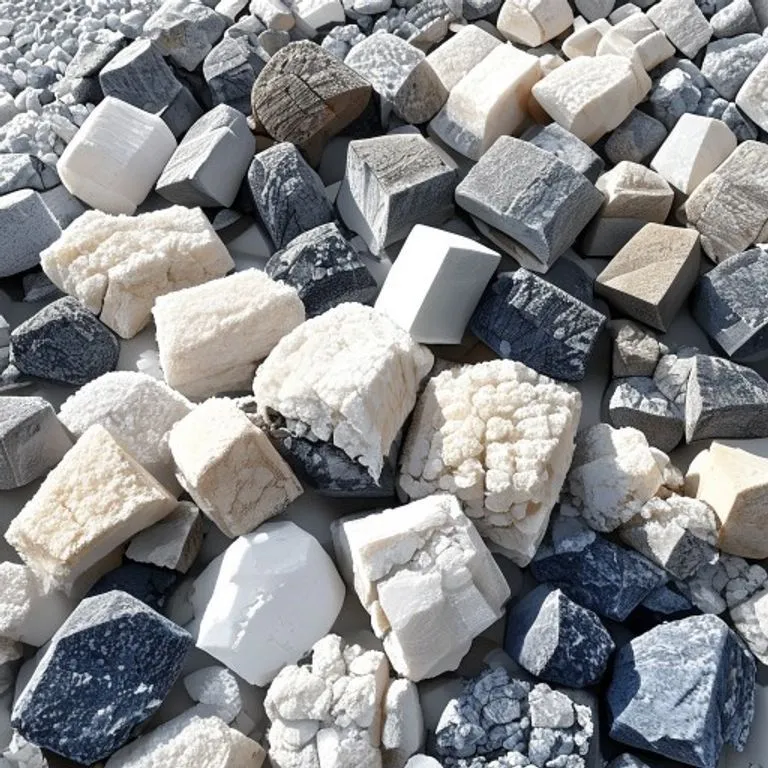
Mineral wool (also known as rock wool or stone wool) is a fibrous material formed by spinning or drawing molten mineral or rock materials. It is superior to fiberglass in fire resistance and density.
Description of what it is like
It appears as greenish-brown or gray dense mats of fibers. It is heavier and denser than fiberglass. It can be found in rolls (blankets), rigid slabs (batts), or loose-fill. It feels slightly prickly to the touch but less irritating than glass wool.
Origin and where to find it
- Synthetic: Produced in industrial furnaces.
- Raw Materials: Basalt (volcanic rock), diabase, or blast furnace slag (waste from steel production).
Minimum processing required
- Melting: Rock and coke are melted in a cupola furnace at approx 1500°C.
- Spinning: The molten lava is poured onto rapidly spinning wheels which fling droplets into fibers (like cotton candy).
- Binding: A binder and oil are added to hold fibers together and reduce dust.
- Curing: The mat is heated to cure the binder.
- Cutting: Sliced into batts or rolls.
Tools needed to work on it
- Serrated Knife: To cut the batts to size (it cuts like bread).
- Protective Gear: Gloves, long sleeves, and a mask/respirator are recommended to avoid skin irritation and inhaling dust.
- Tape Measure: To ensure tight fits between studs.
Common forms of use
- Cavity Wall Insulation: Slabs placed between the inner and outer Brick skins.
- External Wall Insulation: Rigid high-density slabs fixed to the outside of Masonry.
- Fire Protection: Used to wrap steel beams or fill voids to prevent fire spread (it is non-combustible).
- Sound Insulation: High density makes it excellent for blocking noise in partitions.
Possible substitutes
- Fiberglass: Cheaper, lighter, but less fire-resistant and poorer sound blocker.
- Polystyrene: Better moisture resistance for ground contact, but flammable.
- Straw: Natural alternative, requires thicker walls.
- Sheep’s Wool: Natural, breathable, but expensive.
Limitations and common failures
- Moisture: While treated to be water-repellent, if it gets saturated, it loses insulating value. It must be kept dry.
- Compression: Should not be compressed into a space too small, or it loses air pockets (though less prone to this than fiberglass).
- Weight: Heavier than other insulations, requires support.
Risks and safety
- Irritation: Can cause temporary skin itching and eye irritation.
- Dust: Inhalation of fibers should be avoided; wear a mask. unlike asbestos, the fibers are bio-soluble (lung clears them), but high exposure is still harmful.
Related inventions
- Furnace: Required for melting the rock.
- Masonry: Often used in conjunction with brick and block walls.
Related materials
- Thermal Insulation: General category.
- Fiberglass: The glass-based cousin.
- Brick: Commonly insulated with mineral wool.
- Cement: Used to render over mineral wool boards.
Properties
- Thermal insulation
- Acoustic insulation
- Fire resistance
- Water repellency
- Durability
Used for
- Cavity wall insulation
- Loft insulation
- Pipe insulation
- Soundproofing partitions
- Fire stopping
Manufacturing / Process
Melting rock (basalt) or slag at high temperatures (~1500°C) and spinning it into fibers.