NaturalGenerated with AI3 min read
Thermal Insulation
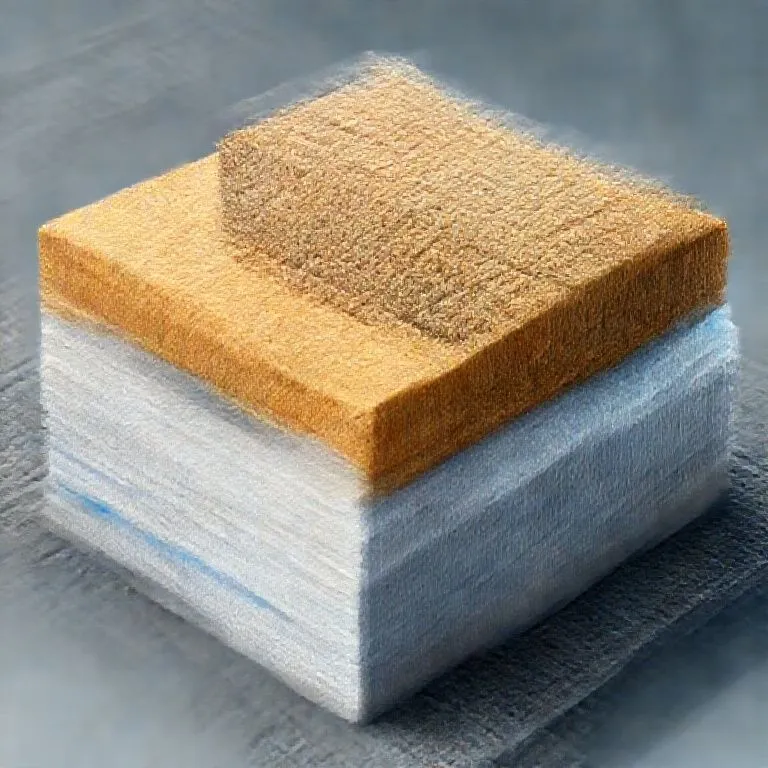
Thermal insulation refers to the set of materials and techniques used to reduce heat transfer between two spaces. Its main function is to keep heat in (in cold climates) or out (in hot climates), creating a barrier against thermal conduction, convection, and radiation.
Description of what it is like
Insulating materials are usually lightweight and porous. Their main characteristic is the ability to trap motionless air (or other gas) inside, as static air is a poor heat conductor. They can appear as:
- Loose fibers or batts: Like wool, fiberglass, or straw.
- Rigid boards: Like cork or plastic foams.
- Granular: Like Perlite or Vermiculite.
Origin and where to find it
- Natural:
- Synthetic: Fiberglass, Polystyrene, Polyurethane foams, Mineral Wool.
Minimum processing required
For natural insulators:
- Drying: Fundamental. Moisture conducts heat and ruins insulation. Materials like straw or moss must be completely dry.
- Cleaning: Removing dirt and parasites (especially in wool and feathers).
- Controlled compaction: Do not compress too much (removes trapped air) nor leave it too loose (allows air currents).
Tools needed to work on it
- Cutting: Sharp knives or shears for fibers and boards.
- Protection: Gloves and masks (essential for fiberglass and dusty materials).
- Containment: Fabrics or structures to keep bulk insulation in place (e.g., double walls).
Common forms of use
- Cavity filling: Straw or moss between two wooden or stone walls.
- Clothing layers: Using multiple layers of clothing (wool, furs) to trap body air.
- Coating: Wrapping pipes or containers (Pottery, thermos).
- Roofs: Thatching (straw roofs) which are excellent insulators and water repellents if done correctly.
Possible substitutes
- Static air: A sealed air chamber is a good insulator (double glazing).
- Vacuum: The absence of matter eliminates conduction and convection (high-tech thermos), but is difficult to maintain primitively.
- Snow: The igloo uses snow (which contains a lot of air) as an insulator.
- Earth: Thick adobe or earth walls (thermal mass) stabilize temperature, although they work differently from lightweight insulation.
Limitations and common failures
- Moisture: The number one enemy. Water conducts heat 25 times better than air. A wet insulator loses its effectiveness and can rot.
- Compression: Crushing a down jacket or a straw wall reduces its thickness and its ability to trap air.
- Thermal bridges: Leaving gaps or using metal nails that go through the entire insulation allows heat to “escape” through those points.
- Pests: Natural materials (straw, wool) can attract rodents and insects if not protected or treated.
Risks and safety
- Flammability: Many natural (straw, moss) and synthetic (foams) insulators are highly flammable. They must be kept away from chimneys or protected with fireproof barriers (mud, plaster).
- Respiratory health: Fibrous materials like fiberglass or asbestos release dangerous particles when inhaled. Use respiratory protection.
- Mold: If they get wet and are not ventilated, they can breed toxic mold.
Related materials
- Wool: The quintessential natural insulator for clothing.
- Cork: Waterproof and insulating, ideal for floors and stoppers.
- Straw: Economical and accessible for construction.
- Fiberglass: Modern standard, effective but irritating.
- Mineral Wool: Denser, fire-resistant fiber often used in Masonry.
- Polystyrene: Rigid foam used in EWI and foundations.
- Brick: Masonry that often requires additional insulation.
- Cement: Used to protect/render external insulation.
- Asbestos: Historical and effective, but carcinogenic (avoid).
- Air: The secret component of most insulators.
Properties
- Low thermal conductivity
- Porosity
- Lightweight
- Heat flow resistance
Used for
- Shelter construction
- Winter clothing
- Food preservation
- Furnaces and forges
- Energy efficiency
Manufacturing / Process
Ranges from direct use of dry natural materials to industrial foaming or fiber spinning processes.