Generated with AI3 min read
Roofing
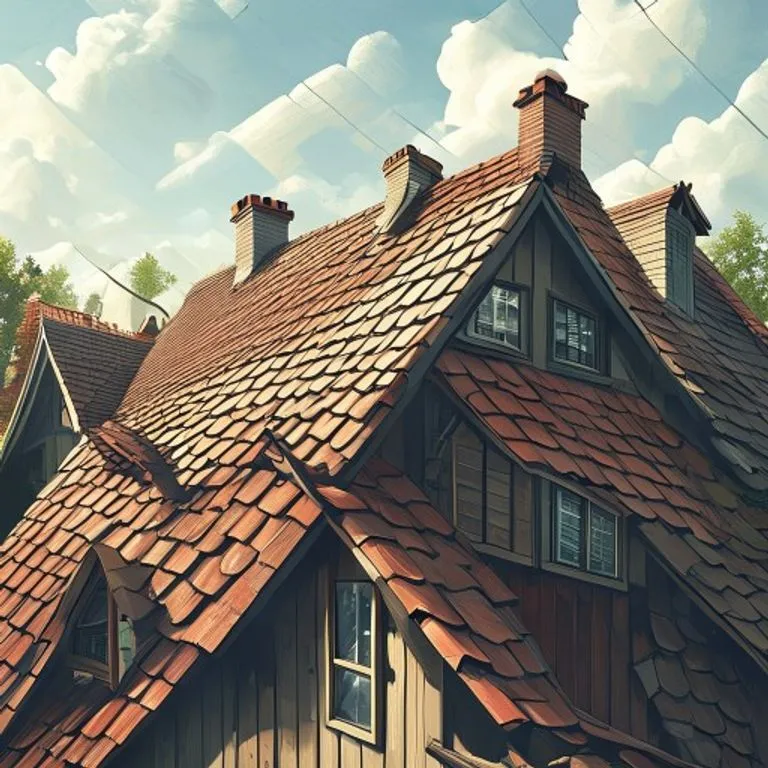
Brief description
Roofing is the top covering of a building, including all materials and constructions necessary to support it on the walls of the building or on uprights, providing protection against rain, snow, sunlight, extremes of temperature, and wind.
Use / Function
- Protection: Shield the interior from weather elements (rain, snow, wind, sun).
- Insulation: Keep the interior warm in winter and cool in summer.
- Drainage: Channel water away from the structure to prevent damage.
- Aesthetics: Define the visual character of the building.
Operating principle
Most roofing systems rely on gravity and overlapping layers to shed water. The roof is built at an angle (pitch) so that water runs off before it can penetrate the materials. The outer layer (tiles, shingles, thatch) overlaps in such a way that water flows from one unit to the next without finding a gap to enter. Flashing is used at joints and intersections to direct water over the surface rather than behind it.
How to create it
- Structure (Frame): Build a framework of rafters or Trusses (usually Wood) to support the roof load.
- Decking (Sheathing): (Optional) Lay a solid base of boards or plywood over the rafters.
- Underlayment: Apply a waterproof membrane (felt, tar paper) to protect against wind-driven rain.
- Battens/Lathing: (For tiles/slates) Fix horizontal strips of wood to the rafters to hook the tiles onto.
- Covering: Install the roof covering material (Tile, Slate, Thatching), starting from the bottom (eaves) and working up to the top (ridge).
- Flashing: Install metal strips around chimneys, vents, and valleys to seal joints.
- Ridge Cap: Seal the very top of the roof where the two sides meet.
Materials needed
- Structural: Wood beams, bamboo, or steel.
- Covering:
- Fasteners: Nails, pegs, or wire.
- Waterproofing: Bitumen, tar, or plant resins.
Variants and improvements
- Thatching: One of the oldest forms, using dry vegetation. Good insulation but high fire risk.
- Wood Shingles: Split logs. Beautiful but requires maintenance and fire treatment.
- Ceramic Tiles: Durable, fire-resistant, and heavy. Common in warm climates.
- Slate: Natural stone, extremely durable (100+ years) but very heavy and expensive.
- Metal Roofing: Lightweight, durable, and fire-resistant. Can be noisy during rain.
- Green Roof: Covered with vegetation. Excellent insulation and manages stormwater, but requires strong structure and waterproofing.
Limits and risks
- Leaks: The most common failure. Even small leaks can cause rot and structural damage over time.
- Wind Damage: Strong winds can lift tiles or shingles if not properly fastened.
- Fire: Thatch and wood roofs are highly flammable. Sparks from a Chimney can ignite them.
- Weight: Heavy materials like Tile and Slate require a very strong supporting structure.
- Condensation: Warm moist air from inside can condense on the cold underside of the roof, causing rot. Ventilation is essential.
Related inventions
- Thatching
- Frame
- Truss
- Basic Shelter: Primitive roofing.
- Chimney: Penetrates the roof, requiring flashing.
- Gutter: Collects water from the roof.
- Insulation: Often installed under the roof.
- Masonry: Often supports the roof.