NaturalGenerated with AI2 min read
Perlite
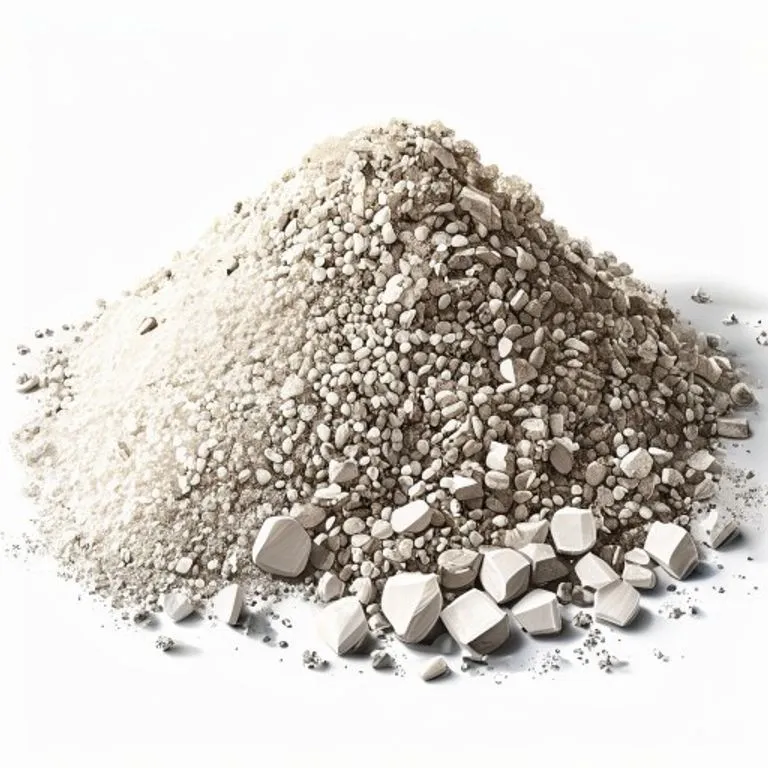
Perlite is an amorphous volcanic glass that has a relatively high water content. It is a naturally occurring mineral that exists as a type of obsidian. When heated, it expands greatly.
Description of what it is like
- Raw: Black or gray dense glass (obsidian-like).
- Expanded: White, ultra-lightweight granules that look like styrofoam beads but are made of stone. They crumble into powder if crushed hard.
Origin and where to find it
- Natural: Volcanic regions.
- Mining: Extracted from open-pit mines.
Minimum processing required
- Mining: Extraction of the ore.
- Crushing/Grading: Breaking down to consistent size.
- Expansion: Heating rapidly to 850-900°C. The water trapped in the structure vaporizes and expands the rock (like popcorn).
Tools needed to work on it
- Kiln/Furnace: For expansion.
- Mixer: For combining with cement or soil.
- Mask: Dust mask is essential as the fine powder is irritating.
Common forms of use
- Insulating Concrete: Mixed with Cement (instead of sand/gravel) to create lightweight, insulating concrete for roof decks or chimney linings.
- Horticulture: Mixed with soil to improve aeration and drainage (the white specks in potting soil).
- Loose-fill: Poured into hollow block cores for insulation.
Possible substitutes
- Vermiculite: Similar expanded mineral (mica-based), holds more water.
- Polystyrene beads: For lightweight concrete (but flammable).
- Pumice: Natural expanded volcanic rock (heavier than perlite).
Limitations and common failures
- Crushing: Granules break down easily under heavy weight; not for structural load-bearing concrete.
- Water Absorption: Can hold water, which is good for plants but bad for insulation if it freezes.
Risks and safety
- Dust: Nuisance dust. While not carcinogenic like asbestos, inhaling any mineral dust is bad for lungs.
- Silica: Contains some crystalline silica.
Related materials
- Thermal Insulation: Major use category.
- Concrete: Often mixed into it.
- Cement: Binder for perlite.
- Glass: Perlite is a form of natural glass.
Properties
- Lightweight
- Thermal insulation
- Fireproof
- High water retention (horticulture)
Used for
- Lightweight concrete
- Horticultural soil amendment
- Loose-fill insulation
- Plaster aggregate
Manufacturing / Process
Heating volcanic glass to 870°C, causing it to pop like popcorn (expanding 4-20 times).