NaturalGenerated with AI2 min read
Cork
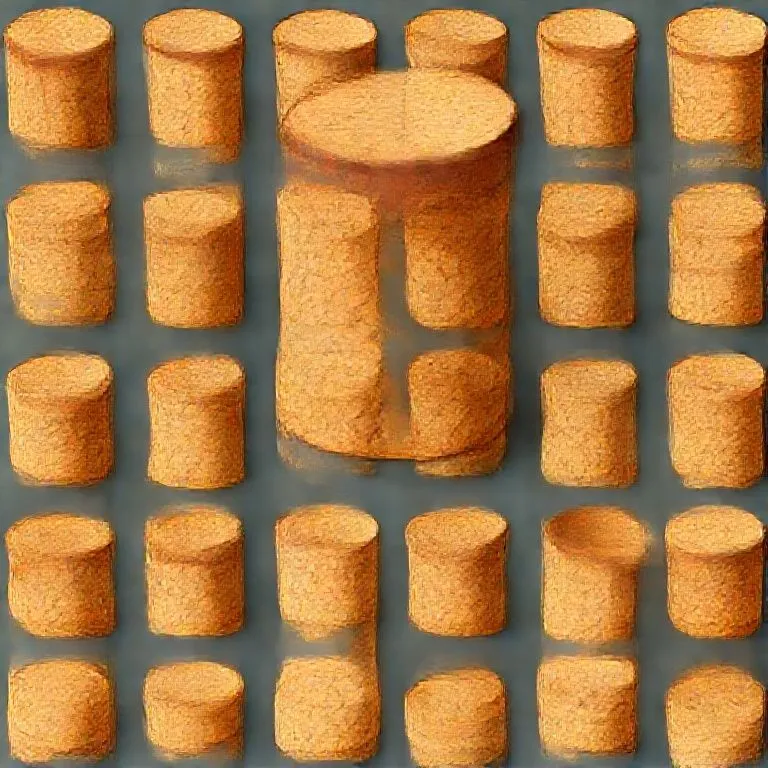
Cork is a natural material obtained from the bark of the cork oak (Quercus suber). It consists of suberin, a hydrophobic substance, and is composed of millions of microscopic air-filled cells, making it lightweight and compressible.
Description of what it is like
It is a spongy, light, and elastic material with a woody texture but soft to the touch. It floats in water and does not absorb moisture easily.
Origin and where to find it
- Environments: Mediterranean forests (Portugal, Spain, North Africa).
- Signs: Trees with thick, rugged, spongy bark.
- Harvest: The bark is stripped from the living tree without harming it.
Minimum processing required
- Harvesting: Carefully stripping the bark in summer.
- Boiling: To clean it, remove insects, and increase flexibility and volume.
- Drying: To stabilize moisture content.
- Cutting: Into desired shapes (stoppers, boards).
Tools needed to work on it
- Axe/Hatchet: Specialized axes for stripping bark without damaging the cambium.
- Knife: For shaping stoppers or floats.
- Boiling vat: For processing raw bark.
Common forms of use
- Stoppers: Sealing wine or oil bottles due to elasticity and impermeability.
- Boards: Compressed granules for wall or floor insulation.
- Floats: For fishing nets or life preservers.
Possible substitutes
- Rubber/Silicone: For stoppers and gaskets (modern).
- Polystyrene: For insulation and buoyancy (modern).
- Corn cobs: Primitive stoppers (less effective).
Limitations and common failures
- Brittleness: Can crumble if very old or dry.
- Taint: “Cork taint” (TCA) can spoil wine if the cork is infected with fungus.
- Scarcity: Trees take decades to mature and years between harvests.
Risks and safety
- Fire: Although fire-resistant compared to wood, it will eventually burn.
- Dust: Cork dust can be flammable or irritating.
Related materials
- Wood: From the same tree, but different properties.
- Natural Rubber: Another elastic natural material.
Properties
- Impermeable
- Elastic
- Thermal insulator
- Buoyant
- Fire retardant
Used for
- Bottle stoppers
- Thermal insulation
- Flooring
- Fishing floats
- Gaskets
Manufacturing / Process
Harvested from the bark of the cork oak tree every 9-12 years, boiled, and cut.