NaturalGenerated with AI2 min read
Cotton
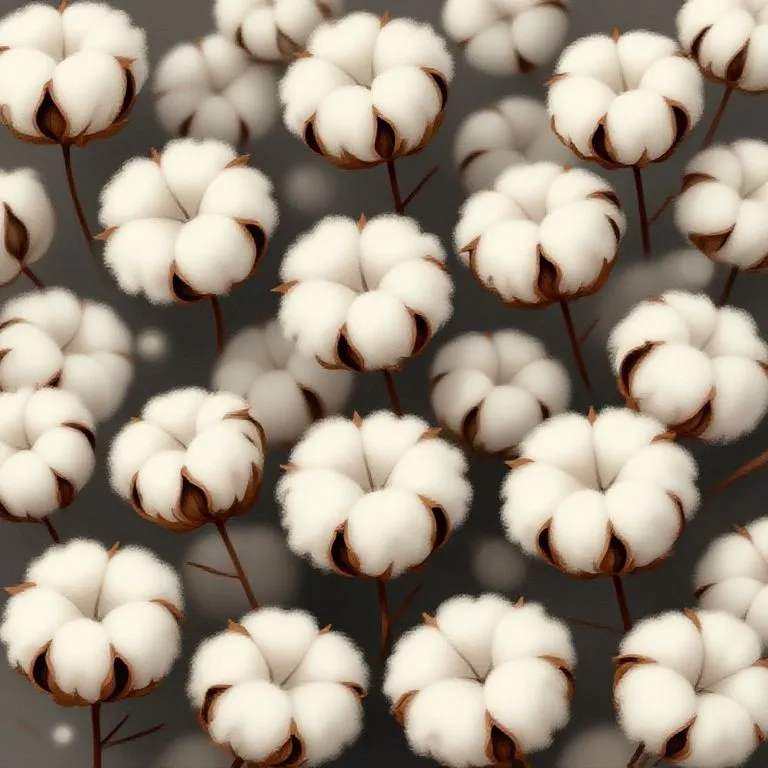
Cotton is a soft, fluffy staple fiber that grows in a boll, or protective case, around the seeds of the cotton plants of the genus Gossypium in the mallow family Malvaceae.
Description of what it is like
The fiber is almost pure cellulose. Under natural conditions, the cotton bolls will increase the dispersal of the seeds. It is white or slightly yellowish, soft to the touch, and consists of many fine fibers packed together.
Origin and where to find it
- Environments: Tropical and subtropical regions around the world (Americas, Africa, Egypt, India).
- Signs: Small shrubs with lobed leaves and white or yellow flowers that turn into round bolls bursting with white fluff.
- Natural: It is a natural agricultural product.
Minimum processing required
- Harvesting: Picking the cotton bolls from the plant.
- Ginning: Separating the fibers from the seeds (can be done by hand or with a machine).
- Carding/Combing: Disentangling and cleaning the fibers to align them.
- Spinning: Twisting the fibers together to form yarn or thread.
Tools needed to work on it
- Hands: For harvesting and simple seed removal.
- Cotton Gin: A mechanical device to speed up seed separation.
- Carding Brushes: To align fibers.
- Spindle or Spinning Wheel: To make thread.
- Loom: To weave fabric.
Common forms of use
- Yarn: Spun cotton used for sewing or weaving.
- Fabric: Woven cotton (denim, muslin, calico).
- Raw: Used as padding or stuffing (batting).
- Medical: Absorbent cotton for cleaning wounds.
Possible substitutes
- Plant Fibers: Linen (flax), hemp (rougher).
- Wool: Warmer, from animals.
- Synthetic Fibers: Polyester, Rayon.
Limitations and common failures
- Moisture: Absorbs water readily and dries slowly; loses insulation value when wet.
- Rot/Mildew: Prone to biological attack if kept damp.
- Flammability: Burns rapidly if not treated.
Risks and safety
- Fire: Cotton dust and fibers are highly flammable.
- Health: Inhaling cotton dust over long periods can cause byssinosis (brown lung disease).
Related materials
- Plant Fibers: General category.
- Linen: Plant fiber with a crisper, cooler hand.
- Yarn: Spun cotton becomes yarn for textiles.
- Cotton & Yarn: The fiber-to-yarn material chain.
- Wool: Animal fiber often blended or substituted for cotton.
- Fabric: The end product.
- Paper: High quality paper often contains cotton.
Properties
- Soft
- Absorbent
- Breathable
- Flammable
Used for
- Clothing
- Textiles
- Medical supplies
- Paper
Manufacturing / Process
Harvested from the boll of the cotton plant, ginned to remove seeds, and spun into thread.