NaturalGenerated with AI3 min read
Vermiculite
(Mg,Fe2+,Fe3+)3[(Al,Si)4O10](OH)2·4H2O
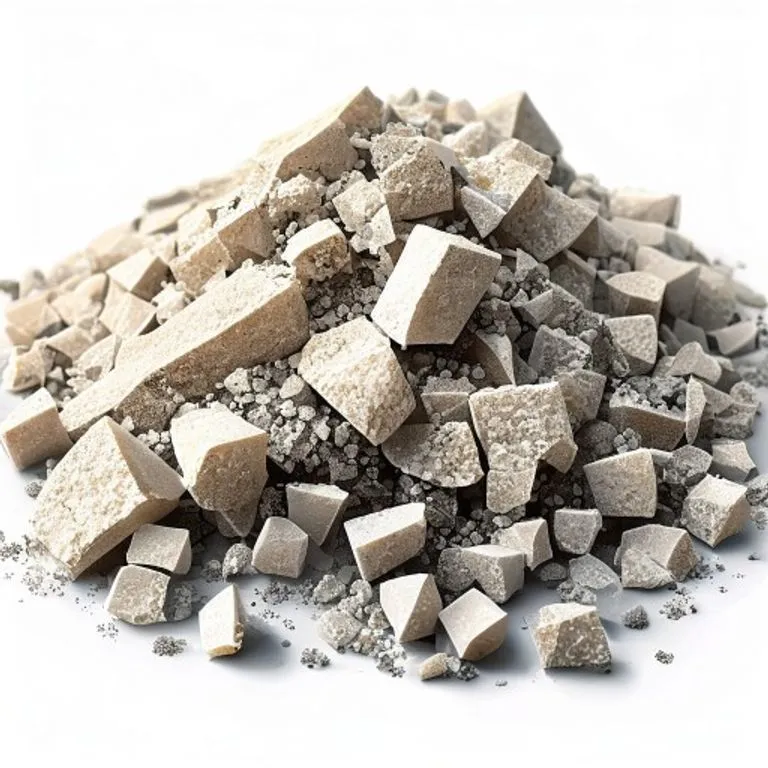
Vermiculite is a hydrous phyllosilicate mineral that undergoes significant expansion when heated. It is very similar to Perlite but holds more water and is chemically distinct.
Description of what it is like
- Raw: Looks like shiny, dark flakes of mica.
- Exfoliated (Expanded): Worm-like, accordion-shaped granules that are golden-brown or bronze in color.
- Texture: Soft, spongy, and very light.
- Odorless and chemically inert.
Origin and where to find it
- Natural: Mined from open-pit mines. Major deposits exist in South Africa, China, and the USA.
- Appearance: Often found alongside other minerals like mica and quartz.
Minimum processing required
- Mining: Extraction of the ore.
- Concentration: Separating vermiculite from other rocks.
- Exfoliation: Rapid heating in a furnace to ~900°C. The water trapped between the layers turns to steam, forcing the layers apart (exfoliation).
Tools needed to work on it
- Furnace: Essential for expansion.
- Mixer: For combining with cement or soil.
- Bags: For storage (it blows away easily).
Common forms of use
- Loose-fill Insulation: Poured into attics or hollow concrete blocks.
- Insulating Concrete: Mixed with Cement to create lightweight roof decks or floor screeds.
- Horticulture: Mixed with soil to retain moisture and nutrients (holds much more water than perlite).
- Fireproofing: Mixed with gypsum or cement and sprayed onto steel structures.
Possible substitutes
- Perlite: Better for insulation where moisture is a concern (holds less water).
- Polystyrene beads: Lighter but flammable.
- Sawdust: For lightweight concrete (but rots).
Limitations and common failures
- Water Retention: Absorbs a lot of water. If used as insulation in damp areas, it loses its insulating value and can cause rot in adjacent wood.
- Compression: The granules are soft and can be crushed easily.
- Settling: Loose-fill vermiculite can settle over time, leaving uninsulated gaps.
Risks and safety
- Asbestos Contamination: Historically (especially from the Libby, Montana mine), some vermiculite was contaminated with tremolite asbestos. Modern sources are tested and safe, but old insulation should be treated with caution.
- Dust: Inhalation of mineral dust is always a respiratory hazard.
Related inventions
- Furnace: Required for exfoliation.
- Concrete Mixer: Used to make insulating concrete.
Related materials
- Perlite: The closest alternative.
- Cement: Binder for vermiculite concrete.
- Thermal Insulation: Primary function.
- Asbestos: Historical contaminant.
- Mica: The mineral family it belongs to.
Properties
- Thermal insulation
- Fire resistance
- High water absorption
- Lightweight
- Sound absorption
Used for
- Loose-fill insulation
- Lightweight concrete
- Fireproofing
- Horticulture
- Packaging
Manufacturing / Process
Heating raw vermiculite ore to ~900°C causes it to exfoliate (expand) up to 30 times its original volume.