SyntheticGenerated with AI3 min read
Caramelized Cheese
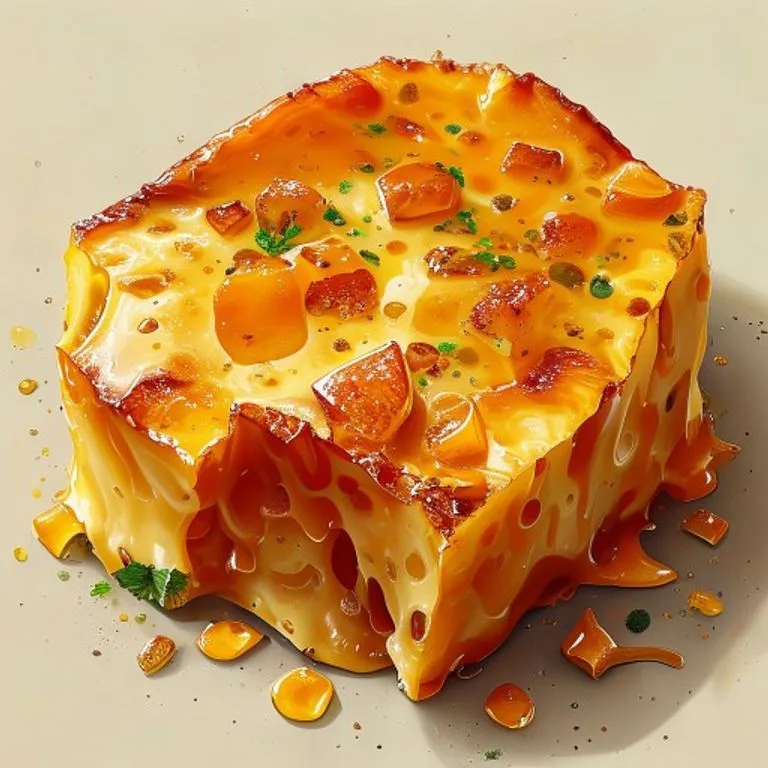
Caramelized cheese is cheese or pressed curd cooked on a dry hot surface until the surface browns and turns nutty. It is a quick way to turn fresh curd into a crisp, aromatic food that keeps its shape.
Description of what it is like
The surface is browned and lightly crisp while the interior stays chewy and dense. Flavor shifts toward roasted, savory notes with a hint of sweetness from caramelized milk sugars.
Origin and where to find it
- Environments: Made wherever Livestock provide milk and a hot stone or pan is available.
- Signs: Thin browned slices or flat rounds with a toasted aroma near a hearth.
- It is a processed material.
Minimum processing required
- Curd formation: Start with fresh curd using acid or Enzymes.
- Draining and pressing: Remove whey with Fabric and press into a firm slab.
- Surface drying: Let the surface dry so it browns instead of melting.
- Browning: Cook on a dry hot surface over Fire until caramelized.
- If skipped: Without drying and browning it behaves like soft fresh cheese.
Tools needed to work on it
- Vessels: Clean Containers or Clay pots.
- Heat: Even heat from Fire, stone, or metal surface.
- Cloth: Fabric for draining and pressing.
- Pressing surface: Boards of Wood or a clean stone.
Common forms of use
- Thin slices browned as a crisp snack.
- Broken pieces as a topping for soups or stews.
- Warm rounds served with Bread or grains.
Possible substitutes
- Bread Cheese for a softer browned crust.
- Unripened Cheese when browning is not possible.
- Processed Cheese for short-term melting uses.
Limitations and common failures
- Sticking: Wet surfaces glue to the pan or stone.
- Burning: Excess heat blackens the surface before browning.
- Over-softening: Too much moisture causes melting instead of crisping.
Risks and safety
- Foodborne illness: Raw milk or poor sanitation can carry pathogens.
- Burns: Hot oil-free surfaces can splatter and scorch skin.
- Salt load: Heavy salting may be unsuitable for some diets.
Related materials
- Curd & Cheese: Base curd process and early stages.
- Bread Cheese: Fresh curd cooked to a toasted crust.
- Cheese: Aged dairy category for longer storage.
- Unripened Cheese: Fresh curd without aging.
- Enzymes: Catalysts used for milk coagulation.
- Salt: Flavor and preservation.
- Water: Cleaning and light brines.
- Fabric: Draining and pressing.
- Wood: Pressing boards and serving surfaces. *** End Patch}ದjson to=functions.apply_patch ,一本道 code block to=functions.apply_patch 经彩票assistant to=functions.apply_patch via commentary 万亚json to=functions.apply_patch code block 】!【 code block to=functions.apply_patch code 天天中奖彩票assistant to=functions.apply_patch via commentary _人人碰JSON to=functions.apply_patch code block 彩票天天 code block to=functions.apply_patch code 天天彩 code block to=functions.apply_patch code 亿贝 code block to=functions.apply_patch code 北京赛车前 code block to=functions.apply_patch code ્યjson to=functions.apply_patch code block _俺去也 code block to=functions.apply_patch code ҙә<toolcall_status>done</toolcall_status>
Properties
- Crisp-edged
- Nutty
- Savory
- Browned
- Protein-rich
Used for
- Food
- Cooking ingredient
- Topping
- Snack
Manufacturing / Process
Browning pressed curd or cheese slices over dry heat until the surface caramelizes and sets.