Generated with AI3 min read
Livestock
Related Materials
Brief description
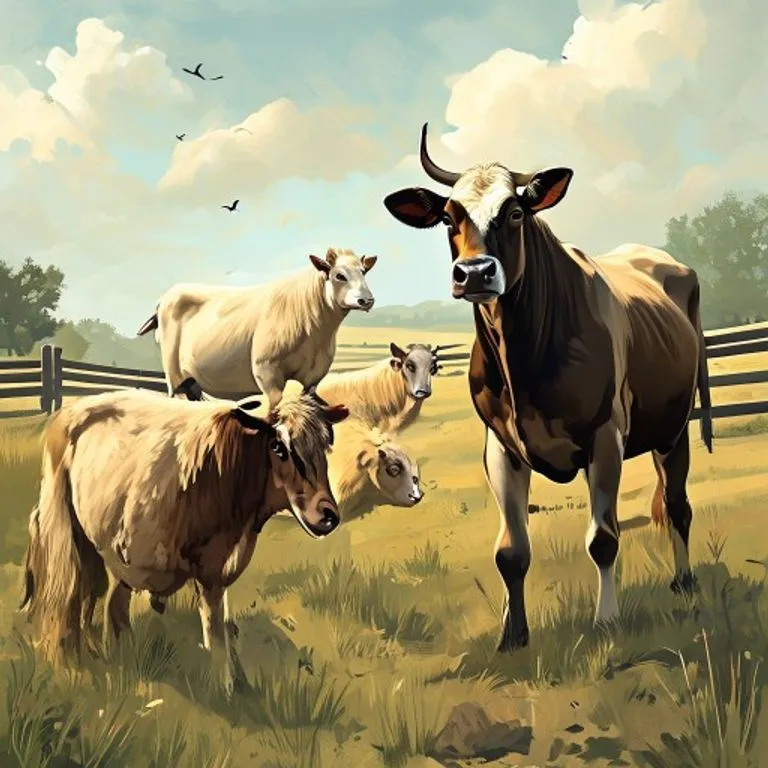
Livestock is the managed raising of domesticated animals for food, materials, labor, and trade. It combines controlled grazing, shelter, and breeding to keep herds productive and resilient.
Use / Function
- Food supply: Meat, milk, and eggs when available.
- Materials: Leather, Wool, Bone, and Animal Fat.
- Labor: Draft power for transport and field work.
- Fertility: Manure for soil enrichment and composting.
- Storage: Animals are living food reserves for lean seasons.
Operating principle
- Forage conversion: Animals turn grasses and crop residues into protein and fats.
- Water and shelter: Regular access to water and protection from weather prevent loss.
- Controlled breeding: Selecting healthy animals improves yield and temperament.
- Health management: Clean bedding, rotation, and observation reduce disease.
How to create it
- Choose species: Match animals to climate, terrain, and local forage.
- Secure water and feed: Reliable water, grazing areas, and stored fodder.
- Build containment: Fences, pens, or corrals using Wood and Rope.
- Set routines: Rotate grazing, clean bedding, and provide shade.
- Manage breeding: Track seasons, isolate aggressive or sick animals.
- Process outputs: Milking, shearing, and butchering with clean tools and Containers for storage.
- Handle manure: Collect and compost to avoid contamination.
Materials needed
- Essential: Water, forage grasses, Straw for bedding, Salt for mineral licks.
- Tools: Rope for tethering, Shovel for cleaning, Containers for milk or feed.
- Substitutes: Living hedges, stone walls, or woven hurdles for enclosure.
Variants and improvements
- Pastoralism: Mobile herds that follow seasonal forage.
- Mixed crop-livestock: Animals feed on residues and fertilize fields.
- Rotational grazing: Rested pastures recover and reduce parasites.
- Dairy focus: Select for milk yield and gentler temperament.
- Fiber focus: Breeds optimized for fleece quality.
Limits and risks
- Disease: Zoonoses and parasites spread quickly in dense herds.
- Overgrazing: Soil compaction and erosion reduce long-term yield.
- Predators and theft: Require strong containment and vigilance.
- Feed gaps: Drought or winter can cause rapid losses without stored fodder.
- Waste hazards: Manure can pollute water if unmanaged.
Related materials
- Water: Essential for drinking and cleaning.
- Straw: Bedding and insulation.
- Wool: Fiber output from sheep or goats.
- Leather: Processed hides for tools and clothing.
- Animal Fat: Energy and preservation.
- Bone: Tools and fertilizer.
- Plant fibers: Cordage and woven hurdles.
- Salt: Mineral supplementation and preservation.
- Curd & Cheese: Concentrated dairy food from milk.
Related inventions
- Rope: Tethering and leading animals.
- Containers: Milk, feed, and storage.
- Cart: Transport of feed, tools, and goods.
- Shovel: Cleaning stalls and handling manure.