SyntheticGenerated with AI3 min read
Bread Cheese
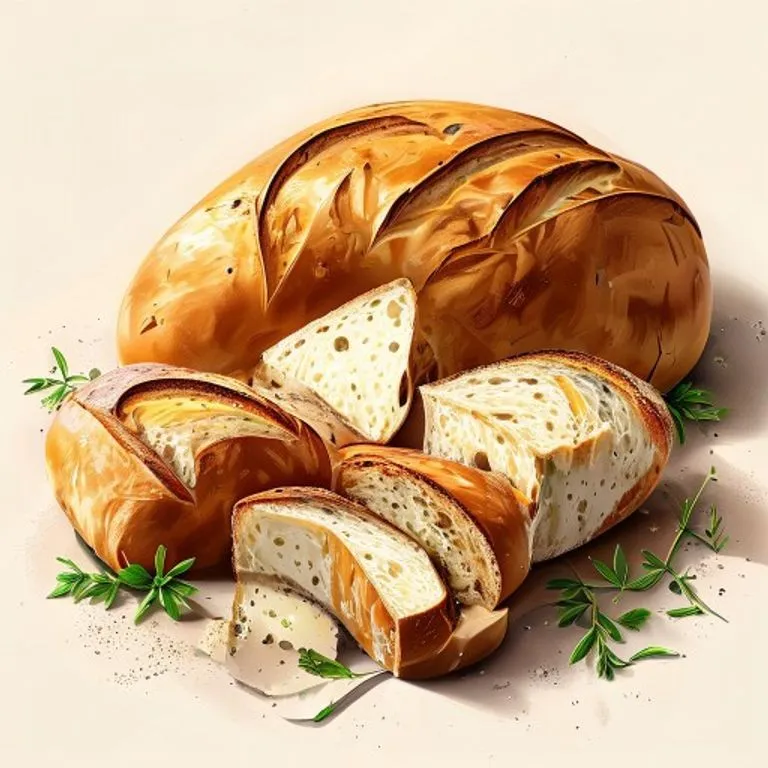
Bread cheese is a firm, fresh cheese cooked until the surface browns and the interior stays springy. It is often eaten warm, retaining a squeaky bite and a toasted aroma.
Description of what it is like
It has a browned, dry crust and a dense, moist interior that resists melting. The texture is springy and squeaks against the teeth, with a mild, milky flavor and roasted notes from the heat.
Origin and where to find it
- Environments: Made wherever Livestock provide milk and there is a hot surface for baking or pan-roasting.
- Signs: Flat cheese rounds, browned surfaces, and the smell of warm dairy near a hearth.
- It is a processed material.
Minimum processing required
- Curd formation: Start with fresh curd using acid or Enzymes.
- Draining and pressing: Remove whey with Fabric and press into a firm wheel.
- Salting: Salt the surface or use a light brine with Salt.
- Browning: Bake or pan-roast over Fire to form a toasted crust.
- If skipped: Without browning it behaves like a soft fresh cheese and spoils faster.
Tools needed to work on it
- Vessels: Clean Containers or Clay pots.
- Heat: Even heat from Fire, stone, or metal surface.
- Cloth: Fabric for draining and pressing.
- Pressing surface: Boards of Wood or a clean stone.
Common forms of use
- Sliced and warmed as a hearty snack.
- Pan-roasted pieces served with Bread or grains.
- Cubed into soups or stews where it keeps its shape.
Possible substitutes
- Unripened Cheese when browning is not possible.
- Cheese for longer storage but different melt behavior.
- Tofu for a non-dairy, heat-stable alternative.
Limitations and common failures
- Scorching: High heat burns the surface before the interior warms.
- Drying: Overbaking makes it tough and crumbly.
- Cracking: Insufficient pressing causes splits during heating.
Risks and safety
- Foodborne illness: Raw milk or poor sanitation can carry pathogens.
- Allergies: Dairy proteins can trigger reactions.
- Salt load: Heavy salting may be unsuitable for some diets.
Related materials
- Curd & Cheese: Base curd process and early stages.
- Caramelized Cheese: Browning-focused variant with deeper toasted flavor.
- Cheese: Aged dairy category for longer storage.
- Unripened Cheese: Fresh curd without aging.
- Salt: Flavor and preservation.
- Water: Cleaning and light brines.
- Fabric: Draining and pressing.
- Wood: Pressing boards and serving surfaces.
- Animal Fat: Related dairy fat source.
Properties
- Dense
- Mild
- Squeaky
- Toasted crust
- Protein-rich
Used for
- Food
- Cooking ingredient
- Travel ration
- Trade good
Manufacturing / Process
Pressing fresh curd into a flat wheel, salting, then baking or pan-roasting until a browned crust forms.