Generated with AI2 min read
Bread
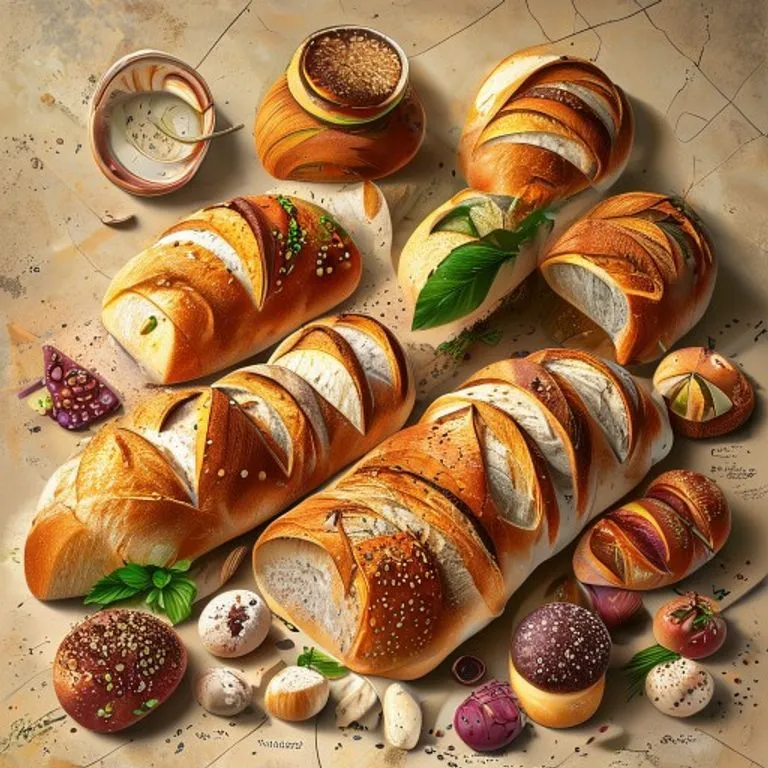
Brief description
Bread is a baked food made from cereal dough, providing durable and portable calories. It can be flat or leavened and adapts to many grains and environments.
Use / Function
- Staple food: Dense energy for daily meals.
- Portability: Easy to transport and portion.
- Preservation: Baking stabilizes dough and slows spoilage.
- Scale: Household to community ovens.
Operating principle
- Water hydrates flour to form a workable dough.
- Kneading aligns gluten to trap gas.
- Fermentation produces CO2 that expands the dough.
- Heat sets the structure as starch gelatinizes and proteins coagulate, forming crust and crumb.
How to create it
- Minimum functional version (flatbread):
- Minimum functional version (leavened):
- Add Yeast or a sourdough starter.
- Let the dough rise, then shape and bake.
- Technical level: Basic for flatbreads, intermediate for leavened breads with controlled fermentation.
Materials needed
- Essential materials: Grain flour, Water, Salt, Yeast or starter.
- Tools: Hand Mill or Mortar, Containers, Fire, Kiln / Oven.
- Possible substitutes: Maize, Rice, or Cassava for flatbreads when wheat is unavailable.
Variants and improvements
- Flatbread: Fast, no fermentation.
- Sourdough: Wild starter for flavor and shelf life.
- Steamed bread: Uses steam instead of dry baking.
- Enriched bread: Added fats or sugars for softness.
- Hardtack: Low moisture for long storage.
Limits and risks
- Staling: Bread dries and hardens without sealed storage.
- Spoilage: Underbaked loaves can mold quickly.
- Gluten sensitivity: Wheat bread is unsuitable for some diets.
- Smoke and ash: Open-fire baking can contaminate flavor and surface.