Generated with AI2 min read
Valve
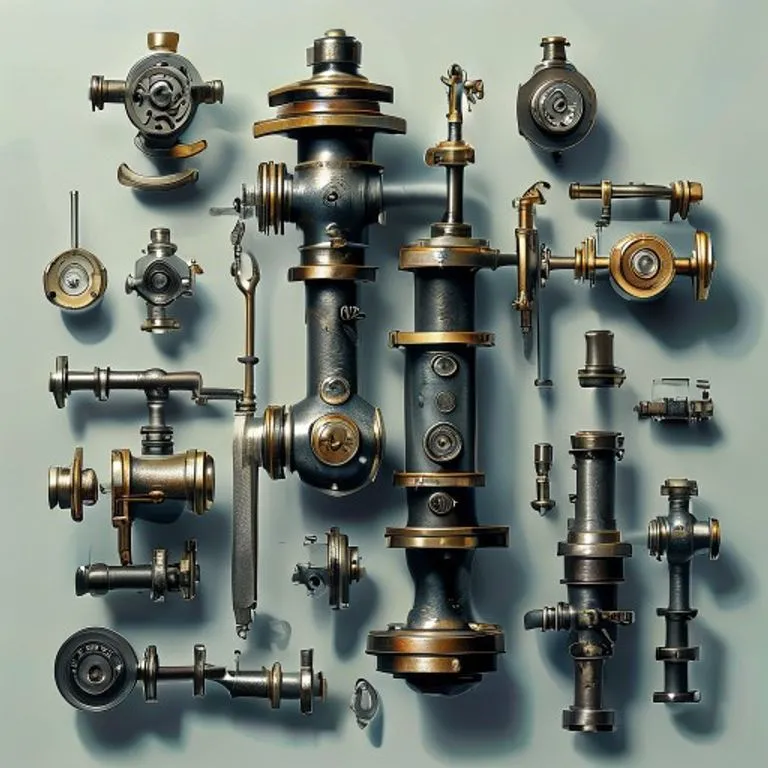
Brief description
A mechanical device that controls the flow of a fluid (liquid, gas, or slurry) by opening, closing, or partially obstructing various passageways.
Use / Function
- Primary use: Stopping and starting water flow in Pipes.
- Secondary uses: Regulating pressure, preventing backflow (check valves), safety release (relief valves).
- Scale: Tiny (bicycle tire) to massive (dam sluice gates).
Operating principle
- Obstruction: A movable element (gate, ball, disc, plug) is moved into or out of the stream.
- Actuation: A handle, wheel, or lever applies force to move the element against the fluid pressure.
- Sealing: Soft materials (Rubber, leather) or precise metal-to-metal contact prevent leaks when closed.
How to create it
- Body: Cast a metal or plastic housing with an inlet and outlet.
- Bonnet/Cap: The cover that allows access to internal parts.
- Trim: The moving parts (stem, seat, disc).
- Assembly: Fit the disc to the stem, insert into the body, and ensure the seat is smooth.
- Packing: Wrap the stem with greased rope or rubber to prevent leaks around the handle.
Materials needed
- Body: Brass (corrosion resistant), Iron (strong), Plastic.
- Seals: Natural Rubber, Leather washers.
- Lubricant: Grease or animal fat.
Variants and improvements
- Gate Valve: A wedge moves up/down. Good for on/off, bad for throttling.
- Ball Valve: A sphere with a hole rotates 90 degrees. Fast and reliable.
- Check Valve: Allows flow in only one direction (automatic). Essential for pumps.
- Butterfly Valve: A disc rotates on a shaft. Compact for large pipes.
Limits and risks
- Water Hammer: Closing a valve too fast stops water instantly, creating a shockwave that can burst pipes.
- Leaking: Seats wear out over time.
- Corrosion: Stuck valves are common in old systems.
- Pressure: Must be rated for the system’s pressure or it will burst.
Related inventions
- Pipes: The network valves control.
- Pump: Requires check valves. See also Gear Pump (requires relief valve).
- Steam Engine: Relies entirely on valves.
- Water Supply: Control points.
- Hand Washing Basin: Common application (faucet).
- Toilet: Fill and flush control.