Generated with AI3 min read
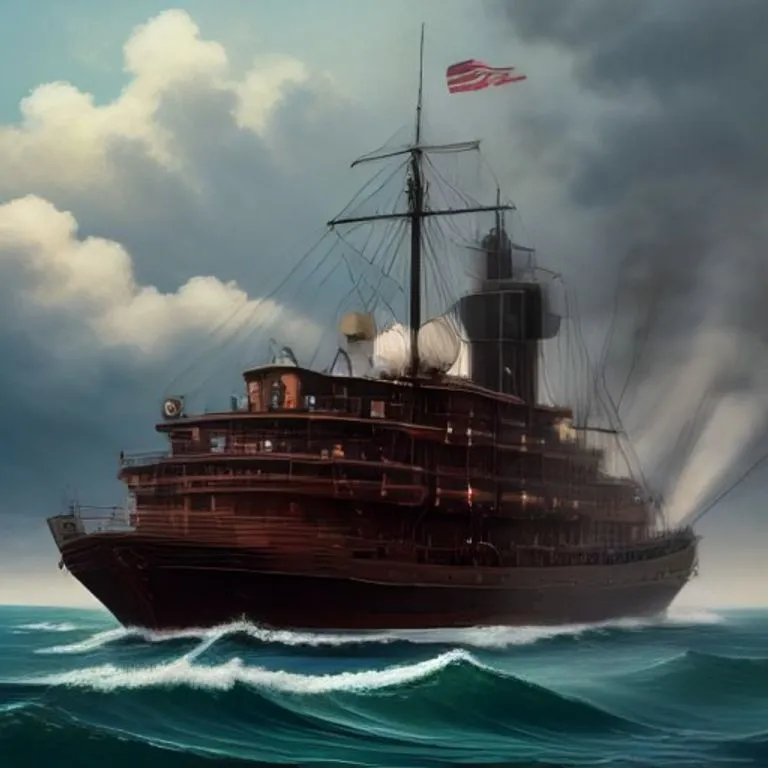
Steamboat
Brief description
A steamboat is a water vessel driven by steam power, typically utilizing a steam engine to turn paddle wheels or a propeller to navigate inland waterways and oceans independently of wind conditions.
Use / Function
- Inland & Coastal Transportation: Enables reliable two-way river navigation against strong currents, opening river basins for trade and transport.
- Transoceanic Shipping: Provides scheduled passenger, mail, and cargo transport across oceans without relying on seasonal trade winds.
- Heavy Towing: Used as tugboats to maneuver large unpowered barges or sailing ships in narrow harbors and canals.
Operating principle
- Steam Generation: Firewood or charcoal is burned in a high-pressure boiler to heat water and create expanding steam.
- Mechanical Work: High-pressure steam drives pistons inside a double-acting steam engine, producing reciprocating linear motion.
- Rotational Conversion: A connecting rod and crankshaft convert reciprocating motion into rotational mechanical power.
- Propulsion: The rotating shaft drives side paddle wheels, a stern paddle wheel, or a submerged screw propeller, pushing water backward to propel the vessel forward.
How to create it
- Hull Construction: Build a watertight wooden or iron hull optimized for shallow draft on rivers or deep displacement for sea navigation.
- Boiler Installation: Mount a heavy, reinforced iron steam boiler securely over a firebox lined with heat-resistant materials.
- Steam Engine Integration: Install a double-acting steam engine and connect the steam supply pipes with pressure safety valves and control throttles.
- Drive Shaft & Propulsion: Connect the engine crankshaft to side/stern paddle wheel axles or a propeller shaft protruding through a watertight stern stuffing box.
- Rudder & Controls: Fit a stern rudder controlled by a helm/steering wheel on an elevated pilot house for clear navigation visibility.
Materials needed
- Hull Structure: Wood (oak or pine timber) or Iron / Steel plates.
- Engine & Boiler: Cast Iron, Iron, and Steel.
- Fuel Source: Charcoal or firewood.
- Bearings & Valves: Brass or Bronze.
Variants and improvements
- Paddle Wheelers: Side-wheelers offer high maneuverability in calm waters; stern-wheelers excel in shallow, obstacle-strewn rivers.
- Screw Propeller Steamboats: Submerged propellers provide far greater efficiency, durability in rough seas, and protection against naval gunfire.
- Compound Steam Engine: Reuses exhaust steam in secondary low-pressure cylinders to drastically improve fuel efficiency on long voyages.
Limits and risks
- Boiler Explosions: Faulty pressure valves or low water levels can cause catastrophic boiler ruptures and fires.
- Fuel Consumption: Requires massive quantities of fuel, requiring frequent coaling stations along long trade routes.
- Navigational Hazards: Shallow river steamboats are vulnerable to snags, submerged logs, and sandbars.