Generated with AI3 min read
Boiler
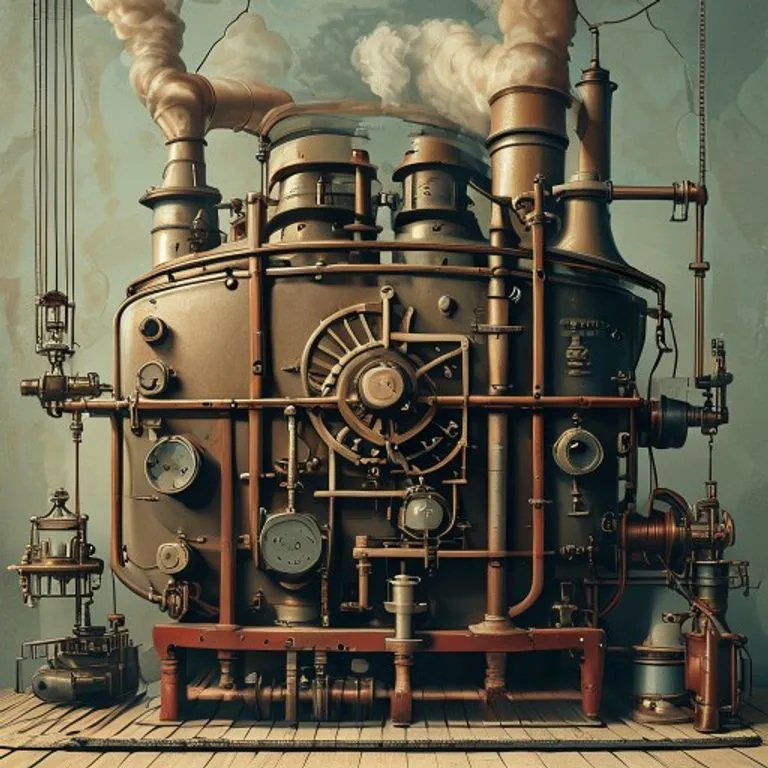
Brief description
A closed vessel in which fluid (generally water) is heated. The fluid does not necessarily boil. The heated or vaporized fluid exits the boiler for use in various processes or heating applications, including water heating, central heating, boiler-based power generation, cooking, and sanitation.
Use / Function
- Primary Use: To produce steam for steam engines, turbines, or heating systems.
- Secondary Uses: Sterilization, cooking, distillation.
- Scale: From small kettles to massive power plant boilers.
Operating principle
Heat energy from the combustion of fuel is transferred to water.
- Combustion: Fuel is burned in a firebox or furnace.
- Heat Transfer: The hot gases pass over surfaces (tubes or plates) that are in contact with the water.
- Pressure: As water turns to steam, it expands. Since the vessel is closed, pressure builds up.
How to create it
Simple Fire-Tube Boiler
- Shell: A large cylinder made of riveted or welded Steel or Iron plates.
- Firebox: A chamber where the fuel is burned.
- Tubes: Metal pipes running through the water-filled shell. Hot smoke from the firebox travels through these tubes to the chimney, heating the water surrounding them.
- Chimney: Creates a draft to pull air through the fire.
- Safety Valve: A CRITICAL component. A weighted valve that opens if pressure gets too high, preventing explosion.
- Water Level Gauge: To see how much water is inside. If it gets too low, the metal overheats and fails.
Materials needed
- Shell/Tubes: Steel, Iron, or Copper (good heat transfer but weaker).
- Insulation: Asbestos (historical, dangerous) or Mineral Wool / Lagging to keep heat in.
- Fuel: Coal, Wood, Oil.
Variants and improvements
- Pot Boiler: Simple pot with a lid (like a pressure cooker). Low pressure only.
- Fire-Tube: Hot gases inside tubes, water outside (steam locomotives).
- Water-Tube: Water inside tubes, hot gases outside. Can handle much higher pressures and is safer (less water to flash into steam if a tube bursts).
Limits and risks
- Explosion: If the pressure exceeds the vessel’s strength, it explodes with devastating force.
- Scale: Minerals in water deposit on tubes (limescale), reducing heat transfer and causing overheating.
- Corrosion: Rust eats away the metal.
Related Inventions
- Steam Engine
- Valve (Safety Valve)
- Pump (Feed Pump)
- Furnace