Generated with AI2 min read
Crankshaft
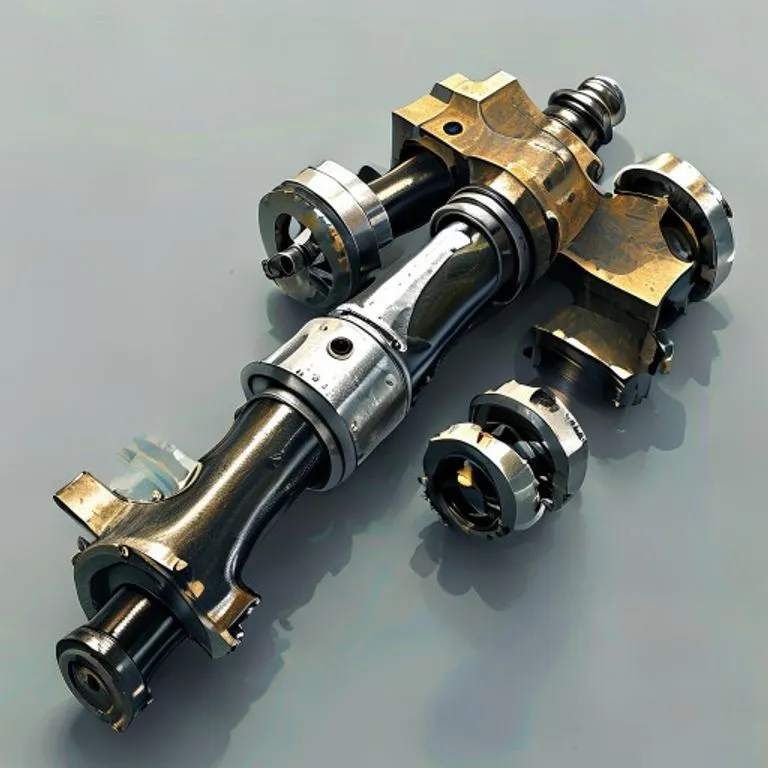
Brief description
A mechanical part able to convert between reciprocating motion and rotational motion. It is a central component in many engines and machines.
Use / Function
- Primary use: Converting linear motion of pistons into rotational motion for wheels or pulleys.
- Secondary uses: Driving pumps, sawmills, and traditional flour mills.
- Scale: Industrial/Mechanical.
Operating principle
The crankshaft consists of a series of “cranks” or “throws” that are offset from the main axis of rotation.
- Reciprocating Input: A connecting rod attached to a piston pushes on a crank pin.
- Torque Generation: Because the pin is offset from the center, the force creates a turning moment (torque).
- Rotational Output: The entire shaft rotates, providing power to other components.
How to create it
- Level: Advanced.
- Manufacturing: In simple forms, it can be forged from a single piece of iron. In industrial settings, it is precisely machined from high-strength steel.
- Balance: Must be carefully balanced with counterweights to prevent vibration at high speeds.
Materials needed
- Essential materials: Steel or Iron (must be strong enough to withstand bending and twisting forces).
- Tools: Forge, Lathe, Milling machine.
Variants and improvements
- Single-throw Crank: Used in simple machines like a foot-powered lathe.
- Multi-throw Crank: Used in multi-cylinder engines for smoother power delivery.
Limits and risks
- Fatigue: Constant stress can lead to cracks and eventual failure.
- Lubrication: Critical to prevent wear on the main bearings and crank pins.
- Complexity: Precision machining is required for reliable operation in high-speed applications.