SyntheticGenerated with AI2 min read
Cast Iron
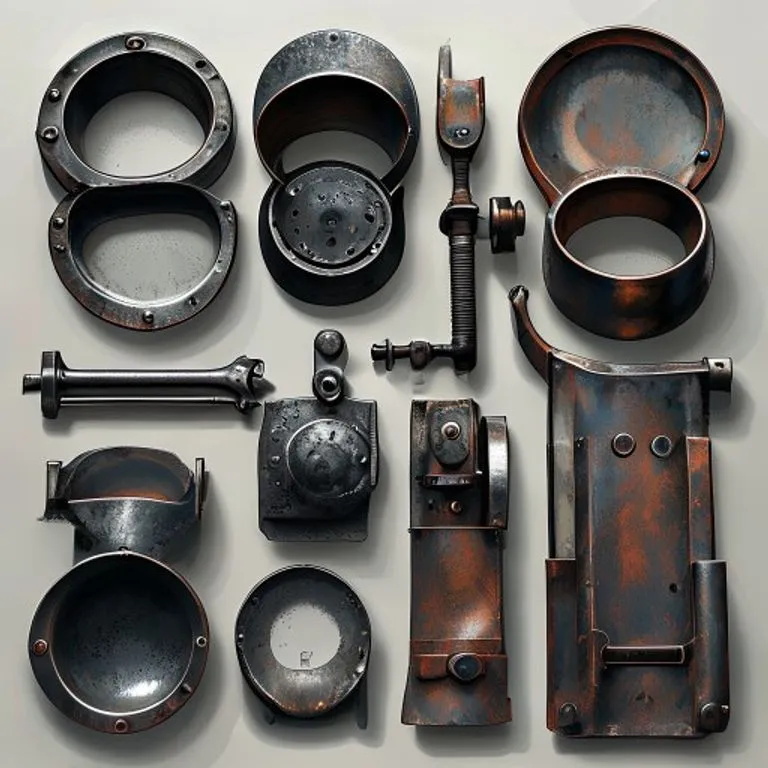
Brief description
Cast iron is a group of iron-carbon alloys with a carbon content greater than 2%. It is known for its relatively low melting point, good fluidity, castability, excellent machinability, resistance to deformation and wear.
Description of what it is like
It is a hard, grey metal (unless white cast iron). It has a crystalline fracture. It is very heavy and rigid but brittle—it will crack or shatter if struck hard, rather than bending like steel or wrought iron.
Origin and where to find it
- Man-made: It is produced in a Blast Furnace or cupola furnace.
- Source: Pig iron (crude iron from the blast furnace) is remelted, often with scrap iron and steel, and cast into molds.
Minimum processing required
- Melting: Heating pig iron, scrap, and limestone to liquid state.
- Casting: Pouring the molten metal into sand molds or metal dies.
- Cooling: allowing it to solidify.
- Cleaning: Removing the sand and gates/risers (fettling).
Tools needed to work on it
- Furnace: To melt the iron.
- Molds: Usually made of sand mixed with clay (Green Sand).
- Files/Grinders: To smooth the rough casting.
- Machine Tools: Lathes and mills to machine precise surfaces (it machines very well, producing short chips).
Common forms of use
- Grey Cast Iron: Most common. Good damping (absorbs vibration) and machinability. Used for machine bases and engine blocks.
- White Cast Iron: Very hard and wear-resistant but brittle. Used for crushing equipment.
- Ductile Iron (Nodular): Magnesium is added to make it less brittle and more flexible (like steel). Pipes, automotive parts.
Possible substitutes
- Steel: Stronger and tougher, but harder to cast complex shapes and dampens vibration less.
- Wrought Iron: Tougher but softer and cannot be cast (must be forged).
- Concrete: For heavy machine bases (polymer concrete).
Limitations and common failures
- Brittleness: The biggest weakness. Do not use for parts subject to high tensile stress or shock loading (unless ductile iron).
- Cracking: uneven cooling can cause internal stresses and cracks.
- Rust: Corrodes easily if not protected (painted or oiled).
Risks and safety
- Molten Metal: Casting involves extreme heat (1200°C+). Splash burns are fatal.
- Heavy: Castings are very dense and heavy.
Related materials
Properties
- Hard
- Brittle
- High compressive strength
- Excellent damping
- Castable
Used for
- Engine blocks
- Cookware
- Pipes
- Machine frames
- Flywheels
Manufacturing / Process
Iron alloy with >2% carbon, melted and poured into molds.