Generated with AI3 min read
Slide Bearings
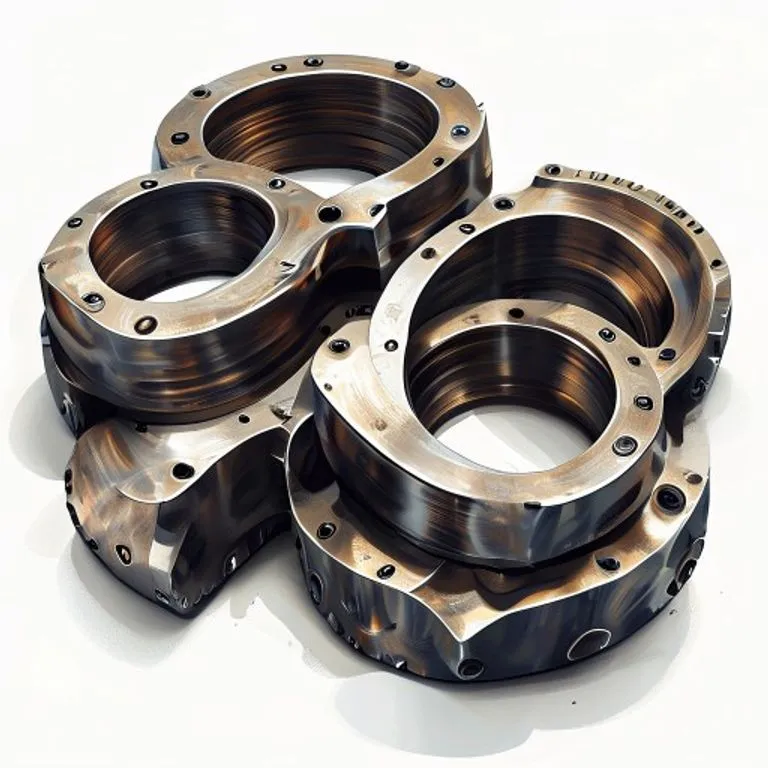
Brief description
A slide bearing (or plain bearing) is the simplest type of bearing, comprising just a bearing surface and no rolling elements. Therefore, the journal (the part of the shaft in contact with the bearing) slides over the bearing surface.
Use / Function
- Primary Use: To support a rotating shaft and reduce friction between moving parts.
- Secondary Uses: Linear motion guides (like on a lathe bed).
- Scale: Used in everything from small clocks to massive steam engines and ship propeller shafts.
Operating principle
The bearing supports the load while allowing the shaft to rotate. The key is to separate the metal surfaces with a film of lubricant (oil, grease, or even water/air).
- Hydrodynamic Lubrication: As the shaft spins, it drags a wedge of oil under itself, lifting it off the bearing surface. This “fluid film” prevents metal-to-metal contact and wear.
How to create it
Basic Bronze Bushing
- Housing: A hole in a rigid support (like a cast iron pillow block) to hold the bearing.
- Bushing (Liner): A sleeve made of a material softer than the shaft, such as Bronze, Brass, or Babbitt metal (a soft alloy of tin, antimony, and copper).
- If the bearing seizes, the cheap bushing is sacrificed to save the expensive shaft.
- Grooves: Cut small channels (oil grooves) into the inner surface of the bushing to distribute the lubricant.
- Lubrication: A hole or cup (oil cup/grease fitting) to feed Oil or Grease into the bearing.
Lignum Vitae Bearing (for water)
- Material: Use Lignum Vitae (an extremely dense, oily wood) or similar hard woods.
- Application: Excellent for underwater applications (like water wheels or ship propeller shafts) because the wood’s natural oils and the water itself act as lubricants.
Materials needed
- Bushing: Bronze, Brass, Babbitt metal, Lignum Vitae, or even oil-soaked Leather (for light loads).
- Shaft: Hardened Steel or Iron.
- Housing: Cast Iron or Wood.
- Lubricant: Animal Fat, Vegetable Oil, Mineral Oil.
Variants and improvements
- Bushing: A simple one-piece sleeve.
- Split Bearing: The housing and bearing are split into two halves (top and bottom), allowing for installation around a shaft without removing the ends, and for adjustment as the bearing wears (by removing shims).
- Self-Aligning: The bearing can tilt slightly to accommodate shaft misalignment.
- Porous Bronze (Oilite): Sintered bronze impregnated with oil; self-lubricating for light loads.
Limits and risks
- Friction: Higher starting friction than ball bearings (stiction).
- Lubrication: Critical. If the oil film fails, rapid wear and heat generation (seizure) occur.
- Speed: High speeds generate significant heat; requires pressure lubrication and cooling.