Generated with AI3 min read
Ball and Roller Bearing
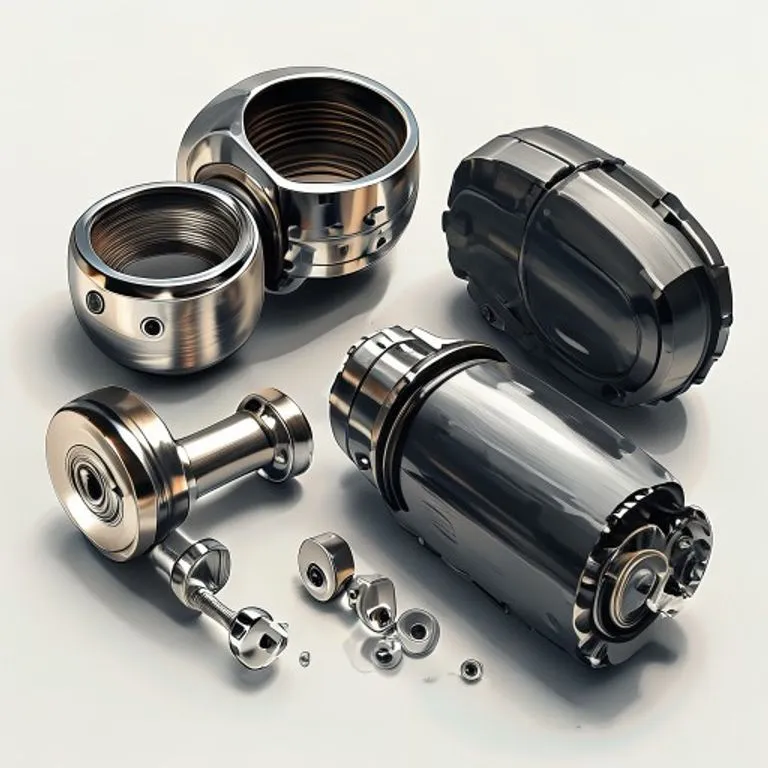
Brief description
A Ball and Roller Bearing is a type of rolling-element bearing that uses balls or rollers to maintain the separation between the bearing races. The purpose of a ball bearing is to reduce rotational friction and support radial and axial loads. It achieves this by using at least two races to contain the balls and transmit the loads through the balls.
Use / Function
- Primary Use: Reduce rotational friction and support radial and axial loads in rotating machinery.
- Secondary Uses: Align shafts and components precisely.
- Scale: From small instruments (watches) to massive industrial machines (turbines, rolling mills).
Operating principle
- Rolling Friction: The fundamental principle is replacing sliding friction (like in a plain bearing) with rolling friction. Rolling friction is typically much lower than sliding friction, allowing for higher speeds and less energy loss.
- Load Transmission: The load is transmitted from the outer race to the ball/roller and then to the inner race. Since the contact area is small (point contact for balls, line contact for rollers), the stress is high but the friction is low.
How to create it
Basic Construction
- Races: Create two rings (inner and outer) from hardened Steel. Machine grooves (raceways) into them to guide the rolling elements.
- Rolling Elements: Manufacture perfectly spherical balls or cylindrical rollers from hardened steel. They must be extremely smooth and uniform in size.
- Cage (Retainer): Fabricate a cage (often from Brass or stamped steel) to keep the balls/rollers evenly spaced and prevent them from rubbing against each other.
- Assembly: Place the balls between the races, install the cage, and seal or shield the bearing if necessary.
- Lubrication: Apply Animal Fat or Vegetable Oil to reduce wear and heat.
Technical Level
Advanced. Requires precision machining and heat treatment (hardening) of steel.
Materials needed
- Essential Materials:
- Steel: High-carbon or alloy steel for races and rolling elements (must be hardenable).
- Brass or Bronze: For the cage (retainer).
- Animal Fat or Vegetable Oil: For lubrication.
- Tools:
- Lathe: For machining the races.
- Grinder: For finishing the hardened surfaces (using Grinding Wheel).
- Furnace: For heat treating the steel.
Variants and improvements
- Ball Bearing: Uses spherical balls. Excellent for high speeds but lower load capacity due to point contact.
- Roller Bearing: Uses cylindrical rollers. Higher load capacity due to line contact but lower speed limits.
- Tapered Roller Bearing: Uses conical rollers. Can handle large radial and axial loads simultaneously (e.g., car wheel hubs).
- Thrust Bearing: Designed specifically to handle axial loads (forces parallel to the shaft).
Limits and risks
- Fatigue: Repeated cyclic loading causes metal fatigue, leading to spalling (flaking) of the race or ball surface.
- Contamination: Dust, dirt, or water can ruin the smooth surfaces, causing rapid failure. Seals are crucial.
- Lubrication Failure: Without proper lubrication, friction increases dramatically, leading to overheating and seizure.
- Brinelling: Excessive static load or impact can dent the races (brinelling), causing permanent damage and vibration.