Generated with AI2 min read
Water Wheel
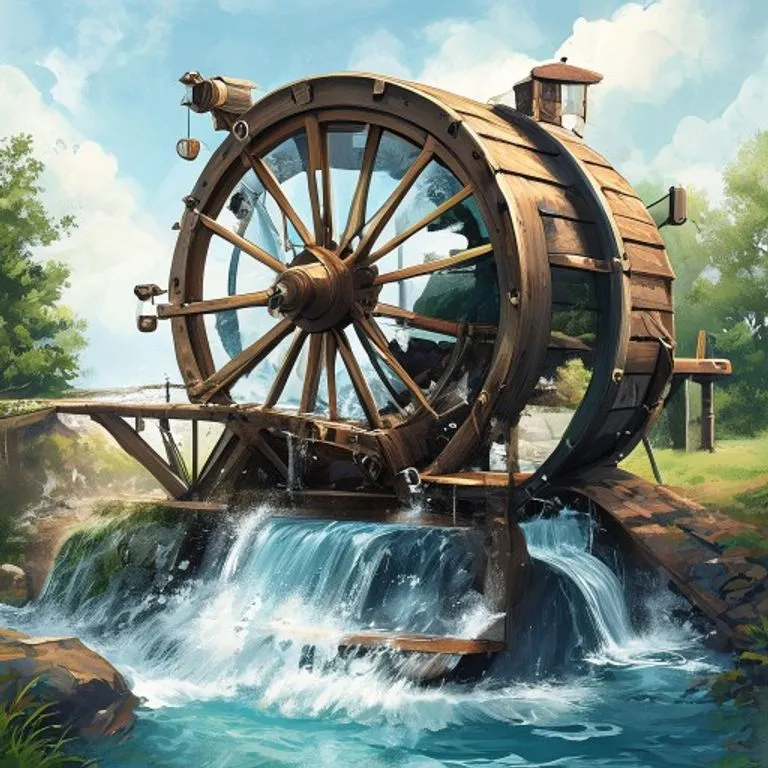
Brief description
A machine for converting the energy of flowing or falling water into useful forms of power, often in a watermill. It was a primary source of industrial power before the steam engine.
Use / Function
- Milling: Grinding grain into flour (gristmill).
- Industrial: Powering bellows for smelting, tripping hammers for forging, or sawing wood.
- Pumping: Lifting water for irrigation.
Operating principle
The water wheel uses the kinetic energy (flow) or potential energy (height) of water.
- Undershot: Water flows under the wheel, pushing paddles. Efficient in fast-flowing rivers.
- Overshot: Water is channeled to the top of the wheel, filling buckets. The weight of the water turns the wheel. More efficient.
- Breastshot: Water strikes the wheel at mid-height.
How to create it
- Axle: Create a massive, strong axle (tree trunk) capable of transmitting high torque.
- Wheel Structure: Build two large parallel wheels attached to the axle.
- Paddles/Buckets: Connect the two wheels with paddles (for undershot) or buckets (for overshot).
- Mounting: Mount the axle on sturdy bearings (stone or greased wood) over the water source.
- Gearing: Connect the axle to a gear system to transfer the slow, high-torque rotation to the machinery (e.g., millstones).
Materials needed
- Wood: Water-resistant wood (oak, larch) for the wheel and buckets.
- Stone: For the bearings and foundations.
- Iron: For reinforcing the axle and gears.
Variants and improvements
- Noria: A water wheel used specifically for lifting water into an aqueduct.
- Turbine: A more advanced, enclosed water wheel (Pelton, Francis) for higher efficiency.
Limits and risks
- Location: Strictly dependent on a reliable water source with flow or head.
- Freezing: Can freeze in winter, stopping production.
- Flooding: High water levels can submerge or destroy the wheel.