Generated with AI2 min read
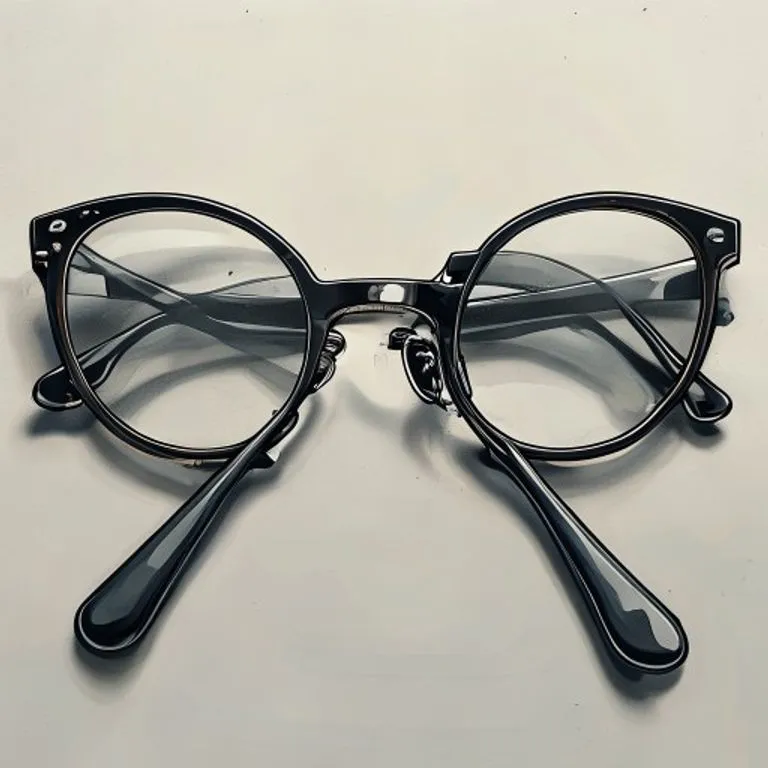
Eyeglasses
Brief description
Eyeglasses (or spectacles) are frames bearing lenses that are worn in front of the eyes to correct vision defects or protect the eyes. They are one of the most impactful inventions for extending the productive life of skilled workers.
Use / Function
- Vision Correction: Restoring sharp vision to people with Vision Problems (refractive errors).
- Myopia: Trouble seeing far away.
- Hyperopia/Presbyopia: Trouble seeing close up (reading).
- Protection: Shielding eyes from dust, sparks, or intense light (sunglasses).
Operating principle
They add an external lens to the eye’s optical system to adjust where the image focuses on the retina.
- For Myopia: The eye focuses light in front of the retina. A concave lens spreads the light out slightly before it enters the eye, pushing the focal point back onto the retina.
- For Hyperopia: The eye focuses light behind the retina. A convex lens concentrates the light slightly before it enters the eye, pulling the focal point forward onto the retina.
How to create it
- Diagnosis: Determine if the person needs concave (nearsighted) or convex (farsighted) lenses. Test with different strength lenses until they see clearly.
- Lens Grinding: Grind Glass or Quartz lenses to the required curvature.
- Frame Making: Twist Wire, leather, or carve bone/horn to create a frame that holds the lenses in front of the eyes.
- Assembly: Fit the lenses into the frames securely.
Technical Level: Intermediate. The lens grinding is the hard part; the frames can be simple.
Materials needed
Variants and improvements
- Pince-nez: Glasses that clip onto the nose without earpieces.
- Monocle: A single lens for one eye.
- Bifocals: Lenses split into two parts (top for distance, bottom for reading), invented by Benjamin Franklin.
- Sunglasses: Darkened or smoked glass to reduce glare.
Limits and risks
- Fragility: Lenses break easily if dropped.
- Fit: Poorly fitting frames can be uncomfortable or slide off.
- Prescription Changes: Eyes change over time, requiring new lenses.