NaturalGenerated with AI3 min read
Quartz
SiO2
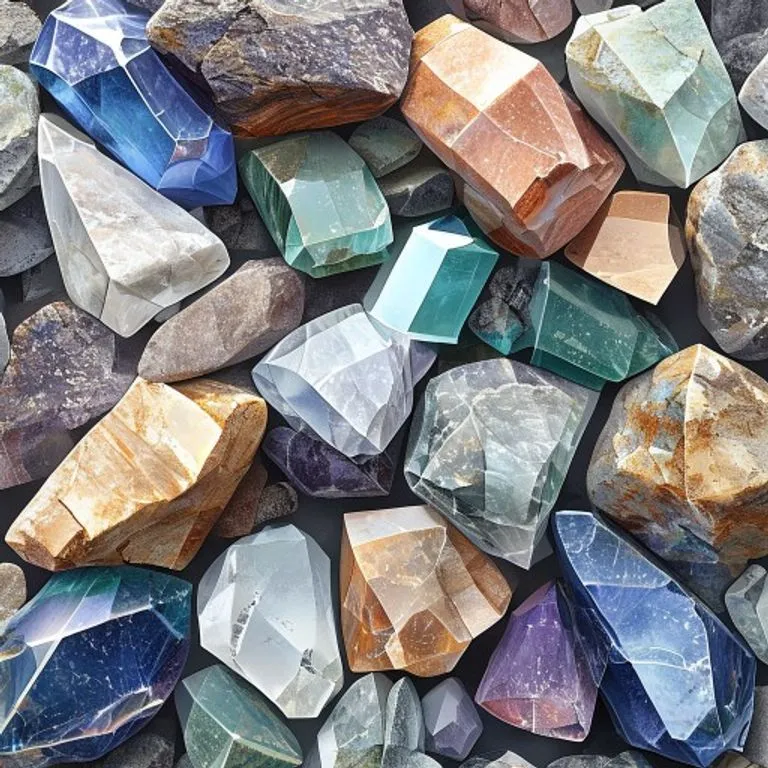
Brief description
Quartz (often called Rock Crystal when clear) is a hard, crystalline mineral composed of silica (silicon dioxide). It is the second most abundant mineral in Earth’s continental crust. Its clarity and hardness make it a superior natural substitute for glass in optics.
Description of what it is like
- Appearance: Ideally colorless and transparent (Rock Crystal), but can be white (Milky), purple (Amethyst), yellow (Citrine), or dark (Smoky) depending on impurities.
- Texture: Smooth, glassy, and cold to the touch.
- Hardness: Very hard (Mohs 7). It scratches glass and steel.
- Crystal Shape: Often forms hexagonal prisms with pyramid-like ends.
Origin and where to find it
- Occurrence: Found globally in all types of rocks (igneous, metamorphic, sedimentary).
- Location: Look in riverbeds for rounded pebbles, or in geodes and veins in mountains for distinct crystals.
- Recognition: Its hexagonal shape and hardness (cannot be scratched by a knife) are key identifiers.
Minimum processing required
- Extraction: Mining from veins or collecting loose crystals.
- Cleaning: Washing off clay and dirt.
- Cutting/Knapping: Can be chipped like flint (conchoidal fracture) or cut with diamond saws.
- Polishing: Needs harder abrasives than glass (like diamond dust or corundum) to polish effectively.
Tools needed to work on it
- Hammer and Chisel: For extraction.
- Lapidary Wheel: For cutting and polishing (needs sand/water or harder grits).
- Leather/Felt: For final polishing.
Common forms of use
- Optics: Carved into superior lenses that transmit UV light (unlike glass).
- Oscillators: Thin slices of quartz generate electricity when stressed (piezoelectricity), essential for Radios and quartz clocks.
- Abrasive: Crushed quartz is the main component of sandpaper and sandblasting.
Possible substitutes
- Glass: Easier to melt and shape, but softer and blocks UV light.
- Transparent Calcite (Iceland Spar): Clear but soft and has double refraction (doubles the image).
- Diamond: Much harder and better optically, but rare and impossible to work with primitive tools.
Limitations and common failures
- Brittle: Like glass, it can shatter if struck.
- Hardness: Very difficult to carve without harder abrasives.
- Heat Shock: Can crack with sudden temperature changes, though less than glass.
Risks and safety
- Silicosis: Breathing in fine quartz dust from grinding is dangerous to the lungs. Always wet-grind or wear a mask.
- Sharp Edges: Fractured quartz has razor-sharp edges.
Related materials
Properties
- Transparent
- Hard
- Piezoelectric
- Chemical Resistant
- High Melting Point
Used for
- Lenses
- Electronics
- Jewelry
- Glassmaking
- Abrasives
- Microscopes
- Telescopes
Manufacturing / Process
Mining and cutting/polishing.