Generated with AI3 min read
Mirror
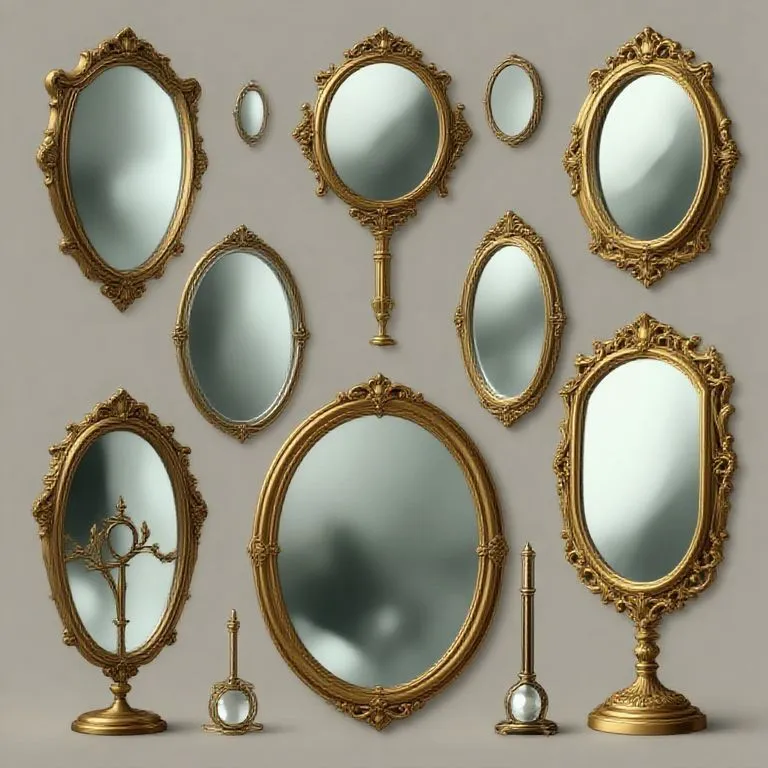
Brief description
A mirror is a polished surface that reflects light specularly, producing a virtual image of objects in front of it. It is an essential tool for personal care, scientific observation, and signaling, and one of the primary applications of Optics.
Use / Function
Its practical purpose is to provide a visual reflection of objects and light:
- Personal: Grooming, dressing, and self-inspection.
- Optics: Used in reflecting telescopes, periscopes, microscopes, and lasers to redirect light.
- Signaling: Heliographs use mirrors to send messages via reflected sunlight over long distances.
- Energy: Concentrating solar power using parabolic mirrors to generate heat or electricity.
- Decoration: Increasing the sense of space and improving interior lighting.
- Scale: Domestic (personal mirrors), Industrial (telescopes, solar plants).
Related Inventions
Related Materials
Operating principle
It relies on the physical phenomenon of specular reflection:
- Reflection: When light hits a smooth surface, it bounces off at the same angle it arrived (angle of incidence = angle of reflection).
- Coherence: Unlike a rough surface that scatters light (diffuse reflection), an extremely smooth surface preserves the parallel nature of light rays, forming a clear image.
- Virtual Image: The brain perceives the reflected rays as if they were coming from a point behind the mirror, creating a “virtual” version of the object.
How to create it
- Polished Metal (Basic): Take a flat plate of bronze, silver, or copper. Use progressively finer abrasives (sand, silt, then fine cloth) to polish the surface until it becomes highly reflective.
- Silvered Glass (Advanced):
- Preparation: Thoroughly clean a flat sheet of glass.
- Sensitization: Apply a tin chloride solution to help the metal stick to the glass.
- Silvering: Pour a mixture of silver nitrate and a reducing agent (like glucose) over the glass. The silver precipitates out of the solution and bonds to the glass surface.
- Protection: Once dry, paint the back of the silver layer with a dark, opaque paint to prevent oxidation and scratches.
- Technical Level: Intermediate (polished metal) to Advanced (chemical silvering).
Materials needed
- Essential:
- Metal: Silver, tin, or aluminum for the reflective layer.
- Substrate: Flat glass for modern mirrors or a solid metal plate for ancient ones.
- Chemicals: Silver nitrate, ammonia, and glucose (for the chemical silvering process).
- Tools: Polishing cloths, fine abrasives, level surface for pouring chemicals.
- Possible Substitutes: Still water in a dark container, polished obsidian, or highly polished stainless steel.
Variants and improvements
- Ancient Mirrors: Made of solid polished bronze or obsidian. They required constant maintenance as they tarnished quickly.
- Mercury-Tin Mirrors: (16th-19th century) A tin foil was coated with mercury to create an amalgam on glass. Very clear but highly toxic to make.
- Silvered Mirrors: Modern standard using chemical precipitation of silver. See Silver Mirror for the detailed chemical process. More reflective and durable.
- Aluminized Mirrors: Uses vacuum deposition of aluminum. Common in telescopes and industrial applications due to high durability and cost-effectiveness.
Limits and risks
- Oxidation: The reflective metal layer (especially silver) can tarnish if exposed to air or moisture, causing dark spots.
- Fragility: Glass-based mirrors are highly susceptible to impact and thermal shock.
- Toxicity: Antique mirror-making processes involving mercury pose severe health risks (mercury poisoning).
- Surface Quality: Any imperfection or scratch on the surface will distort the reflected image.