Generated with AI4 min read
Lens & Refraction
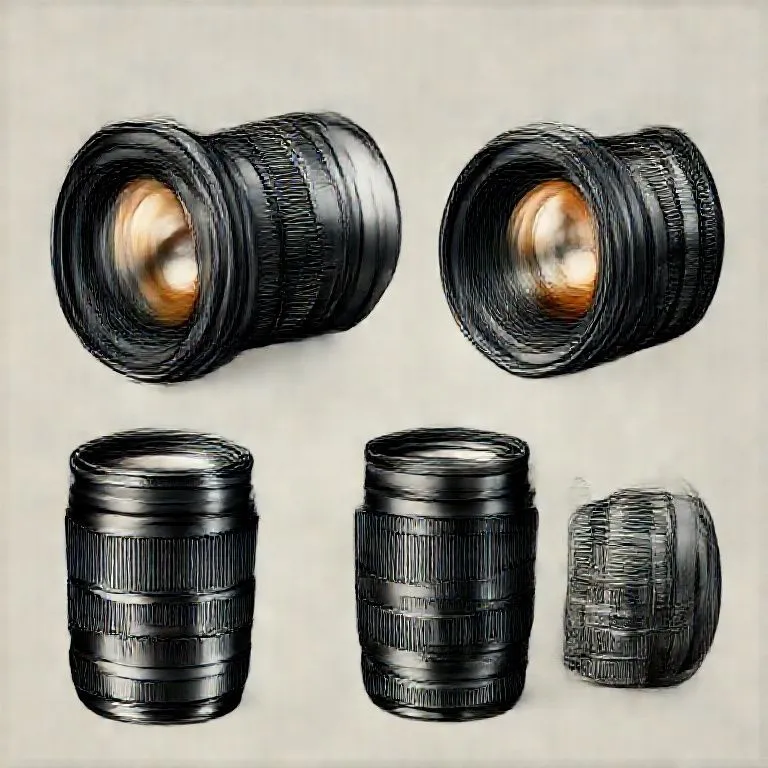
Brief description
A lens is a transparent object (usually glass, plastic, or crystal) with at least one curved surface that uses refraction to bend light rays, either concentrating them (converging) or spreading them out (diverging). Refraction is the fundamental principle of Optics.
Use / Function
- Magnification: Enlarging images of small objects for detailed study (basis of the Microscope and magnifying glass).
- Far Vision: Bringing distant objects closer to the eye (basis of the Telescope).
- Vision Correction: Correcting Vision Problems (refractive errors) such as myopia or hyperopia using Eyeglasses.
- Fire Starting: Concentrating sunlight onto a specific point (focal point) to generate intense heat and ignite tinder.
Related Inventions
Related Materials
Operating principle
The core principle is Refraction.
- Light Speed Change: Light travels at different speeds in different materials. It is faster in air and slower in denser materials like glass or water.
- Bending: When light enters a denser medium at an angle, it slows down and bends. When it exits, it speeds up and bends again.
- Curvature: By curving the surface of the lens, you control this bending.
- Convex (Converging): Thicker in the center. Bends light inward to a single focal point. Used for magnification and starting fires.
- Concave (Diverging): Thinner in the center. Bends light outward. Used for correcting nearsightedness.
How to create it
Creating a functional lens requires patience and precision. For a detailed guide on the process, see Lens Grinding.
- Rough Grinding: Take a piece of clear Glass or Quartz. Rub it against a hard, concave mold (like an iron dish) using coarse abrasive sand and water. This shapes the glass into a curve.
- Fine Grinding: Switch to finer abrasives (like fine sand or ground sandstone) to smooth out the deep scratches.
- Polishing: Use a very fine polishing powder (like rouge or tripoli) on a piece of leather or pitch attached to the mold. Rub until the glass is perfectly transparent and scratch-free.
- Casting (Alternative): Molten glass can be poured into a heated mold, but this often results in imperfections and bubbles, making it inferior to ground lenses.
Technical Level: Advanced. Requires consistent motion and increasingly fine abrasives.
Materials needed
- Essential: High-quality, bubble-free Glass or clear Quartz (Rock Crystal).
- Tools:
- Molds: Metal (iron, brass) or hard stone concave forms.
- Abrasives: Coarse sand, fine sand, sandstone, emery, rouge (iron oxide).
- Polisher: Leather, pitch, or felt.
- Substitutes:
- Water Sphere: A round glass bowl filled with Water acts as a crude magnifying lens.
- Ice: Clear ice can be carved into a lens shape (works only in freezing conditions).
- Water Drop: A drop of water on a small hole in a plate can act as a tiny magnifier.
Variants and improvements
- Simple Magnifier: A single biconvex lens (burning glass).
- Compound Systems: Combining multiple lenses to correct “aberrations” (color fringing or distortion). This is essential for high-quality Microscopes and Telescopes.
- Fresnel Lens: A flat lens with concentric ridges, used in lighthouses to focus light into a beam without the weight of a thick lens.
Limits and risks
- Aberrations: A simple single lens will not focus all colors at the same point (chromatic aberration), causing rainbow halos around images.
- Fire Hazard: A convex lens left in direct sunlight can unintentionally ignite flammable materials behind it.
- Fragility: Glass and crystal are brittle and scratch easily, ruining their optical properties.
- Impurities: Bubbles or veins in the glass will distort the image significantly.