SyntheticGenerated with AI3 min read
Glass
SiO2 (main)
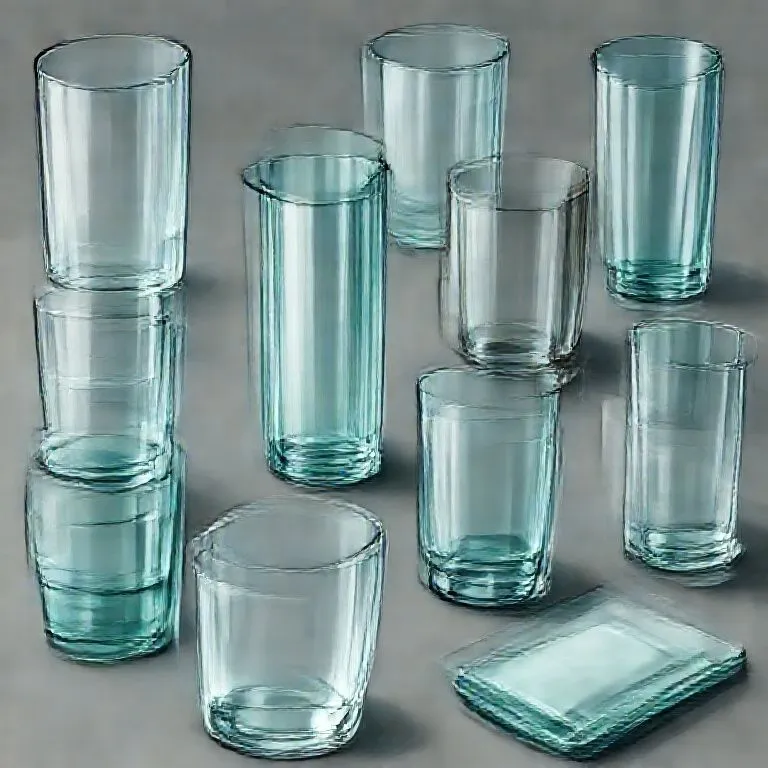
Glass is a solid inorganic, non-crystalline (amorphous) material that is typically transparent. It is essential for modern civilization, enabling everything from weather protection while maintaining light, to vision correction and chemical advancements.
Description of what it is like
- Appearance: Generally transparent, though it can be colored by impurities (iron gives a greenish tint) or additives.
- Texture: Extremely smooth and slick to the touch when cold.
- State: Solid at room temperature but flows like a viscous liquid at high temperatures.
- Breakage: Breaks with a conchoidal fracture (curved and very sharp edges).
Origin and where to find it
Although Obsidian is a natural volcanic glass used since prehistory, common glass is a synthetic material.
- Components:
Minimum processing required
Glass requires advanced pyrotechnic technology (kilns).
- Mixing: Combine sand, soda, and lime in the correct proportions.
- Melting: Heat in a kiln or crucible to very high temperatures (>1500°C) until liquid and homogeneous.
- Forming: While hot and viscous, it can be blown, molded, or stretched.
- Annealing: Slow and controlled cooling in a special oven. This is critical; if cooled too fast, it accumulates internal stress and shatters spontaneously.
Tools needed to work on it
- High-temperature Kiln: Capable of maintaining intense heat.
- Crucible: Refractory ceramic container to hold the molten mixture.
- Blowpipe: Hollow metal tube to gather and blow glass.
- Jacks and Shears: Metal tools to shape hot glass.
- Annealing Lehr: Oven for slow cooling.
Common forms of use
- Blown: For bottles, cups, and complex shapes.
- Flat/Float: For windows and mirrors (including the modern Silver Mirror).
- Pressed: For thick and uniform objects.
- Fibers: Stretched into fine threads for insulation (glass wool) or reinforcement (fiberglass).
Possible substitutes
- Windows:
- Oiled Paper: Allows diffuse light but is fragile.
- Flattened Horn: Translucent and tough.
- Mica: Natural mineral that splits into transparent sheets.
- Containers:
- Glazed Ceramics: Waterproof and opaque.
- Metal: Durable but reactive with acids.
- Lenses:
- Quartz (Rock Crystal): Hard to carve but optically superior.
- Water Droplet: Ephemeral and primitive lens.
Limitations and common failures
- Thermal Shock: Common glass breaks if temperature changes too fast (e.g., boiling water in a cold glass).
- Brittleness: Low impact resistance.
- Devitrification: If kept hot too long without fully melting, it can crystallize and become opaque and brittle.
Risks and safety
- Cuts: Broken glass edges are sharper than any surgical scalpel.
- Silicosis: Breathing silica dust during mixture preparation is deadly in the long term.
- Burns: Hot glass looks the same as cold glass.
Related materials
- Sand: Main ingredient.
- Mirror: Primary application of flat glass.
- Silver Mirror: Modern chemical application.
- Photography: Uses glass for lenses and early plates.
- Obsidian: Natural glass.
- Ceramics: Similar kiln technology, sibling material.
Properties
- Transparent
- Hard
- Brittle
- Inert
- Impermeable
- Insulator
Used for
- Windows
- Containers
- Lenses
- Mirrors
- Thermal insulation
- Lab equipment
- Microscopes
- Telescopes
- Photography
- **[Spectroscope](/en/inventions/spectroscope)**
Manufacturing / Process
Melting silica sand with soda and lime at high temperatures, followed by rapid but controlled cooling (annealing).