Generated with AI2 min read
Dental Prosthetics
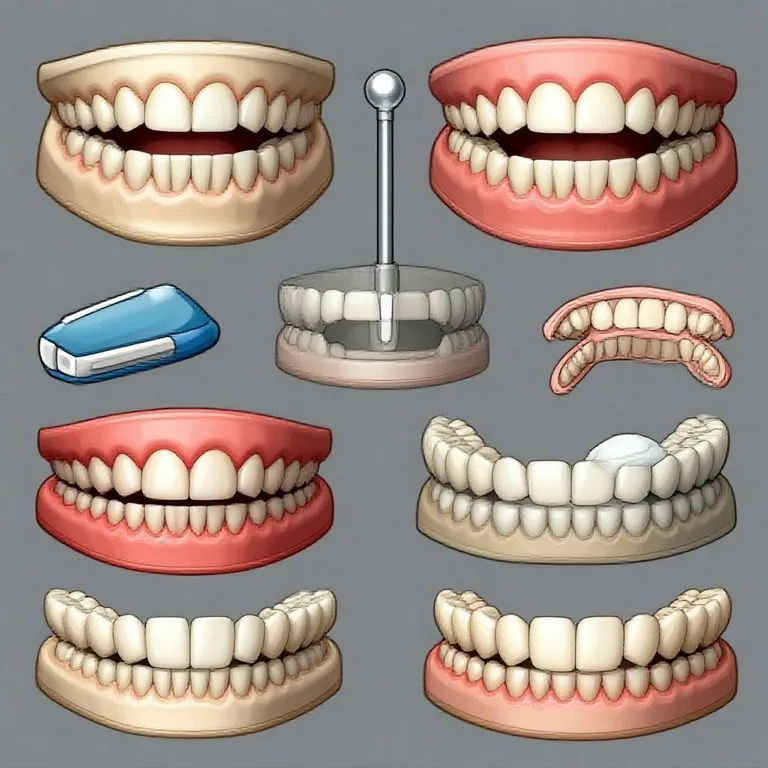
Brief description
Dental prosthetics are artificial teeth or tooth parts made to replace missing or damaged teeth, restoring chewing function, protecting oral tissues, and improving speech and appearance.
Use / Function
They restore essential oral functions:
- Chewing: Rebuilds biting surfaces so food can be processed.
- Protection: Covers gaps and sharp edges to reduce irritation and injury.
- Stability: Helps prevent nearby teeth from shifting.
- Speech: Improves clarity by restoring tongue contact points.
- Scale: Individual, custom-fitted items.
Operating principle
The prosthetic reproduces the shape of missing teeth and anchors to the mouth with a stable base. It spreads bite forces over a larger area of gum and bone, using smooth, cleanable surfaces to limit irritation and infection. Retention comes from careful fit, friction, or simple clasps.
How to create it
- Assess and measure: Clean the mouth and check the gap size with a Mirror.
- Make a mold: Press Beeswax or soft Clay to capture the shape.
- Create tooth forms: Carve Bone or Wood for a simple tooth, or shape clay teeth and fire them in a Kiln.
- Build the base: Use Resin or Natural Rubber as the plate; reinforce with Gold or Silver when available.
- Fit and adjust: Smooth edges with a File and Sandpaper until comfortable.
- Finish and sanitize: Wash with Soap and disinfect with Alcohol.
Materials needed
- Essential: Bone or Wood, Resin, Beeswax, Clay.
- Optional durability: Gold or Silver for supports.
- Tools: Mirror, Kiln, File.
- Hygiene: Water, Soap, Alcohol, Cotton.
Variants and improvements
- Single-tooth peg: A carved tooth tied or pinned into place for emergencies.
- Partial plates: Replace several teeth with a small base and simple clasps.
- Full plates: Replace an entire arch when most teeth are missing.
- Ceramic teeth: Fired clay teeth on a resin base for better wear resistance.
Limits and risks
- Poor fit: Causes sores, inflammation, and unstable chewing.
- Breakage: Bone and ceramic can chip under hard loads.
- Hygiene risk: Trapped food and plaque can cause infection and odor.
- Skill limits: Unsafe fitting can damage gums and remaining teeth.