Generated with AI3 min read
Bearings
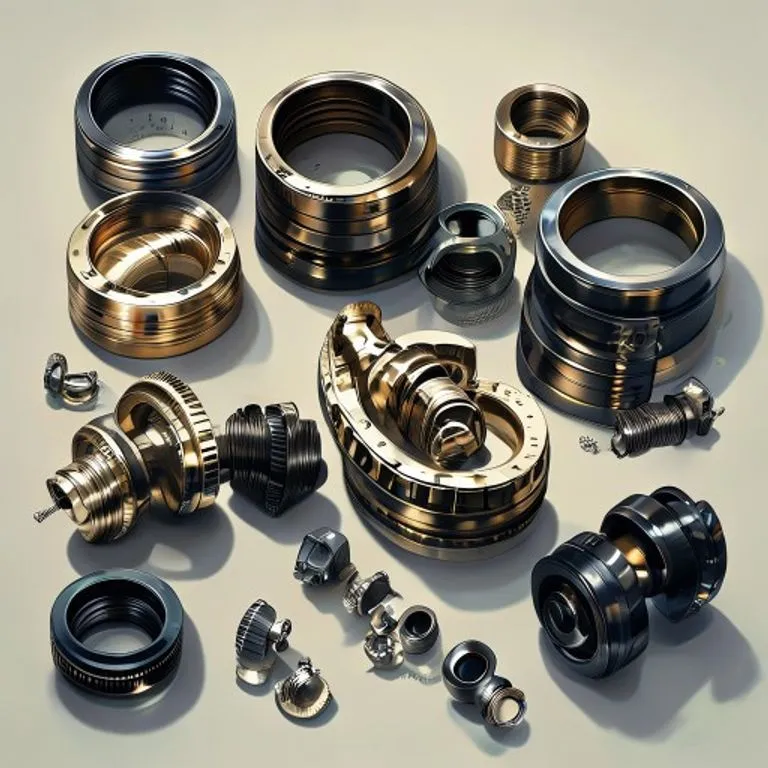
Brief description
A Bearing is a machine element that constrains relative motion to only the desired motion, and reduces friction between moving parts. It is essential for any machine with rotating shafts, such as Wheels, Gears, and engines.
Use / Function
- Support Rotation: Holds rotating shafts (axles) in place while allowing them to spin freely.
- Reduce Friction: Minimizes energy loss and heat generation by replacing sliding friction with rolling friction or using low-friction surfaces.
- Load Handling: Supports radial loads (perpendicular to the shaft) and axial loads (thrust along the shaft).
- Positioning: Keeps moving parts precisely aligned.
Operating principle
Bearings work by separating moving surfaces.
- Plain Bearings: Use a smooth, low-friction surface (like polished bronze or oil-soaked wood) and a lubricant to allow the shaft to slide easily.
- Rolling-Element Bearings: Place balls or rollers between two rings (races). The rolling action generates much less friction than sliding.
How to create it
Plain Bearing (Bushings)
- Material Selection: Choose a material softer than the shaft but durable, such as Bronze, Brass, or dense Wood (like Lignum Vitae).
- Shaping: machine a cylinder (bushing) that fits tightly into the housing and has a smooth inner bore that fits the shaft with a small clearance.
- Lubrication: Add grooves or holes to introduce Animal Fat or Vegetable Oil into the contact area.
Rolling-Element Bearing (Advanced)
- Races: Create inner and outer rings from hardened Steel. They must be perfectly circular and smooth.
- Rolling Elements: Create perfectly spherical balls or cylindrical rollers from hardened steel.
- Cage: Make a separator (cage) to keep the balls/rollers evenly spaced.
- Assembly: Place the balls between the races and seal with grease.
Materials needed
- Bearing Material: Bronze, Babbitt metal, Cast Iron, Hardwood.
- Rolling Elements: High-carbon Steel (hardened).
- Lubricant: Grease, Oil, Graphite.
Variants and improvements
- Journal Bearing: A simple plain bearing for radial loads.
- Thrust Bearing: Designed to support axial loads (e.g., a propeller shaft).
- Ball Bearing: Uses balls for low friction at high speeds.
- Roller Bearing: Uses cylinders for higher load capacity.
- Tapered Roller Bearing: Handles both radial and thrust loads.
Limits and risks
- Friction/Heat: If lubrication fails, the bearing will overheat and seize (weld itself to the shaft).
- Wear: Over time, surfaces wear down, causing “play” (looseness) and vibration.
- Contamination: Dirt and dust ruin bearings quickly; seals are essential.
- Load Limits: Exceeding the load rating will deform the rolling elements (brinelling).