Generated with AI2 min read
Staple Crops
Related Materials
Brief description
Staple crops are high-yield plants that provide the bulk of daily calories for a population. They are chosen for reliable production, storability, and versatility in basic cooking and preservation.
Use / Function
- Calorie base: Provides the main energy source for communities.
- Food security: Reliable harvests reduce famine risk.
- Storage and trade: Grains and dried roots can be stored and exchanged.
- Scale: Household to regional food systems.
Operating principle
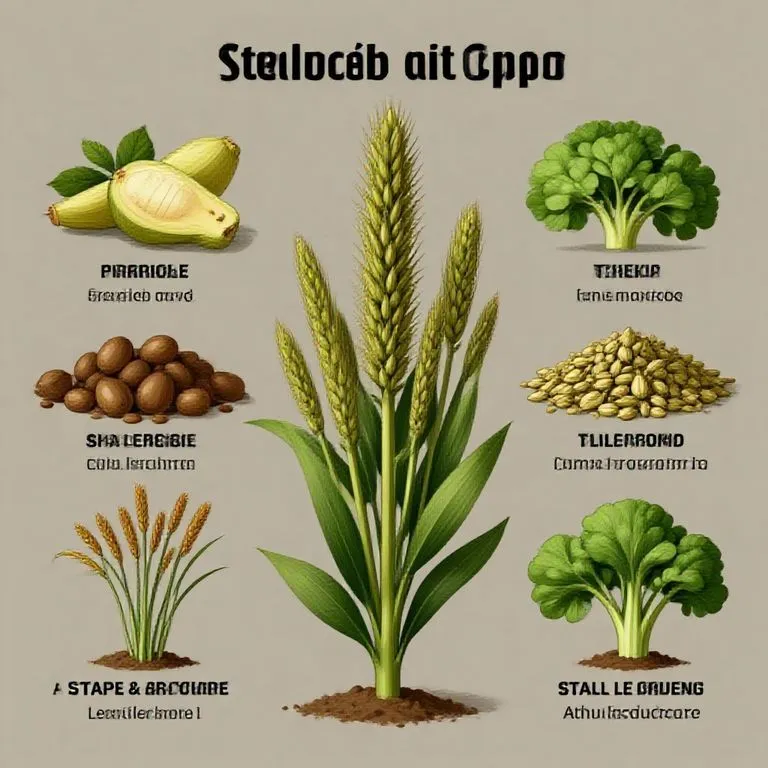
Staple crops prioritize yield per area, storability, and simple processing. Grains such as Wheat and Rice dry well for long storage, while tubers like Potato and Cassava provide dense calories even in poorer soils.
How to create it
- Select climate-ready crops: Choose species adapted to local rainfall and temperature.
- Prepare soil: Clear, loosen, and add organic matter.
- Plant and protect: Sow seeds or plant cuttings at proper spacing; manage weeds.
- Harvest and dry: Harvest at maturity, then dry or cure to prevent spoilage.
- Store safely: Use dry, sealed containers and elevated storage.
Materials needed
- Essential: Seeds or cuttings, water, fertile soil.
- Tools: Digging stick or hoe, Mortar or Hand Mill, Containers, Fire for cooking.
- Substitutes: Mix grains and tubers to spread climate and pest risk.
Variants and improvements
- Crop rotation: Alternating crops to restore soil and reduce pests.
- Irrigated fields: Higher yields where water is controlled.
- Storage upgrades: Granaries, sealed pottery, and drying racks.
- Selection: Saving the best seed improves yield and resilience over time.
Limits and risks
- Monoculture vulnerability: Single-crop reliance increases disease and pest losses.
- Soil exhaustion: Repeated planting without replenishment depletes nutrients.
- Post-harvest spoilage: Moisture leads to mold and rot.
- Diet gaps: Heavy reliance on one staple can cause nutrient deficiencies.