NaturalGenerated with AI2 min read
Cassava
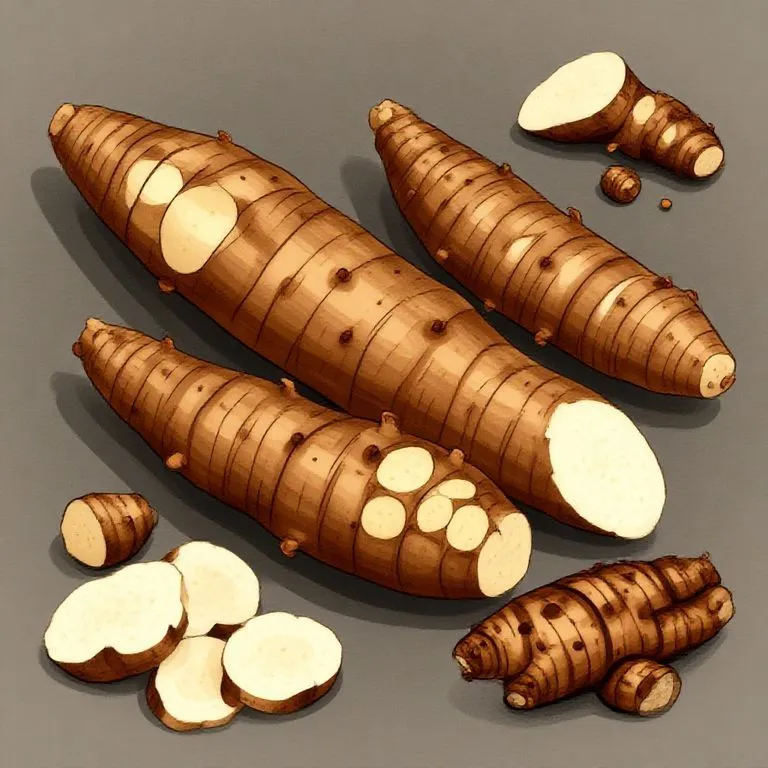
Cassava is a hardy root crop that thrives in poor soils and dry conditions. It is highly starchy but needs careful processing to be safe.
Description of what it is like
Thick, brown-skinned roots with white or yellow flesh. Fresh cassava is firm and watery, but it becomes floury when dried.
Origin and where to find it
- Environments: Tropical and subtropical fields, often in low-fertility soils.
- Signs: Shrubby plants with palmate leaves and thick underground roots.
- It is a cultivated crop grown from stem cuttings.
Minimum processing required
- Peeling: Remove the outer skin.
- Grating: Break the root into small pieces.
- Soaking or fermentation: Reduce toxic compounds.
- Drying: Make flour or shelf-stable granules.
- Cooking: Heat thoroughly before eating.
Tools needed to work on it
- Cutting tools for harvest and peeling.
- Mortar for pounding.
- Containers for soaking and storage.
- Fire for cooking and drying.
Common forms of use
- Cassava flour for flatbreads.
- Thick porridges and stews.
- Tapioca pearls or starch.
Possible substitutes
Limitations and common failures
- Short shelf life when fresh.
- Detox step: Skipping soaking or fermentation is dangerous.
- Low protein content: Needs complementary foods.
Risks and safety
- Cyanide poisoning: Improperly processed cassava can be fatal.
- Spoilage: Fermentation must be controlled to avoid rot.
Related materials
Properties
- Starchy root
- Drought-tolerant
- High calorie
- Requires detox processing
Used for
- Flour and flatbreads
- Porridge and stews
- Tapioca
- Animal feed
Manufacturing / Process
Roots are harvested, peeled, grated, soaked or fermented, dried, and cooked to remove toxins.