Generated with AI2 min read
Breaks, Burns & Wounds
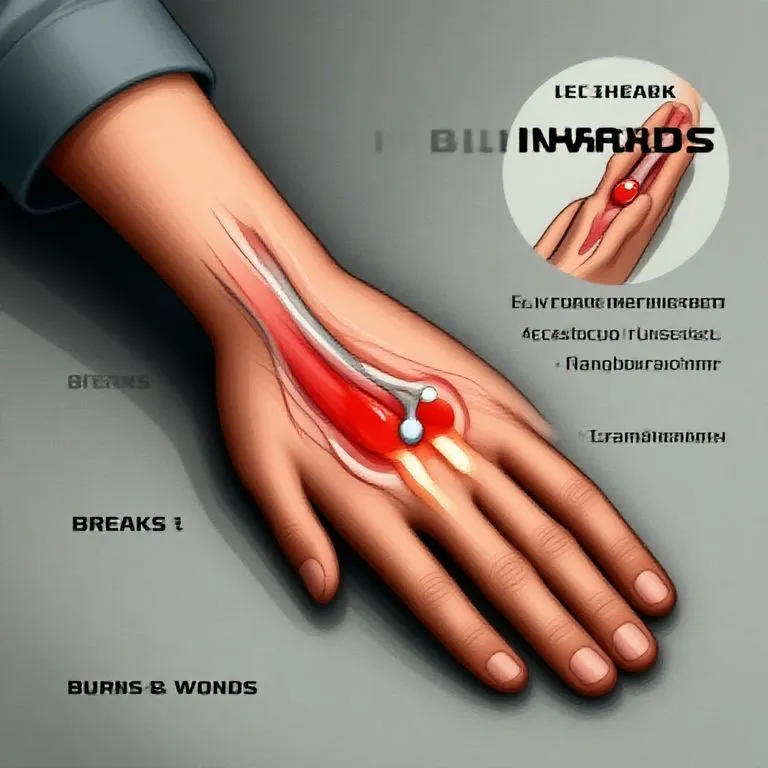
Brief description
Essential field care for fractures, burns, and open wounds focused on preventing infection, limiting tissue damage, and stabilizing injuries until healing or evacuation is possible.
Use / Function
- Fractures: Immobilize the injured area to reduce pain and prevent further damage.
- Burns: Stop the heat source and cool the tissue to limit depth of injury.
- Open wounds: Clean, cover, and control bleeding to prevent infection.
- Scale: Individual to small-group first aid.
Operating principle
- Stabilization: Immobilization reduces mechanical stress and pain.
- Cooling: Lowering temperature limits burn progression.
- Barrier: Clean coverings prevent contamination and keep tissue moist.
- Hemostasis: Direct pressure limits blood loss and supports clotting.
How to create it
- Assessment: Check airway, breathing, and circulation, then identify bleeding, burns, or deformity.
- Fracture care: Immobilize the joint above and below using padded splints made from Wood and Fabric. Check circulation after tying.
- Burn care: Cool with clean Water for several minutes, then cover with clean Cotton or Fabric.
- Wound care: Rinse with clean water, wash surrounding skin with Soap, then apply a clean dressing. Use Alcohol for tools and hands, not directly in deep wounds.
- Closure (only if trained): Use Needle and Surgical Thread for clean, straight wounds, or use strips of fabric for pressure bandages.
- Follow-up: Recheck swelling, color, and sensation; change dressings regularly; monitor for infection.
Materials needed
- Essential: Clean Water, Cotton or Fabric, and Wood for splints.
- Tools: Cutting tool, clean containers, and basic first-aid knowledge. Basic Surgery (instruments) improves safety when available.
- Possible substitutes: Healing Herbs for mild antiseptic washes, Beeswax or Animal Fat for protective salves.
Variants and improvements
- Primitive: Cloth strips, bark splints, cold water, and pressure-only dressings.
- Intermediate: Sterilized dressings, Alcohol for disinfection, and structured splints.
- Advanced: Simple Medicines for stable antiseptics and analgesics, and controlled-sterility work areas.
Limits and risks
- Infection: The main risk for wounds and burns without clean handling.
- Circulation loss: Splints or bandages that are too tight can cause tissue damage.
- Hidden injury: Deep burns or fractures may look minor but worsen over time.
- Skill limits: Improper closure, debridement, or alignment can cause permanent harm.