Generated with AI3 min read
Needle
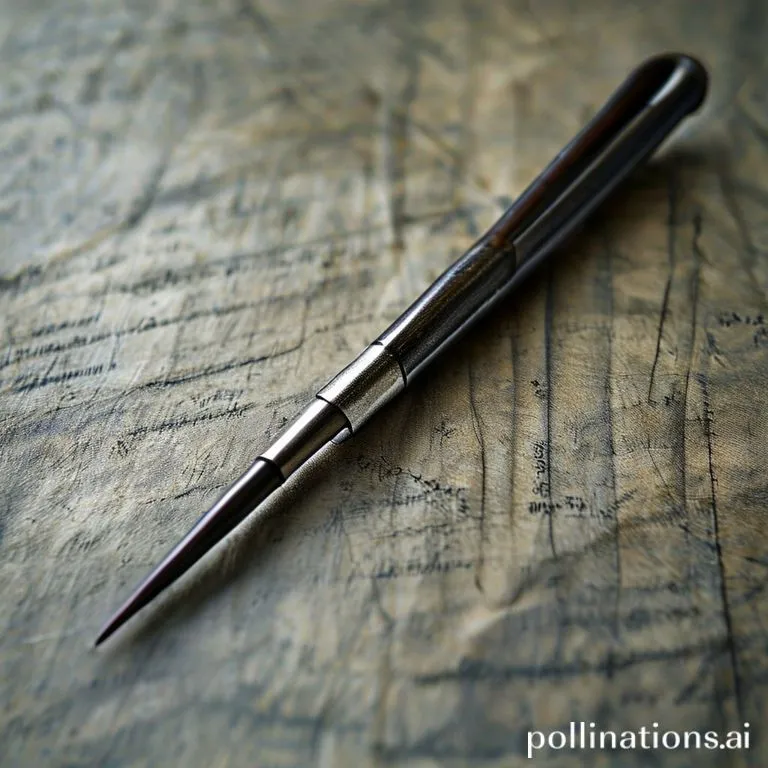
Brief description
A needle is a slender, elongated tool with a sharp point at one end and an eye (or hole) at the other to hold a thread. It is the fundamental tool for sewing, allowing flexible materials such as skins, fabrics, or textiles to be joined together.
Use / Function
- Sewing: Joining pieces of fabric or skin to make clothing, shelter (tents), and tools (sails, bags).
- Repair: Darning holes or tears in existing fabrics.
- Medical: (Surgical needle) Closing wounds via suturing.
- Crafts: Embroidery, leatherwork, and fine basketry.
Operating principle
The needle acts as a penetration guide. The sharp point separates the material’s fibers without cutting them (ideally), creating a path of least resistance. The body of the needle temporarily widens this hole to allow the eye and the trailing thread to pass. Once passed, the material’s fibers tend to return to their position, gripping the thread.
How to create it
Primitive Version (Bone/Wood)
- Selection: Find a dense bone splinter or hard wood thorn.
- Shaping: Scrape the splinter against sandstone to thin it and give it a cylindrical shape.
- Sharpening: Rub one end against a fine stone to create a sharp point.
- Drilling: Use a hand drill with a very fine flint point to bore the eye at the opposite end. This is the most delicate part; often drilled from both sides to meet in the middle.
Metal Version (Copper/Bronze/Iron)
- Forging/Drawing: Hammer or draw metal into a fine wire.
- Flattening: Slightly flatten one end for the eye.
- Punching: Punch the hole for the eye while the metal is hot (if iron) or soft.
- Sharpening and Polishing: Sharpen the point and polish the entire needle so it glides smoothly.
Materials needed
- Primitive: Bone (shinbone), antler, hardwood, fish spines, ivory.
- Metals: Copper, Bronze, Iron, Steel (best point retention).
- Abrasives: Sandstone for shaping and sharpening.
Relationship with Sewing Machine
The Sewing Machine uses a specialized version of the needle.
- Hand Needle: Eye is at the top (opposite the point).
- Machine Needle: Eye is at the bottom (near the point) to carry the thread through the fabric and form a loop for the shuttle hook.
Variants and improvements
- Bone Needle: Thicker, good for hides and coarse fabrics.
- Metal Needle: Thinner and stronger, allows for finer stitching and denser fabrics.
- Curved Needle: Used in surgery and upholstery to work in spaces where a straight needle cannot turn.
- Awl: A related tool without an eye, used only to punch holes through which a thread is then passed (common in thick **leather**work).
Limits and risks
- Fragility: Bone needles break easily if forced.
- Loss: They are small and easy to lose; a magnet (if available) helps find them.
- Rust: Iron/steel needles must be kept dry or oiled.
- Injury: Accidental pricks can get infected.