Generated with AI2 min read
Sword
Brief description
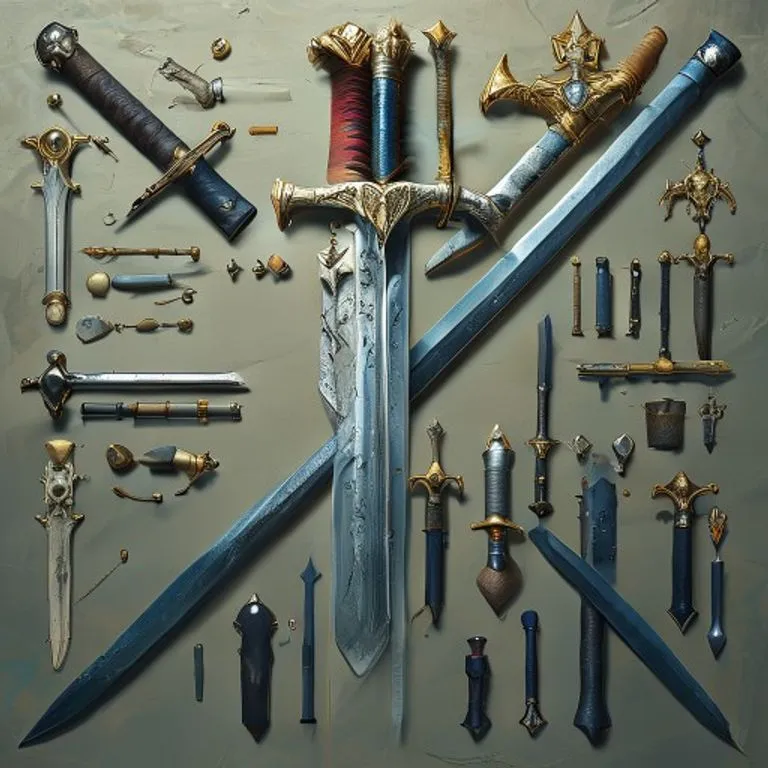
A bladed melee weapon intended for cutting or thrusting. It consists of a long metal blade and a hilt (handle) with a guard. It is a symbol of warfare and status.
Use / Function
- Combat: Used for slashing, chopping, or thrusting at opponents.
- Defense: Can parry incoming blows.
- Status: Often a ceremonial symbol of authority or rank.
Operating principle
The sword acts as a lever and a wedge.
- Cutting: The sharp edge concentrates force on a tiny area to sever material.
- Thrusting: The point concentrates force to pierce armor or flesh.
- Balance: The distribution of weight (controlled by the pommel and taper) determines if it cuts better (weight forward) or handles faster (weight back).
How to create it
- Forging: A bar of steel is heated and hammered into the shape of a blade, tang, and point.
- Shaping: The bevels are ground in to create the edge geometry. Balancing is critical here.
- Heat Treatment: The blade is hardened (quenched) and tempered to be hard enough to hold an edge but tough enough not to snap.
- Hilt Assembly: A guard is fitted, the handle (wood/leather) is added, and a heavy pommel is peened onto the end of the tang to secure it and balance the sword.
Materials needed
- Essential: High-quality Steel or Iron (or Bronze historically).
- Hilt: Wood, Leather, bone, or metal wire.
- Tools: Forge, Anvil, Hammer, Grindstone.
Variants and improvements
- Gladius: Short thrusting sword.
- Longsword: Two-handed sword for reach and power.
- Katana: Curved single-edged sword optimized for cutting.
- Rapier: Thin, pointed sword optimized for thrusting and dueling.
Limits and risks
- Maintenance: Rusts easily if not oiled; edges dull quickly.
- Skill: Requires significant training to use effectively without injuring oneself.
- Brittleness: Poor heat treatment can cause the blade to shatter on impact.