Generated with AI3 min read
Anvil
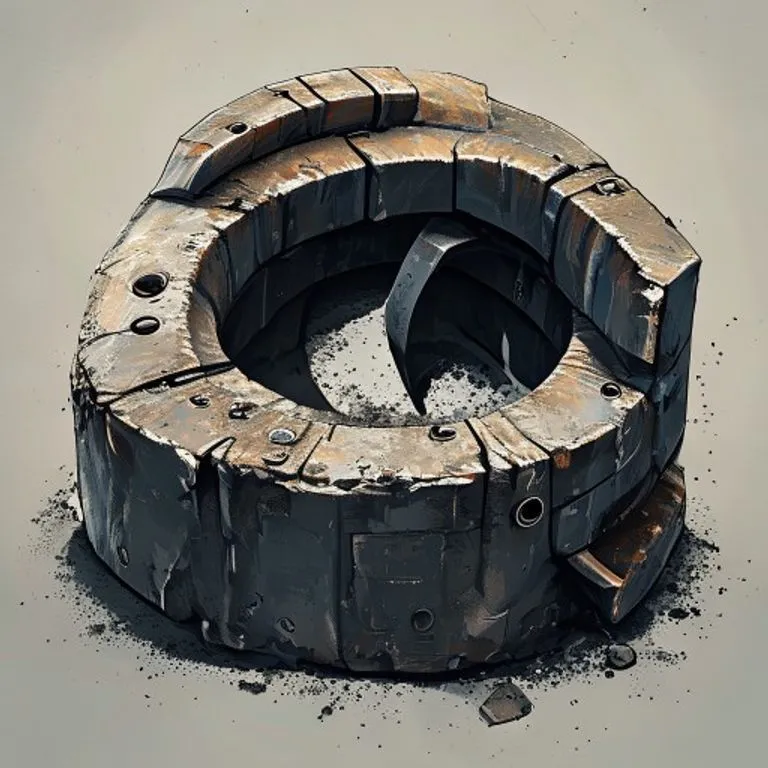
Brief description
A massive, hard block used as a surface for hammering, shaping, and forging objects, primarily metals. It acts as a stationary counterpart to the hammer.
Use / Function
Its primary function is to provide rebound and resistance.
- Forging Surface: The workpiece is placed on the anvil and struck with a hammer. The anvil’s mass absorbs the energy that would otherwise be lost in moving the support, and its hardness reflects the energy back into the metal, making the hammer blows more efficient.
- Shaping: Different parts of the anvil (face, horn, edges) allow for different shaping operations like flattening, bending, drawing out, and cutting.
Operating principle
The anvil relies on Newton’s Third Law and Inertia.
- Inertia: A heavy anvil stays put when struck. The heavier the anvil relative to the hammer, the more energy goes into deforming the hot metal rather than moving the anvil.
- Rebound: A hard, elastic face (like hardened steel) allows the hammer to bounce back, reducing fatigue for the smith and delivering a sharper, more effective blow to the metal.
How to create it
Primitive Stone Anvil
- Selection: Find a large, dense, fine-grained stone (like granite or basalt) with a flat top surface.
- Mounting: Bury it partially in the ground or mount it on a sturdy log stump to bring it to working height (knuckle height when standing).
Forged/Cast Iron Anvil
- Body: In early times, anvils were often wrought iron blocks.
- Face: A plate of high-carbon steel is forge-welded to the top surface.
- Hardening: The steel face is heated and quenched to make it extremely hard, while the body remains tough and ductile to absorb shock without cracking.
- Modern: Most modern anvils are cast steel or cast iron with a chilled (hardened) face.
Materials needed
- Essential:
- Support: A heavy wooden stump (elm or oak) to absorb vibration and mount the anvil at the correct height.
Variants and improvements
- Stump Anvil: A simple metal spike driven into a log, with a small flat head. Used for fine work or portable kits (scythe sharpening).
- London Pattern: The classic shape with a flat face, a conical horn (for bending rings), a step (cutting table), a hardie hole (square, for tools), and a pritchel hole (round, for punching).
- Stake Anvil: T-shaped or specialized shapes used by tinsmiths and armorers for sheet metal work.
Limits and risks
- Noise: A good steel anvil rings loudly when struck. This can damage hearing over time. (Tip: Put a magnet or chain on it to deaden the ring).
- Chipping: The edges of a hardened steel face can chip if struck directly with a hammer without hot metal in between.
- Weight: Difficult to transport.