Generated with AI3 min read
Forge
Brief description
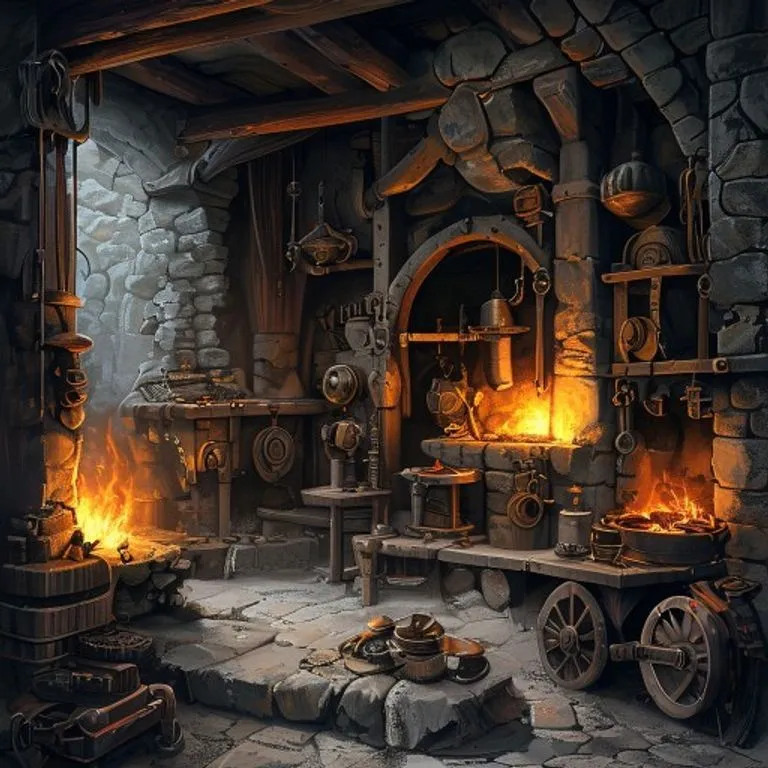
A specialized hearth or fireplace designed to heat metals to a high temperature, making them malleable for shaping (forging) or liquid for casting (foundry work). It is the heart of a blacksmith’s workshop.
Use / Function
Its primary function is controlled heating.
- Forging: Heating iron or steel until it glows red, orange, or white hot so it can be hammered into shape.
- Welding: Heating two pieces of metal to near melting point to fuse them together (forge welding).
- Annealing: Heating and slowly cooling metal to soften it and relieve internal stresses.
- Smelting/Melting: With sufficient airflow and insulation, it can melt metals like copper, bronze, or even iron in a crucible.
Operating principle
The forge relies on forced draft combustion.
- Fuel: Charcoal or coal provides the carbon for burning.
- Oxygen: A bellows or blower forces air into the fire through a nozzle called a tuyere. This extra oxygen drastically increases the rate of combustion, raising the temperature far beyond what a natural draft fire can achieve (up to 2000°C / 3600°F).
- Insulation: The hearth structure reflects heat back into the center, concentrating it on the workpiece.
How to create it
Basic Earth Forge (Primitive)
- Dig a Pit: Dig a small hole in the ground (about 30cm wide and 15cm deep).
- Air Supply: Dig a trench or insert a pipe (clay, bamboo, or metal) leading to the bottom side of the pit. This is the tuyere.
- Lining: Line the pit with clay or mud to prevent the earth from crumbling and to reflect heat.
- Bellows: Connect a bellows (made of leather bags or wood) to the pipe to pump air.
Raised Forge (Permanent)
- Structure: Build a waist-high table from stone or brick.
- Firepot: Create a depression in the center lined with fire-resistant clay or cast iron.
- Air System: Install a tuyere at the bottom of the firepot, connected to a hand-cranked blower or large bellows.
- Hood (Optional): Build a chimney or hood above to carry away smoke.
Materials needed
- Essential:
- Tools: Shovel, Trowel.
Variants and improvements
- Side-Blast Forge: The air enters from the side. Common in primitive and early medieval forges. The tuyere is less likely to clog with ash (clinker).
- Bottom-Blast Forge: The air enters from the bottom. Provides a very hot, concentrated fire but the tuyere can get clogged with molten slag.
- Gas Forge: Uses propane or natural gas. Cleaner and easier to control, but requires modern fuel tanks.
Limits and risks
- Fuel Consumption: A forge consumes fuel rapidly. A constant supply of charcoal is needed.
- Burning Metal: If the airflow is too strong or the metal is left too long, steel can “burn” (spark excessively and become brittle) or melt completely.
- Carbon Monoxide: Burning charcoal/coal produces deadly CO gas. Always use in a well-ventilated area.
- Fire Hazard: Sparks and heat can ignite the surroundings.