Forging
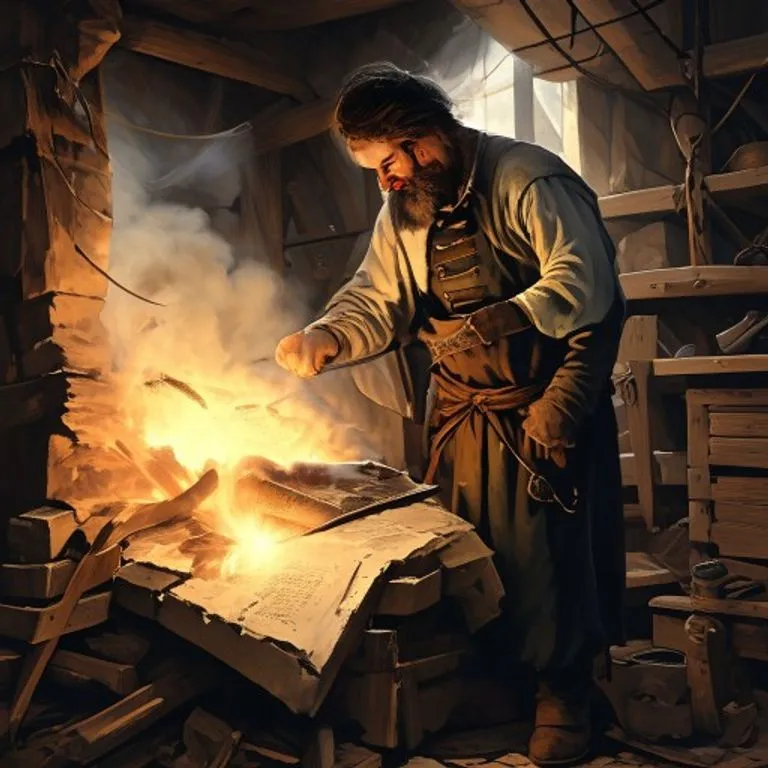
Forging
Forging is a manufacturing process involving the shaping of metal using localized compressive forces. The blows are delivered with a hammer (often a power hammer) or a die. Forging is often classified according to the temperature at which it is performed: cold forging (a type of cold working), warm forging, or hot forging (a type of hot working).
The Process
Forging usually requires heating the metal to a temperature where it becomes malleable but not molten. This is done in a Forge. The heated metal is then placed on an Anvil and struck with a Hammer to change its shape. Tongs are used to hold and manipulate the hot metal.
Key Steps:
- Heating: The metal is heated in a forge fueled by Charcoal or Coal. A pair of Bellows is often used to intensify the heat.
- Shaping: The metal is hammered on an anvil. Techniques include drawing out (lengthening), upsetting (thickening), and bending. See Shaping for broader context.
- Heat Treatment: Processes like annealing, hardening, and tempering are often performed after forging to adjust the metal’s properties. See Heat Treatment.
- Balancing: Adjusting the weight distribution for optimal handling, especially for tools and weapons. See Balancing.
Importance
Forged parts are generally stronger than those produced by casting or machining. The grain structure of the metal is altered to follow the shape of the part, resulting in superior strength and resistance to impact and fatigue.
Types of Forging
- Smith Forging: The traditional method where a blacksmith uses a hammer and anvil.
- Drop Forging: A die is used to shape the metal, and a heavy hammer is dropped onto it.
- Press Forging: Slow, continuous pressure is applied to the metal instead of sudden blows.
Common Forged Metals
- Iron: The most common metal for traditional forging.
- Steel: An alloy of iron and carbon, used for tools and weapons.
- Bronze: Can be forged, but often cast.