Generated with AI3 min read
Rotary Kiln
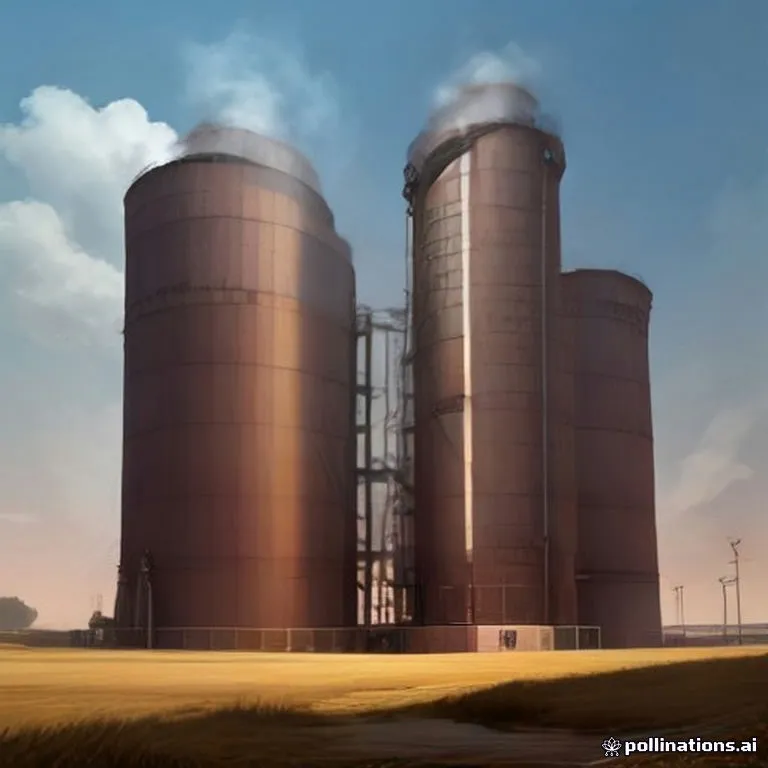
Brief description
A rotary kiln is a long, slightly inclined, rotating cylindrical thermal reactor used for continuous thermal processing of solid materials. Operating as a continuous-flow furnace, it enables large-scale calcination, roasting, and thermal decomposition required for industrial cement, lime, and chemical production.
Use / Function
- Cement Manufacturing: Clinkering limestone and clay mixtures at high temperatures ($1400\text{–}1500,^\circ\text{C}$) to make Portland cement.
- Lime Calcination: Continuously calcining Limestone into quicklime for steelmaking and chemical plants.
- Ore Roasting & Metallurgy: Heating metallic ores in controlled atmospheres to drive off sulfur, moisture, or organic impurities.
- Activated Charcoal Production: Thermal activation and carbonization of organic materials in low-oxygen environments.
Operating principle
- Inclined Rotation: A heavy steel cylinder lined with refractory brick is mounted on roller bearings at a slight incline ($2\text{–}4^\circ$) and rotated slowly ($1\text{–}5\text{ RPM}$).
- Counter-Current Flow: Raw material feed enters at the elevated upper end and slowly tumbles downward toward the lower discharge end under gravity.
- Heat Exchange: A burner installed at the lower discharge end injects fuel and air, blowing hot combustion gases upward against the downward flow of material.
- Thermal Reaction: As the material tumbles down through progressively hotter thermal zones, it undergoes drying, calcination, and chemical synthesis before discharging into a cooler.
How to create it
- Fabricate the Shell: Roll and weld heavy Steel plates to form a long, rigid cylindrical tube.
- Install Refractory Lining: Line the inner wall with high-density Refractory Brick and heat-resistant mortar to protect the outer steel shell from extreme operating temperatures.
- Mount Riding Rings & Rollers: Fix heavy Cast Iron riding rings (tyres) around the shell and position them on sturdy steel trunnion rollers mounted on reinforced Concrete foundations.
- Drive Mechanism: Attach a girth gear around the cylinder mesh with a pinion gear driven by an electric or mechanical drive with a speed reducer.
- Install Burner & Air Seals: Position a high-capacity burner tube at the lower discharge end and install heat-resistant rotary seals at both ends to minimize stray air infiltration.
Materials needed
- Kiln Vessel: Heavy structural Steel plate and structural rings.
- Thermal Insulation: High-temperature Refractory Brick and alumina/fireclay mortar.
- Support & Drive: Heavy Cast Iron trunnion rollers, tyres, and large drive gears.
- Foundation: Reinforced Concrete footings.
- Fuel Source: Pulverized coal, Charcoal, natural gas, or heavy fuel oil.
Variants and improvements
- Wet Process Kiln: Feeds raw materials as a liquid slurry; requires longer kiln cylinders to accommodate a drying zone.
- Dry Process Kiln with Preheater: Uses multi-stage cyclone preheaters to heat dry powder before entering a shorter rotary kiln, drastically reducing fuel consumption.
- Direct-Fired vs. Indirect-Fired: Direct-fired kilns pass combustion gases through the material bed; indirect-fired kilns heat the outer shell externally for gas-sensitive chemical processes.
Limits and risks
- Thermal Strain & Shell Cracking: Severe thermal gradients or refractory failure can overheat and deform the outer steel shell.
- Refractory Wear: Continuous abrasive motion of tumbling material erodes inner brick linings, requiring periodic shutdowns and relining.
- Dust Emission: High gas velocities inside the drum generate fine particulate dust requiring cyclone collectors or baghouses.
- Dust Ring Formation: Molten or sticky ash and mineral compounds can fuse onto internal walls, forming restrictive rings that block material flow.