Generated with AI3 min read
Cupola Furnace
Brief description
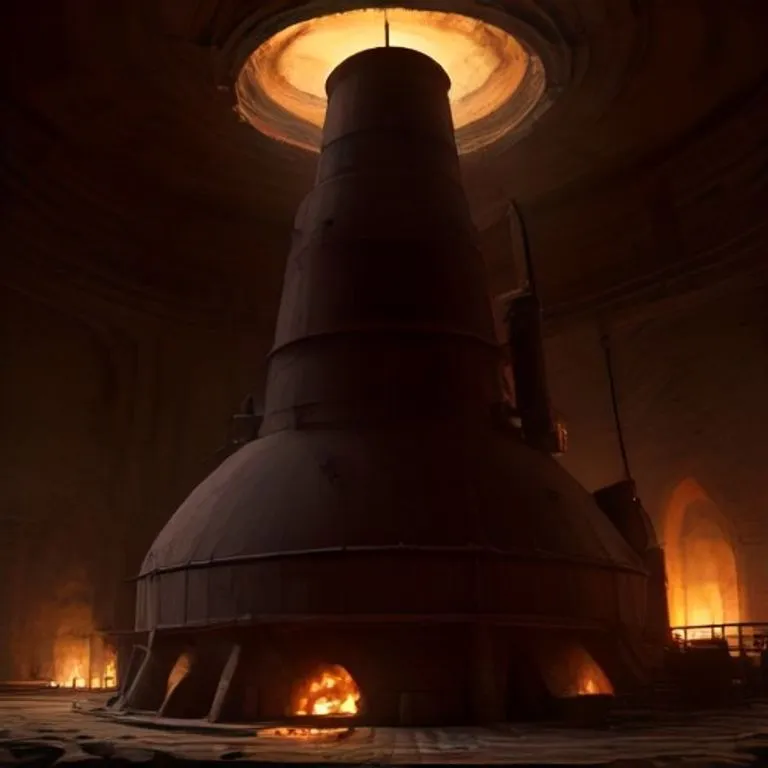
A cupola furnace is a vertical cylindrical furnace used in foundries to melt cast iron, bronze, and other metals. It operates continuously by alternating charges of metal, fuel (coke), and flux (limestone) while blowing air into the lower section to achieve efficient thermal melting.
Use / Function
- Cast Iron Foundry Melting: Primary industrial furnace for melting pig iron and scrap iron to produce cast iron components.
- Metal Casting Production: Continuous output of liquid iron for poured molds in machinery, structural components, pipes, and heavy tools.
- Scale: Industrial to local workshop foundry scale.
Operating principle
- Layered Charging: Alternating layers of Coke fuel, metal scrap or Iron, and Limestone flux are fed continuously into the top of the vertical stack.
- Air Blast: Pressurized air is blown through tuyeres located near the bottom of the shaft into the coke bed, igniting the fuel and generating high heat (over 1,200°C–1,500°C).
- Melting & Fluxing: Rising hot combustion gases transfer heat directly to descending metal charges. The melting iron drips down through the glowing coke. Limestone reacts with impurities to form liquid slag floating on top of the liquid iron.
- Tapping: Molten cast iron accumulates at the bottom tap hole and is tapped into ladles, while slag is tapped separately from a higher hole.
How to create it
- Vertical Shell: Construct a cylindrical steel shell lined internally with high-grade refractory Brick and refractory Clay.
- Air Tuyeres: Install evenly spaced air inlet nozzles (tuyeres) around the circumference near the bottom to supply forced air into the combustion zone.
- Air Windbox: Encircle the tuyere zone with a pressurized air supply chamber (windbox) connected to a heavy blower or bellows system.
- Hearth & Tap Holes: Form a sloped hearth bottom at the base with two distinct openings: an upper slag tap hole and a lower iron tap hole with a spout.
- Stack & Charge Door: Provide a tall vertical stack for draft and exhaust, along with a charging door located above the melting zone.
Materials needed
- Essential: Iron scrap/pig iron, Coke (or high-density Charcoal), Limestone.
- Construction: Refractory Brick, fire clay, structural steel shell.
- Air Supply System: Blower or powered bellows and tuyere piping.
Variants and improvements
- Cold Blast Cupola: Traditional design using ambient temperature air blast.
- Hot Blast Cupola: Uses waste heat from exhaust gases to preheat incoming combustion air, reducing fuel consumption and raising furnace temperatures.
- Cokeless Cupola: Modern adaptation using natural gas or liquid fuel burners instead of solid coke beds.
Limits and risks
- Chemical Contamination: Direct contact between liquid metal and fuel can introduce sulfur or excess carbon into the alloy.
- Carbon Monoxide & Gas Hazards: Produces significant quantities of toxic carbon monoxide and particulate smoke.
- Thermal Stress & Refractory Failure: Refractory lining erodes rapidly under extreme heat and chemical action of slag, requiring regular maintenance.