Generated with AI3 min read
Lime Kiln
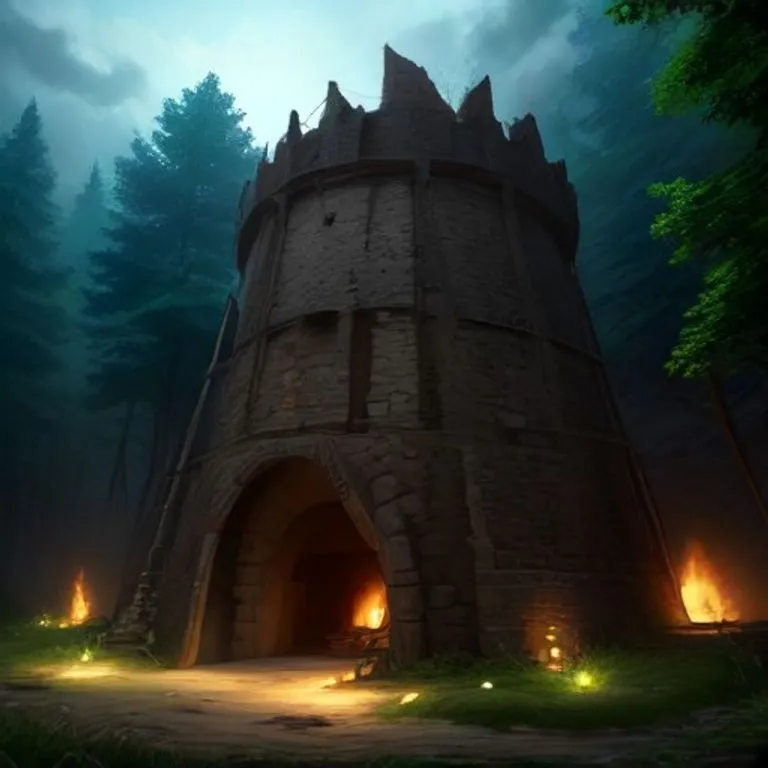
Brief description
A lime kiln is a high-temperature furnace used to calcine limestone (calcium carbonate) into quicklime (calcium oxide). It is a fundamental chemical technology essential for civil engineering, agriculture, paper manufacturing, and metal refining.
Use / Function
- Mortar and Cement Production: Provides quicklime, which when slaked with water yields Lime mortar for masonry construction.
- Soil Conditioning: Produces agricultural lime to reduce soil acidity and improve crop yield.
- Sanitation and Water Purification: Raises pH levels to disinfect water supplies and treat waste.
- Industrial Processing: Used as a flux in metallurgical smelting and in paper and glass manufacturing.
Operating principle
The lime kiln operates through thermal decomposition (calcination):
- Heating: Limestone ($\text{CaCO}_3$) is heated to temperatures exceeding 900 °C (1650 °F).
- Decomposition: The heat breaks chemical bonds, driving off carbon dioxide gas ($\text{CO}_2$).
- Product Formation: The remaining solid material is quicklime ($\text{CaO}$), which is highly reactive with water.
$$\text{CaCO}_3 + \text{heat} \rightarrow \text{CaO} + \text{CO}_2 \uparrow$$
How to create it
Minimum functional version
- Dig a Pit or Shaft: Excavate a vertical shaft (2 to 3 meters deep) into a hillside or construct a thick stone cylinder.
- Build Fire Arch: Construct a stone or brick arch at the bottom of the shaft to support the limestone stack while leaving space for fuel combustion underneath.
- Load Fuel and Limestone: Pack Wood or Charcoal in the bottom chamber and stack broken Limestone chunks (fist-sized) loosely above the arch to allow draft passage.
- Seal Outer Walls: Coat the outer masonry shell with refractory Clay or mud mortar to retain heat and direct draft upwards.
- Fire and Maintain: Light the fire and maintain intense continuous heat for 24 to 72 hours until calcination is complete.
- Cool and Unload: Allow the kiln to cool down completely before extracting the fragile quicklime lumps.
Required technological level
Intermediate. Requires basic masonry skills, understanding of draft physics, and sustained high-temperature fire management.
Materials needed
- Limestone Source: Broken Limestone or seashells ($\text{CaCO}_3$).
- Thermal Structure: Refractory Clay, heat-resistant Stone or fire-Brick.
- Fuel: Hard dry Wood or Charcoal.
Variants and improvements
- Clamp Kiln (Periodic): Simple temporary pile of limestone and fuel covered with earth; low efficiency, suitable for small batches.
- Vertical Shaft Kiln (Continuous): Permanent tall stone tower where limestone is continuously added from the top and quicklime extracted from the bottom.
- Rotary Kiln (Modern): Large rotating inclined cylinder used in modern industrial cement production.
Limits and risks
- Chemical Burns: Quicklime ($\text{CaO}$) reacts violently with water and moisture (including sweat and tears), causing severe chemical burns and blindness. Wear protective goggles and gloves.
- Carbon Monoxide & Dioxide: The burning process produces high concentrations of $\text{CO}_2$ and toxic $\text{CO}$ gases. Always operate in open air or well-ventilated areas.
- Thermal Shock: Rapid cooling can crack structural kiln walls or cause hot fragments to pop out.